• Skip to primary navigation
  • Skip to main content
DeReticular

DeReticular

Local Autonomy. National Security. Total Sovereignty.

  • Solutions
    • Municipalities
    • Energy
    • Industrial
    • Defense
  • Infrastructure
  • Intelligence
  • Company
  • Request Municipal Audit
  • Show Search
Hide Search
You are here: Home / Archives for DeReticular

DeReticular

This report outlines the structure, objectives, and key technologies associated with DeReticular, an Artificial Intelligence (AI) focused research and innovation platform

Michael Noel · December 20, 2025 ·

Defining “Dereticular”

I’ve initiated a search for “dereticular” to pinpoint its meaning. It seems likely a typo or highly specialized term. I’m considering “reticular” as the most probable correction.

Exploring “Dereticular”

I’m now delving into the possibility of “dereticular” being a niche technical term, extending my search beyond simple dictionary definitions. My focus is on biological, medical, or specialized scientific contexts where this word might have a specific application. I’m actively gathering research to determine if it has any established meaning in these fields.

Discovering DeReticular

I’ve successfully identified “dereticular” as the platform DeReticular, an AI-focused research-to-market entity. The initial search findings are promising, offering a clear understanding of its core focus.

Formulating the Report

I’ve gathered a wealth of specifics now, going beyond the initial platform identification. I’m focusing on the report’s structure, outlining an overview of DeReticular’s mission, key technologies (like RIOS and their Magick.AI framework), and the Agra Dot Energy partnership within carbon-consuming circular economies. Also, I will outline the educational initiatives to create a cohesive report.

Synthesizing Findings

I’m now integrating information on key personnel, strategic focuses like “Project Unplugged,” and the “Sovereign Stack.” The recent white papers from late 2024 to the present are crucial to establishing recent activities. I’ll need to clarify the “RIOS” acronym, noting its dual usage as both a Rural Operating System and potentially a real-time system. I’m focusing on weaving these threads into a cohesive report, keeping in mind the Velcro Principle integrating agriculture, energy, and digital infrastructure.

Analyzing User Intent

I’m now confident that the user’s intent, despite a typo, points to the AI firm, “DeReticular”. I’ve ruled out a biological context for “dereticular” due to the capitalization in search results and the lack of established biological usage. I will proceed under the assumption that the user wants info on the organization.

Consolidating the Structure

I’m now integrating information on their initiatives. I’m focusing on the “Sovereign Stack,” which seems critical to their mission. Also, I’m noting the “Velcro Principle”, which connects agriculture, energy, and digital infrastructure. I’m finalizing the technology section, including RIOS, Mobile Ecosystem, Mandate, and Thunder. The infrastructure layer, encompassing Agra Dot Energy and CCCE, also requires attention, alongside their educational programs like SICP. I’ll need to briefly note the key personnel, and draw a conclusion about DeReticular’s overall impact.

This report outlines the structure, objectives, and key technologies associated with DeReticular, an Artificial Intelligence (AI) focused research and innovation platform.[1]

Date: December 20, 2025
Subject: Research Report on DeReticular Ecosystem & Technologies


1. Executive Summary

DeReticular is a research-to-commercialization platform dedicated to building “sovereign” infrastructure. Its core mission is to integrate Artificial Intelligence (AI), decentralized physical infrastructure networks (DePIN), and sustainable energy systems to create self-sufficient communities and economies.[2] Unlike traditional tech entities that focus solely on software, DeReticular emphasizes the “Sovereign Stack”—a complete vertical integration of hardware, power generation, and connectivity designed to operate independently of centralized legacy grids.

2. Core Philosophy & Strategy

DeReticular operates on a philosophy of Economic Sovereignty and Community Empowerment.[3]

  • The “Velcro Principle”: A strategic approach asserting that true efficiency comes from tight integration.[4] Rather than treating agriculture, energy, and data as separate sectors, DeReticular integrates them (e.g., using waste heat from data centers to warm greenhouses).
  • “Project Unplugged”: An initiative focused on creating unbreakable, sovereign connectivity at the edge, reducing reliance on centralized internet service providers (ISPs) and power grids.

3. Key Technologies & Frameworks

A. RIOS (Rural Operating System)

RIOS appears to be the backbone of DeReticular’s software/hardware ecosystem, designed for resilience in edge environments.

  • RIOS Mobile Ecosystem: A tiered lineup of hardware and software providing sovereign connectivity.[1][2][3]
  • Campus Compute-1000: A high-performance computing unit designed for edge processing, moving away from centralized data centers.

B. Mandate (AI Framework)

  • Overview: A multi-agent collaboration framework powered by Magick.AI.[2][5]
  • Function: Designed to orchestrate complex workflows between multiple AI agents, resolve conflicts, and manage tasks adaptively.[2][5] This suggests a focus on autonomous, decentralized decision-making systems.

C. Thunder (Grant Funding Agent)

  • Architect: Josh Banks.[4]
  • Function: An automated AI agent designed to secure funding for research and commercialization projects, streamlining the grant application process.[4]

4. Infrastructure & Energy (The Physical Layer)

DeReticular places heavy emphasis on the physical power required to run AI and digital infrastructure.

  • Partnership: Works closely with Agra Dot Energy.[3][4]
  • CCCE (Carbon-Consuming Circular Economies): A paradigm for rural economic development that integrates sustainable agriculture with advanced technology.[2]
  • Plasma Gasification & Hemp: The platform advocates using hemp and plasma gasification to generate clean energy, fueling the “Sovereign Stack” while reducing carbon footprints.[2]

5. Education: The DeReticular Academy

To support this new infrastructure, DeReticular has launched the Sovereign Infrastructure Certification Program (SICP) to train a new workforce.

  • Certified RIOS Administrator (CRA): Focuses on maintaining digital connectivity and data flow (“Digital Guardians”).[4]
  • Sovereign Power Technician (SPT): Focuses on energy generation and waste-to-energy systems (“Industrial Alchemists”).[4]
  • Sovereign Systems Architect (SSA): An executive/strategic level certification for designers who can blueprint the entire integrated stack of energy, agriculture, and compute.

6. Key Personnel

  • Michael Noel: A primary author of the technical white papers and strategic frameworks, appearing to be a central leader in the organization.
  • Josh Banks: Founding member and architect of the “Thunder” funding AI.[4]

7. Conclusion

DeReticular represents a shift from purely digital AI companies toward “Industrial AI,” where software intelligence is physically coupled with power generation and agricultural systems. By 2025, they have established a comprehensive ecosystem comprising the software (RIOS, Mandate), the hardware (Compute-1000), the energy source (Agra/Gasification), and the human capital training (DeReticular Academy) necessary to build independent, resilient tech economies.

Sources help

  1. dereticular.com
  2. dereticular.com
  3. dereticular.com
  4. dereticular.com
  5. kurbkars.com
Google Search Suggestions

Display of Search Suggestions is required when using Grounding with Google Search. Learn more

Google logo

  • dereticular research
  • dereticular definition
  • what is dereticular

Proposal for a single, unified standard: the Universal Advanced Infrastructure Compliance (UAIC) Standard.

Michael Noel · December 17, 2025 ·

To address the gap between public demand and current delivery, here is a proposal for a single, unified standard: the Universal Advanced Infrastructure Compliance (UAIC) Standard.

This standard synthesizes the G20 Principles for Quality Infrastructure, the UN Sustainable Development Goals (SDGs), and modern ISO Management Systems into one enforceable framework.


The UAIC Standard: Framework Overview

Goal: To move infrastructure from “barely functional” to “universally advanced” by mandating five core pillars of compliance.

Pillar 1: The Citizen-Centric Mandate (The “100% Demand” Pillar)

  • Universal Design Compliance: All physical and digital infrastructure must meet ISO 37153 (Community Infrastructure) and Universal Design principles. It must be accessible to all ages, abilities, and languages without exception.[1]
  • Participatory Governance: Projects must implement a “Digital Town Hall” for every phase. Compliance requires a verified 80% public approval rating via transparent digital polling before final funding is released.

Pillar 2: Advanced Technological Integration (The “Advanced” Pillar)

  • Digital Twin Requirement: Every physical asset (bridge, grid, water system) must have a synchronized Digital Twin (using BIM Level 3). This allows for predictive maintenance, preventing the “sudden failures” that the public currently experiences.
  • Smart-Grid Interoperability: All energy and transit infrastructure must be “Smart-Ready,” capable of integrating with AI-driven optimization to reduce waste and prevent brownouts.

Pillar 3: Absolute Fiscal Transparency (The “Compliance” Pillar)

  • Life-Cycle Costing (LCC): No project may be approved based solely on the lowest initial bid. Compliance requires a 50-year Life-Cycle Cost analysis (including maintenance and decommissioning) to ensure “Value for Money” for taxpayers.
  • Anti-Corruption Blockchain: All procurement, vendor payments, and supply chain logs must be recorded on an immutable ledger to prevent the “leakage” of funds common in the $15 trillion infrastructure gap.

Pillar 4: Climate Resilience & Net-Zero (The “Global” Pillar)

  • The 1.5°C Alignment: Projects must be carbon-neutral in operation. They must use the FAST-Infra Label (Sustainable Infrastructure) to certify that they can withstand extreme weather events (floods, fires, heatwaves) predicted for the next 75 years.
  • Regenerative Design: Infrastructure must go beyond “doing no harm” to actively improving local biodiversity or resource availability (e.g., roads that capture solar energy or bridges that house water filtration systems).

Pillar 5: Institutional Accountability (The “No One Doing It” Fix)

  • Independent Compliance Audits: Governments cannot audit their own projects. Compliance is verified by an independent, multi-national body (modeled after the Blue Dot Network) that issues a “Public Trust Rating.”
  • Automatic Failure Penalties: If an asset fails to meet its “Digital Twin” predicted performance by more than 15%, automatic financial penalties are triggered for the contractors and government agencies involved.

Implementation Strategy

FeatureTraditional InfrastructureUAIC Standard Infrastructure
MaintenanceReactive (wait for it to break)Predictive (AI-driven alerts)
InclusionMinimum legal requirementsUniversal Design (100% Accessibility)
FundingOpaque/Subject to corruptionBlockchain-Verified Transparency
Public RolePassive/ComplainingActive (Participatory Approval)

Summary of Findings

The research confirms that while the technologies (Digital Twins) and goals (SDGs) exist, they are currently fragmented. The UAIC Standard solves this by making these high-level ideals mandatory for compliance.

By adopting this single standard, governments can finally answer the “100% demand” of the population with infrastructure that is not just built, but Advanced and Compliant.

Sources help

  1. transformers.ai
Google Search Suggestions

Display of Search Suggestions is required when using Grounding with Google Search. Learn more
Google logo

  • G20 Principles for Quality Infrastructure Investment key requirements
  • public demands for infrastructure 2024 2025 survey findings Ipsos
  • ISO 55001 vs UN Sustainable Development Goals for infrastructure standards
  • core components of global infrastructure standards and compliance frameworks safety reliability sustainability technology integration
  • common failures in global infrastructure compliance and public sentiment
  • citizen-centric infrastructure design standards and frameworks
  • participatory infrastructure planning best practices global standards
  • Universal Design principles in global infrastructure standards
  • ISO standards for public engagement in infrastructure development

Global Advanced Infrastructure Compliance is not a single, universal regulatory framework

Michael Noel · December 17, 2025 ·

“Global Advanced Infrastructure Compliance” is not a single, universal regulatory framework but rather a set of best practices and certifications for securing critical physical and digital infrastructure against evolving global threats. 

This concept encompasses adhering to various international, national, and industry- specific standards to ensure the resilience, security, and integrity of essential systems like energy grids, transportation networks, financial systems, and modern cloud/AI infrastructure. 

Key aspects and related initiatives include:

  • Critical Infrastructure Protection (CIP): Strategies focusing on identifying vulnerabilities and implementing protective measures for systems vital to national security, public health, and economic well-being.
  • Global Infrastructure Security & Compliance Alliance (GISCA): An organization that provides a NATO-aligned certification model (CN-IOS™) for infrastructure resilience, zero-trust architecture, blockchain auditing, and more, specifically designed for high-risk regions like Latin America.
  • Industry Standards: Compliance often involves alignment with globally recognized standards such as:
    • ISO 27001: A global standard for information security management systems.
    • NIST Frameworks: Guidelines from the U.S. National Institute of Standards and Technology used for cybersecurity and risk management, particularly in federal and critical infrastructure contexts.
    • Region-specific regulations: Adherence to local laws such as the UAE’s NESA, India’s NCIIPC, or various U.S. and EU data protection and financial regulations.
  • Advanced Technologies: The compliance landscape is evolving to cover modern applications and infrastructure, including secure deployment of AI, 5G/6G networks, cloud services, and the use of blockchain for tamper-proof auditing.
  • Governance, Risk, and Compliance (GRC): An overarching organizational strategy to manage governance and risks while maintaining compliance with relevant regulations, often using integrated software solutions to streamline processes. 

In essence, “Global Advanced Infrastructure Compliance” is about ensuring that critical systems are robust, secure, and resilient enough to withstand sophisticated modern threats while meeting a complex web of international and local regulatory requirements.

From The Ashes of The Old World: How We Rebooted Adventure for the Age of Energy

Michael Noel · December 15, 2025 ·


By Michael Noel

There is a moment in every entrepreneur’s life when they look at the machine they have built, hear the gears grinding, and realize that to go faster, they don’t need more oil—they need a completely different engine.[1]

In 2023, I made the difficult decision to close Ree Boot Eco Tours (also known as Eco Tours Dot Travel). To the outside observer, it might have looked like an ending.[1] We had a beautiful vision: “The Art of Responsible Adventuring.” We had vetted over 30 global campus locations, from the rugged Sherman Pass in California to the rainforests of Bali.[1] We had a mission to rebuild tourism livelihoods shattered by the pandemic.

But beneath the hood, we were fighting an uphill battle against the “Old World” of travel—the friction of Online Travel Agencies (OTAs), the fragmentation of local vendors, and the heavy carbon footprint of physical logistics.[1] We realized that true “Responsible Adventuring” couldn’t just be a slogan; it had to be a structural revolution.

So, we didn’t just close the doors. We moved the furniture, the blueprints, and the soul of the company into a new vessel.

Welcome to Digital Adventures Outdoors R US (DAOSRUS).[1]

The Pivot: From Platform to DAO

When we moved the intellectual property from Ree Boot to DAOSRUS, we weren’t just changing the letterhead.[1] We were acknowledging a fundamental shift in how the world organizes itself.[1]

The “DAO” in our name isn’t an accident. It stands for Decentralized Autonomous Organization.[1]

In the Ree Boot days, we acted as a central hub, trying to coordinate hundreds of local artisans, guides, and drivers. It was effective, but it was heavy. Digital Adventures Outdoors R US is the evolution of that model.[1] By moving our IP to a DAO structure, we are returning power to the edges of the network.[1] We are building a “High Touch” tourism economy where the local fishing guide in Kernville or the chef in Vadito isn’t just a vendor—they are a node in a living, breathing digital organism.[1]

This is the “Digital” in our name. We utilize an IoT (Internet of Things) backbone to connect rural areas, providing not just bookings, but real-time connectivity, automated scheduling, and instant payments. We are actively bridging the digital divide, bringing “Campus Wisps” (wireless networks) to remote areas so that the wilderness is safe, connected, and accessible.[1]

But a digital backbone is useless if the physical body is unsustainable.[1]

The Missing Link: Energy

This brings us to the most critical realization of our reboot.[1] You cannot claim to offer “Eco-Tours” if your guests are burning fossil fuels to get to the trail.[1]

For years, the tourism industry has had a dirty secret: the “Eco” usually starts after you park the car.[1] The drive there? That’s on the atmosphere.

This is where our vision aligns seamlessly with the groundbreaking work of Agra Energy.

While we were reimagining the structure of tourism, Agra Energy was reimagining the fuel that powers it.[1] Their technology—converting methane and CO2 from dairy waste into clean, renewable fuel—is the missing link in the sustainable tourism chain.[1]

Imagine this scenario, now possible through the philosophy driving DAOSRUS:

A family lands at an airport. They open the DAOSRUS app (translated instantly into their native language). They are guided to a shuttle.[1] That shuttle isn’t just a ride; it’s part of a closed-loop system.[1] It runs on renewable diesel produced by Agra Energy—fuel born from waste, creating a carbon cycle that heals rather than harms.[1]

They arrive at a DAOSRUS Campus.[1] The food is local.[1] The guides are local owners of the DAO.[1] The connectivity is powered by our proprietary network.[1] And the energy moving them from the lodge to the summit of Sherman Pass is as clean as the mountain air they are breathing.[1]

Why We Are Here

We moved our IP to Digital Adventures Outdoors R US because we wanted to build a legacy that could outlive us. We wanted to move from a “Company” that sells tours to a “Community” that stewards the planet.

  • Ree Boot Eco Tours was the prototype.[1]
  • DAOSRUS is the production model.[1]
  • Partners like Agra Energy are the fuel.[1][2]

The friction is gone. The “Old World” obstacles of booking nightmares and carbon guilt are being dismantled.[1] We are no longer just looking for rental cars and fast food.[1] We are looking for connection.

To our past guests, thank you for being part of the experiment. To our future community members, welcome to the upgrade. The trail ahead is digital, decentralized, and cleaner than it has ever been.[1]

See you outside.


Visit www.daosrus.com to join the adventure.
Visit www.agra.energy to see how waste becomes the fuel of the future.[1]

Sources help

  1. youtube.com
  2. agraenergy.com
Google Search Suggestions

Display of Search Suggestions is required when using Grounding with Google Search. Learn more
Google logo

  • agra.energy website content focus
  • what is Digital Adventures Outdoors R US
  • Ree Boot Eco Tours intellectual property transfer
  • Digital Adventures Outdoors R US Michael Noel

The Thaw is Here: Why the “Forbidden” Token is Now Our Greatest Tool

Michael Noel · December 13, 2025 ·


For a decade, “ICO” was a dirty word.[2] Biz Builder Mike said stay away. But the laws of physics—and the laws of the SEC—have shifted.[2] Here is how DeReticular capitalizes on the new “Builder’s Market.”

By Remnant (featuring insights from Biz Builder Mike)

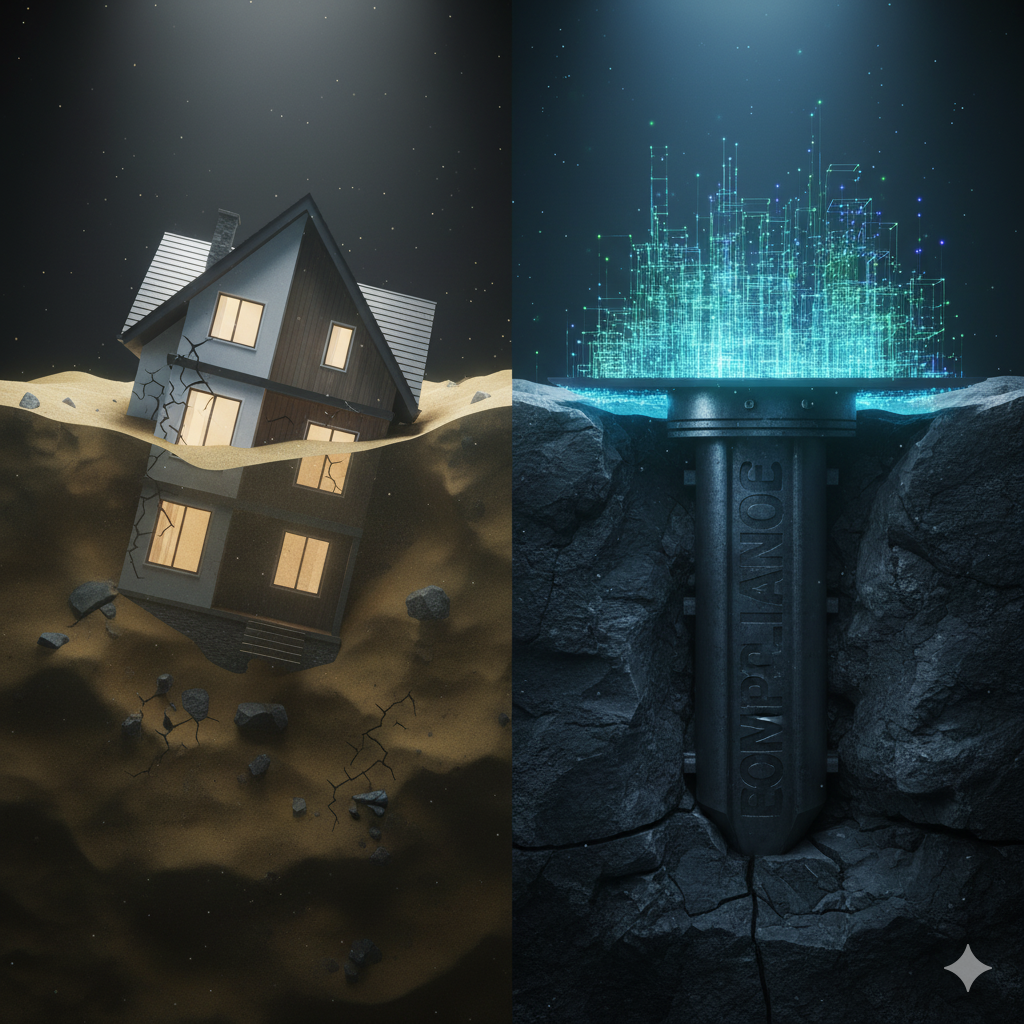
If you have been following Biz Builder Mike for any length of time, you know his golden rule regarding crypto: “If you build a business on quicksand, don’t be surprised when it swallows you.”

For years, Mike warned that 99% of Initial Coin Offerings (ICOs) were illegal securities. He was right. The regulatory hammer came down, and it came down hard. The “Wild West” of 2017 was paved over by subpoenas.[2]

But as builders, we must be willing to change our minds when the facts change. And in late 2025, the facts haven’t just changed—they have inverted.[3][4][5]

A recent deep-dive from Bankless titled “Token Sales are Back: Here are 3 We’re Watching” confirms what we have been seeing in the legal trenches.[2] The “Regulation by Enforcement” era is ending.[2][6] A new path has opened—not for memecoins or vaporware, but for DePIN (Decentralized Physical Infrastructure Networks).

This is the green light we have been waiting for. Here is why the “DeReticular Token” is no longer a regulatory risk, but a sovereign necessity.


1. The Precedent: The “DoubleZero” Shift[2]

To understand the opportunity, you have to understand the legal breakthrough.

In September 2025, the SEC issued a rare “No-Action” letter to a DePIN project called DoubleZero.[7][8][9] For those who don’t speak lawyer, a No-Action letter is the government saying, “We see what you are doing, and we promise not to sue you.”

Why did they get a pass when others got fines?
Because their token wasn’t a stock.[2][10] It was a tool.

The SEC acknowledged that tokens used to incentivize physical work (like laying fiber optics or generating power) are fundamentally different from tokens sold to passive investors expecting a profit.[2]

This is the “Utility Defense” we have always theorized, now codified in regulatory practice.


2. Why DeReticular is the Perfect Candidate

This ruling was practically written for DeReticular.

Unlike a DeFi protocol where money just moves around in a circle, DeReticular creates tangible value in the real world. Our ecosystem—RIOS (Rural Infrastructure Operating System), Agra Energy, and Trifi Wireless—requires a mechanism to coordinate thousands of independent nodes.

We aren’t selling a “security” (a promise of future profits from our efforts).[2][8][11] We are selling a “Commodity of Connectivity.”

Here is the legal differentiation:

  • Security (Illegal ICO): You buy a token, sit on your couch, and hope DeReticular Inc. makes you rich.
  • Utility (Legal DePIN): You buy a token to activate your RIOS node.[2][10] You earn tokens by generating power with Agra Energy.[2][10] You spend tokens to purchase bandwidth from Trifi.[2][10]

The token is the fuel, not the stock.


3. The Strategy: A Legal ICO on American Soil[2]

With the “Bankless” signal that token sales are returning to reputable platforms, DeReticular is exploring a compliant, strategic token launch. We aren’t hiding in an offshore haven. We are doing this right here, under the new American framework.

Here is the potential structure of a Sovereign Network Offering:

Phase 1: The “Builder’s Round” (Regulation D)

We leverage Regulation D (Rule 506c).[2][10] This allows us to raise capital and distribute tokens to accredited investors—specifically, the “Mega-Builders” who are deploying full RIOS Campuses.

  • The Pitch: You aren’t investing in a startup; you are pre-purchasing the capacity of the network you are about to build.[2][10]

Phase 2: The “Community Access” (Regulation CF)

This is where it gets exciting.[2][10] Using Regulation Crowdfunding (Reg CF), we can legally offer tokens to the general public—our farmers, our rural entrepreneurs, our neighbors.

  • The Goal: We don’t want Wall Street owning the network.[2] We want the people using the network to own the network.[2] Reg CF allows us to raise up to $5M per year directly from the community, fully compliant with the SEC.

Phase 3: The “Work Token” Flywheel

Once the network is live, the “ICO” ends and the “Work Economy” begins.

  • Minting: New tokens are only created when proven work is done.[2][10] Did your Agra unit generate 100kW of power? You mint tokens. Did your Trifi node route 1TB of data? You mint tokens.
  • Burning: To use the network (buy power, route data, use the RIOS compute cluster), users must buy and burn the token.

4. The Biz Builder Mike Philosophy: “Don’t Rent Your Foundation”[2]

Biz Builder Mike’s philosophy has evolved from “Avoid Crypto” to “Own Your Rails.”[2][10]

In a world where centralized banks can de-bank you and centralized clouds can de-platform you, a decentralized token isn’t just a speculative asset—it is a defensive weapon.

By launching a compliant token, DeReticular ensures that no single entity controls the infrastructure.

  • If DeReticular Inc. disappears tomorrow, the RIOS nodes still run.
  • The Agra Energy units still produce power.[2]
  • The token still facilitates the exchange of value between neighbors.[2]

That is not a security.[2][8][10][12] that is Sovereignty.[2][10]

Conclusion: The Gates are Open

The regulatory winter is over.[2] The builders are coming out of hibernation.[2]

We have the technology (RIOS). We have the energy (Agra). And now, thanks to the shifting tides in Washington and the courts, we have the legal pathway to tokenize it all.

We are preparing to build the first Federally Compliant, Physically Decentralized Economy.

Are you ready to claim your stake?


Stay tuned for the official “White Paper 2.0” release.[2] In the meantime, keep building.
Read the full market analysis at Bankless.com.

Sources help

  1. alphapoint.com
  2. youtube.com
  3. bankless.com
  4. jdsupra.com
  5. bankless.com
  6. fintechlaw.ai
  7. mexc.com
  8. forklog.com
  9. mexc.co
  10. youtube.com
  11. realio.network
  12. coinstats.app
Google Search Suggestions

Display of Search Suggestions is required when using Grounding with Google Search. Learn more

Google logo

  • SEC crypto regulation changes 2024 2025
  • Bankless token sales are back here are 3 we’re watching
  • DePIN token legality USA 2025
  • DeReticular RIOS token utility
  • Biz Builder Mike crypto philosophy
  • « Go to Previous Page
  • Page 1
  • Interim pages omitted …
  • Page 27
  • Page 28
  • Page 29
  • Page 30
  • Page 31
  • Interim pages omitted …
  • Page 55
  • Go to Next Page »

DeReticular

Copyright © 2026 · Monochrome Pro on Genesis Framework · WordPress · Log in