
• Skip to primary navigation
  • Skip to main content
DeReticular

DeReticular

Local Autonomy. National Security. Total Sovereignty.

  • Solutions
    • Municipalities
    • Energy
    • Industrial
    • Defense
  • Infrastructure
  • Intelligence
  • Company
  • Request Municipal Audit
  • Show Search
Hide Search
You are here: Home / Archives for DeReticular

DeReticular

The Death of the Line and the Birth of the Octagon: How DeReticular is Rewiring Reality

Michael Noel · December 28, 2025 ·

By The DeReticular Editorial Team


Civilization is built on lines. Power lines. Supply chain lines. Fiber optic lines.

Lines are efficient. They are direct. But lines have a fatal flaw: they are fragile. Cut the line at any point, and everything downstream dies. In 2025, we watched the old “Linear World” struggle. We saw grids buckle under the weight of AI compute demands. We saw centralized ISPs choke on data. We saw the fragility of a world designed for the 20th century trying to run 21st-century software.

At DeReticular, we don’t build lines. We build Octagons.

We are building a multi-directional, self-healing, sovereign ecosystem where energy, data, and mobility are not services you buy from a utility, but assets you own and generate. As we close the book on 2025—our “Generation 2” year—we are pulling back the curtain on the Sovereign Stack.

Here is how we spent the last year turning the concept of Decentralized Physical Infrastructure Networks (DePIN) into heavy metal, running code, and living systems.

The Architecture of Independence

DeReticular is not a single company; it is an alliance of specialized divisions, each solving one variable in the equation of sovereignty. If you want to build a “Digital Hamlet”—a self-sufficient economic engine in the middle of nowhere—you need three things: Power, Connection, and Purpose.

1. The Heart: Agra Energy

You cannot have a decentralized internet if you have to plug it into a centralized wall socket.
Through our industrial arm, Agra Energy, we solved the energy trilemma. In 2025, we moved beyond theory. The facility in New Franken, WI, achieved over 1,500 hours of continuous steady-state operation, turning dairy waste into carbon-negative fuel.
But the real leap came with the Plasma Gasification units deployed in our Uganda initiative. We aren’t just burning gas; we are performing molecular alchemy, turning the “waste” of the agricultural world into the high-grade syngas that powers the AI revolution.

2. The Brain: Biz Builder Mike & RIOS

Power is useless without control. Enter Biz Builder Mike and the Rural Infrastructure Operating System (RIOS).
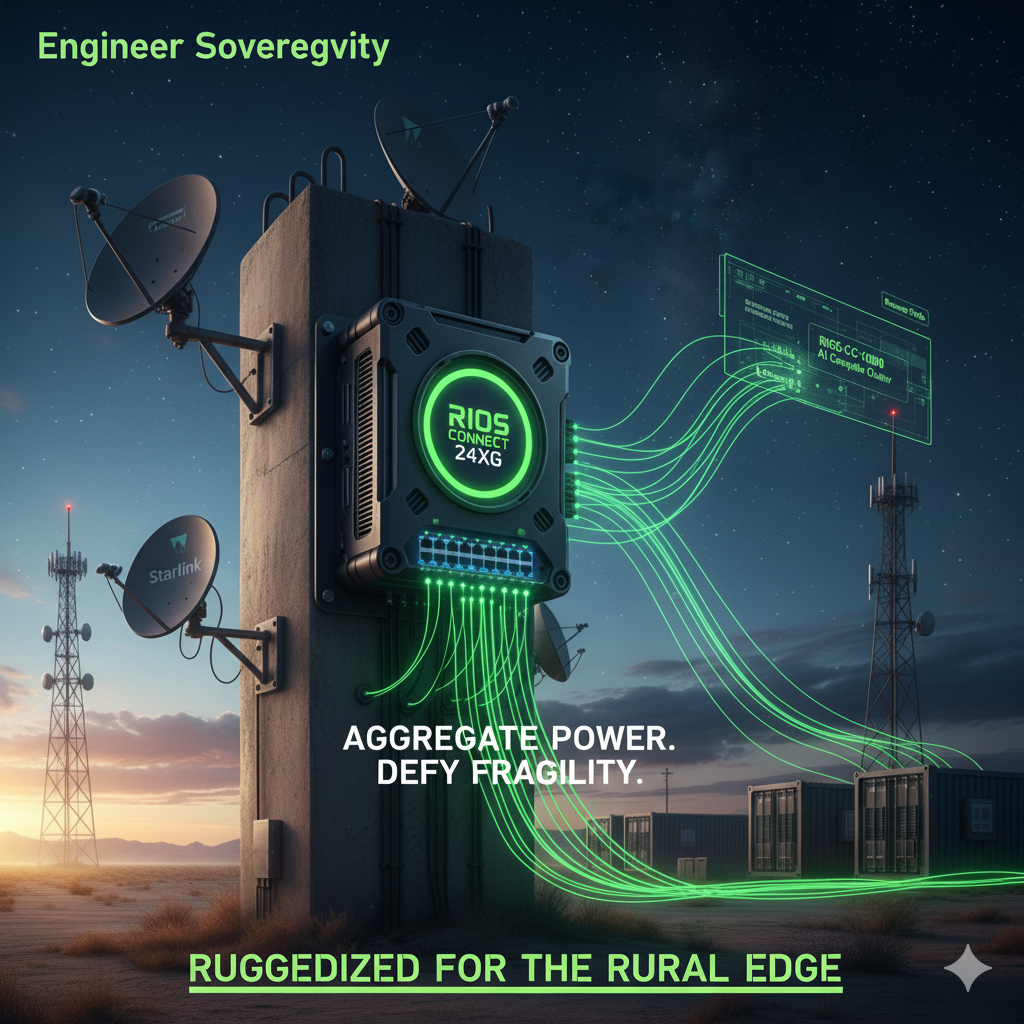
In September, we announced that “The Alliance Just Built Its Own Private Internet.” This wasn’t marketing fluff. By deploying Starlink Business Kits, WiFi 6 Mesh networks, and the RIOS Connect 24XG “spine” switches, we created a network architecture that exists outside the public internet.
This is the “Vault in the Cornfield.” It allows a farm in Missouri or a lodge in Karamoja to run high-level AI compute clusters locally, air-gapped from cyber threats and immune to regional internet outages.

3. The Skin: DAOs R Us

Technology without human connection is cold. DAOs R Us became our “Proving Ground.”
From the “luxury lab” accommodations at the DeReticular Academy in Arizona to the autonomous safari fleets in Uganda, this division tested our tech on actual humans. They gave us the “Human Impact Score,” teaching our power grids to prioritize human comfort and anxiety reduction during crises. They proved that the “Sovereign Stack” isn’t just for survivalists—it’s for anyone who wants a better, more responsive quality of life.

The 2025 Pivot: Code Meets Soil

The defining moment of our year happened in August, with a directive we called “Code Meets Soil.”

For too long, the tech industry has treated the physical world as an annoyance. They want the Cloud, but they don’t want the rain. We took the opposite approach. We argued that the safest, most efficient place for the massive compute power required by AI isn’t a data center in Ashburn, Virginia. It’s a farm.

  • The Logic: Farms have space. Farms have security (private land). Most importantly, farms have biomass (infinite energy).
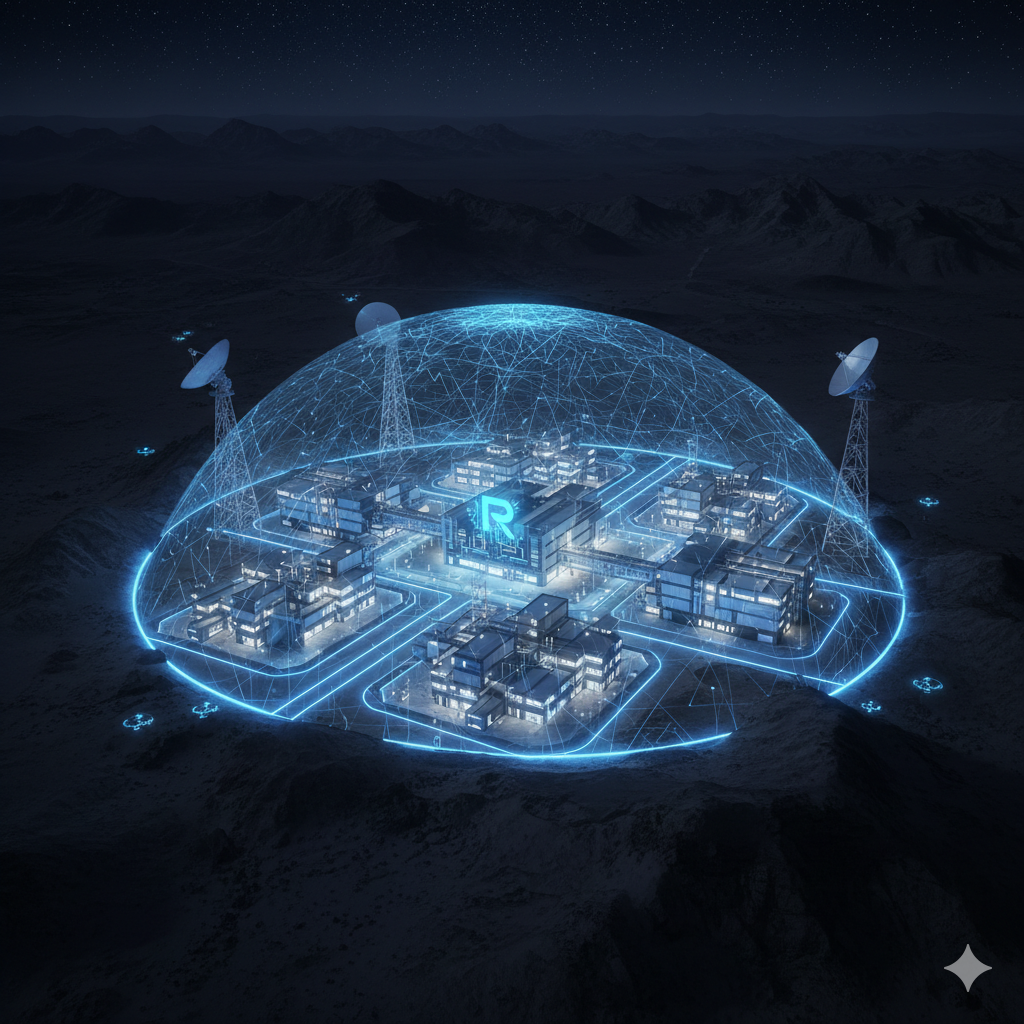
  • The Result: The “Digital Hamlet.” By placing RIOS Compute Clusters on agricultural land powered by Agra reactors, we created a new economic model. The farmer doesn’t just grow corn; they “grow” data. They become a node in the DeReticular global computer.

November: The Hardware Blitz

Philosophy is cheap. Hardware is heavy.
November 2025 was our “Generation 2” rollout. We stopped talking about what we could build and started shipping what we did build.

  • The RIOS Power Core 2X: The intelligent bridge between the reactor and the server.
  • The Pilot Expeditionary Kit: A data center in a suitcase, launched in December.
  • The Sovereign Reserve BESS: Battery storage that acts as the lungs of the grid, breathing in power when it’s cheap and exhaling it when it’s needed.

We released the “Sovereign Power Systems Master Catalog” because we believe the revolution requires a menu. You should be able to order your independence like you order auto parts.

2026: The Year of the Octagon

As we look to 2026, the “Linear World” is looking shakier than ever. Fragile grids, censored internets, and broken supply chains are the norm.

DeReticular offers the alternative. We are moving toward the Octagon—a system of eight-sided resilience where every node supports every other node.

  • Agra makes the fuel.
  • RIOS runs the data.
  • Kurb Kars (our mobility partner) moves the goods.
  • DAOs R Us connects the people.

We have built the stack. We have proven the tech. We have secured the alliances.

The “Cloud” is dead. Long live the Sovereign Soil.

Welcome to DeReticular.


Read the full “Generation 2 Milestone Report” and explore the RIOS Master Catalog at www.dereticular.com.


Timeline of Events (August – December 2025)

Michael Noel · December 28, 2025 ·

Based on the archives of DeReticular.com, here is the timeline of events for late 2025. The site documents a rapid acceleration from theoretical “DePIN” (Decentralized Physical Infrastructure Networks) concepts to the deployment of a fully “Sovereign Stack” of hardware and software.[1]

Timeline of Events (August – December 2025)

August 2025: The DePIN Vision & The Uganda Genesis

August was defined by the articulation of the company’s core philosophy—Decentralized Physical Infrastructure (DePIN)—and the launch of its international testing ground.[1]

  • Early August: The DePIN Manifesto. A five-part article series titled “The Future is Decentralized” is published, laying the theoretical groundwork for the company’s existence.[1] It argues that the AI revolution requires a new, decentralized grid.[1]
  • August 19: The Karamoja Blueprint. The company unveils its vision for Karamoja, Uganda, positioning it not just as a charitable cause but as a “connected and autonomous” market.[1]
  • August 31: “Code Meets Soil”. A strategic pivot is announced with the “New Genesis” initiative, formally linking high-tech code with agricultural development (Agra Energy).[1]

September 2025: The Alliance & The “Private Internet”

September marked the transition from theory to business strategy, characterized by the formation of “The Alliance” and aggressive financial modeling.[1]

  • September 6: The Private Internet. A landmark post titled “The Alliance Just Built Its Own Private Internet” declares the successful creation of a network independent of traditional ISPs, signaling a move toward total data sovereignty.[1]
  • September 16: The Phoenix Protocol. The company releases its “Marketing Growth Plan” and “North Star Calendar,” a 24-month roadmap designed to guide the ecosystem through rapid scaling.[1]
  • September 17: MOUs Signed. Multiple Memorandums of Understanding are finalized, legally cementing the partnerships between DeReticular, Agra Energy, and other stakeholders.[1]
  • September 19: The Investment Prospectus. The “Blueprint for the Next Economy” and revised investment prospectuses are released, targeting “sophisticated capital” for a new asset class.[1]

October 2025: The “Digital Hamlet” & The Plasma Project

October saw the application of these technologies in specific “campus” environments, focusing on the synergy between AI compute and rural energy.[1]

  • October 10: The Plasma Project. Detailed reports on Agra Energy Uganda and the Plasma Project are released, describing an “AI-Native Blueprint” for sustainable development in the African savanna.[1]
  • October 12: Operation Quartzsite. The “Exodus Solved” report details the deployment of Trifi Wireless and RIOS Mobile fleets at the Quartzsite RV show, testing the tech in a nomadic, off-grid American setting.[1]
  • October 30: The Digital Hamlet. A series of visionary posts introduces the concept of the “Digital Hamlet”—placing AI compute clusters (“a thousand AI brains”) directly on rural farms to create a new economic engine.[1]
  • October 30: AI Compute Cluster SOW. The official Statement of Work (SOW) for deploying the RIOS AI Compute Cluster is published, moving the concept to execution.[1]

November 2025: Generation 2 & The “Sovereign Stack”

November was the month of product delivery.[1] The company rolled out an extensive catalog of specific hardware and software solutions under the “RIOS” brand.[1]

  • November 1: Starlink Integration. The RIOS Starlink Business Kit and Roam Kit are officially detailed, providing the satellite backhaul for their sovereign network.[1]
  • November 3: Milestone Report. The company publishes the “DeReticular Milestone Report: A Journey from Concept to Commercialization,” summarizing the year’s progress.
  • November 8: Generation 2 Launch. A major announcement titled “Generation 2: The Dawn of the Sovereign Stack” marks a maturity point for the technology, moving from pilot testing to a standardized product.[1]
  • November 10: Agra Energy Catalogs. The Sovereign Power System and Micro-GTL (Gas-to-Liquid) system catalogs are released, standardizing the energy side of the equation.[1]
  • November 26: The Spine of the Cloud. The RIOS Connect 24XG switch is introduced as the “spine” of the new sovereign cloud infrastructure.[1]

December 2025: The Octagon & Total Sovereignty

The year concludes with a focus on finalizing standards, certifying the workforce, and articulating the ultimate “Octagon” strategy.[1]

  • December 3: The “Seed of Sovereignty”. A manifesto argues that small towns don’t need billions in federal aid; they need “sovereign seeds” (self-contained power/compute nodes).[1]
  • December 8: Infrastructure in a Suitcase. The RIOS Pilot Expeditionary kit is launched—a data center that fits in a 10ft box, designed for rapid deployment.[1]
  • December 17: The UAIC Standard. A proposal for the “Universal Advanced Infrastructure Compliance” standard is released, aiming to unify the disparate parts of the new decentralized grid.[1]
  • December 27: The Birth of the Octagon. The final major post of the year, “The Death of Linear Systems and the Birth of the Octagon,” frames the company’s work not just as tech, but as a fundamental re-wiring of planetary systems from linear (fragile) to octagonal (resilient).[1]

Sources help

  1. dereticular.com

The Death of linear systems and the Birth of the Octagon: How DeReticular is Re-Wiring the Planets DeReticular

Michael Noel · December 27, 2025 ·


If the last five years have taught us anything, it is that linear systems break.

Supply chains are linear. The national electrical grid is linear. The fiber optic cable running under the ocean is linear. When one link in a straight line snaps—whether due to a pandemic, a geopolitical conflict, or a simple tree falling on a power line—the entire chain collapses.

At DeReticular, we stopped believing in lines a long time ago. We believe in geometry. We believe in the mesh.

Enter Project Octagon.

This is not a theoretical white paper. As you read this, we are deploying a planetary mesh of eight sovereign infrastructure nodes. From the freezing tundra of Canada to the red dust of Uganda and the scorching heat of the Arizona desert, we are building the “Digital Nervous System” for a new era of industrial resilience.

Here is the story of how we are doing it, and why the future of infrastructure isn’t about building bigger grids—it’s about building smarter islands.

The Problem: The “Dumb” Grid

For the last century, humanity has built “dumb” infrastructure. We dug holes, poured concrete, strung copper wires, and waited for a central authority to flip a switch.

This model worked for the 20th century. In the 21st, it is a liability.

  • In Uganda, a factory stops working because the grid fluctuates.
  • In Arizona, a data center overheats because the cooling systems can’t react fast enough.
  • In Rural America, a farmer loses a harvest because they couldn’t get data on soil moisture in time.

The world is drowning in data, but starving for wisdom. We have smart phones, but dumb roads. We have AI in the cloud, but darkness on the ground.

The Solution: RIOS (The Rural Infrastructure Operating System)

DeReticular was founded on a simple, somewhat rebellious premise: What if a patch of dirt could think?

We built RIOS. It is a hardware and software stack that turns any location—no matter how remote—into a Sovereign Node.

  1. It generates its own power (Solar/Plasma).
  2. It creates its own connectivity (Starlink/Mesh bonding).
  3. It processes its own data (Edge AI).

We call this “Black Start” capability. If the rest of the world goes dark, a RIOS node turns on. It doesn’t ask permission. It doesn’t wait for a repair crew. It just works.

Project Octagon: The Global Testbed

To prove that RIOS works anywhere, we couldn’t just build a lab in Silicon Valley. We had to go to the edges of the map. Project Octagon consists of eight strategic campuses, each testing a specific stress vector of our technology.

Here is a look inside the network:

Node 3: The Blast Furnace (Phoenix, Arizona)

You cannot simulate heat like this. In partnership with Trifi Wireless and Kurb Kars, our Phoenix node acts as the R&D Headquarters. Here, temperatures routinely hit 115°F. We bake our servers, our batteries, and our sensors in the sun.

Why? Because if our autonomous navigation systems can survive an Arizona summer, they can survive anything. This is where we certify the “Sovereign Stack” before it ships globally.

Node 4: The Green Industrial Engine (Kaabong, Uganda)

This is the crown jewel. In the Karamoja sub-region, we aren’t just deploying sensors; we are powering an industrial revolution.

In a Joint Venture with Agra Energy, this 7,000-acre Smart Eco-Industrial Park (SEIP) is proving the Circular Economy. We grow industrial hemp. We process it. We take the waste biomass and feed it into a Plasma Gasification unit that generates 10MW of clean baseload power.

While the rest of the world talks about “Carbon Neutral,” Node 4 is Carbon Negative. And thanks to RIOS, we verify that data cryptographically, turning carbon sequestration into a tradeable asset.

Node 2: The Brain (Canada)

If Uganda is the muscle, Canada is the mind. This node hosts the “Architect” layer of our operating system. It handles the federated learning algorithms. It looks at the energy consumption data from the equator and compares it to the data from the frozen north, optimizing the code for every node in between.

The “Data Flywheel”: Why Connectivity is Currency

Project Octagon creates something traditional infrastructure developers don’t understand: Data Arbitrage.

By owning the infrastructure, DeReticular owns the “Ground Truth.”

  • We know the exact soil moisture of a hemp field in East Africa before the commodities market does.
  • We know the exact battery degradation rate in a desert environment before the manufacturer does.
  • We know the traffic patterns of autonomous logistics rovers before the city planners do.

We don’t sell this data to foreign clouds. We process it locally, secure it, and monetize it to subsidize the infrastructure itself. This is the Biz Builder Mike economic model: Infrastructure that pays for itself.

Sovereignty is the Strategy

The word “DeReticular” literally means “to move away from the network.”

It sounds counter-intuitive for a tech company, but it is the ultimate safety mechanism. By making every node in Project Octagon fully independent—capable of surviving without the other seven—we paradoxically make the whole network stronger.

If Node 1 goes down, Node 4 doesn’t blink. If the internet is cut in one country, the mesh relies on satellite backhaul in another.

We are not building a glass house. We are building a honeycomb. Strong. Redundant. Sovereign.

Join Us at the Edge

Project Octagon is currently live. The sensors are blinking. The solar arrays are tracking the sun. The data is flowing.

We are looking for the next wave of partners—developers, governments, and visionaries who are tired of the fragility of the “dumb grid.”

If you are ready to stop renting your infrastructure and start owning your future, it’s time to talk.

[Stop Guessing. Start Architecting.]
Schedule a Digital Sovereignty Strategy Session at www.dereticular.com

Integrating Decentralized AI Infrastructure with Green Growth Policy Frameworks

Michael Noel · December 22, 2025 ·

Comprehensive Report: The Future of Sustainable Industrial Development
Integrating Decentralized AI Infrastructure with Green Growth Policy Frameworks

Executive Summary

This report synthesizes a new paradigm for industrial development in emerging markets, specifically focusing on the context of Uganda. It bridges the gap between high-level policy frameworks—represented by the Global Green Growth Institute (GGGI) and UN 2.0—and practical, decentralized innovation represented by DeReticular and the Rural Infrastructure Operating System (RIOS).

The central finding is that traditional, centralized infrastructure models are insufficient to meet the ambitious goals of Uganda’s “Green/Eco-Industrial Park” (EIP) guidelines. A transition to “sovereign,” AI-native infrastructure (RIOS), supported by capacity building (Biz Builder Mike) and aligned with upcoming 2025 AI regulations, offers a viable path to sustainable industrialization.


Section 1: The Policy Anchor – GGGI Uganda Guidelines

Source: Developing Green/Eco Industrial Parks and Freezones Policy Guidelines for Uganda (GGGI/GoU)

The Government of Uganda, supported by GGGI and the EU, has established a rigorous framework to transition from traditional industrial zones to Eco-Industrial Parks (EIPs). This policy is the foundation upon which any new infrastructure technology must sit.

Key Policy Pillars:

  • The Three Scenarios: The guidelines outline three development pathways:
    1. Baseline: Business as usual (discouraged).
    2. Incremental: Greening existing parks (Brownfield).
    3. Green Growth Status: Purpose-built EIPs that meet international standards (Greenfield).
  • Industrial Symbiosis: A critical requirement where waste from one company becomes fuel/input for another (Circular Economy).
  • Extended Cost Benefit Analysis (eCBA): Moving beyond simple financial metrics to include social and environmental capital in investment decisions.
  • The “Gap”: The document explicitly identifies the “infrastructure gap” and the “skills gap” as primary barriers to EIP success in Uganda.

Section 2: The Innovation Solution – DeReticular & RIOS

Entity: DeReticular (AI-Native Research & Innovation)
Core Concept: DeReticular Architecture (Decentralized, Self-Healing, Self-Financing)[1]

While the GGGI guidelines provide the rules, DeReticular appears to provide the tools to execute them, specifically addressing the infrastructure fragility noted in Ugandan policy documents.

The Rural Infrastructure Operating System (RIOS):
Research indicates RIOS is not merely software but a vertically integrated “Sovereign Stack” combining hardware, software, and human capital. It is positioned as the “Operating System” for the post-grid world.[2]

  • Relevance to EIPs: Traditional EIPs rely on the national grid. RIOS offers a decentralized alternative:[1][2][3][4]
    • RIOS Campus: A turnkey infrastructure hub providing power, connectivity, and a compute cluster.[5] This aligns with the GGGI requirement for “Common Infrastructure” but adds a revenue-generating layer (data processing) that can subsidize park operations.
    • The Nightingale Gateway: An IoT gateway that “listens” to the physical world. This fulfills the GGGI requirement for “Real-time Environmental Monitoring” (air quality, energy usage, waste tracking).
    • Sovereignty vs. Autonomy: Unlike standard “smart city” tech which relies on cloud connections (often sending data abroad), RIOS emphasizes “Data Sovereignty”—processing data locally. This is crucial for compliance with Uganda’s emerging data protection laws.

Section 3: Human Capital & Capacity Building – Biz Builder Mike

Entity: Biz Builder Mike (Michael Noel)
Role: Educational Lead / Capacity Building

The GGGI guidelines dedicate Chapter 7 to “Skills Strategy,” noting a critical mismatch between educational output and industrial needs. “Biz Builder Mike” addresses this through a specific pedagogical shift:

  • From Mechanic to Architect: The curriculum focuses on teaching students (and local entrepreneurs) to design ecosystems rather than just maintain code.
  • The Data Flywheel: Teaching local businesses how to turn their operational data into an asset.[6] In an EIP context, this empowers tenant companies to monetize their efficiency data (e.g., carbon credits).
  • Economic Resilience: The philosophy of “Making Money vs. Raising Money” aligns with the GGGI’s push for EIPs to be financially self-sustaining rather than reliant on perpetual government subsidies.

Section 4: The Macro Framework – UN 2.0 & Global Compliance

Framework: UN 2.0 “Quintet of Change”

The United Nations’ modernization agenda (UN 2.0) focuses on five key capabilities to accelerate the Sustainable Development Goals (SDGs). The DeReticular/RIOS model maps directly to this quintet:

UN 2.0 ElementRIOS/DeReticular Application
1. DataRIOS converts physical infrastructure data into decision-grade intelligence locally.
2. DigitalThe “Sovereign Stack” digitizes rural/industrial connectivity without reliance on fragile national grids.
3. InnovationDeReticular Architecture represents a shift from centralized to distributed systems.
4. ForesightUsing AI (Nightingale) to predict infrastructure failure before it happens (predictive maintenance).
5. Behavioral Sci.Incentivizing community ownership of infrastructure (The “BizBuilder Model”).

Global Compliance Standards:
To achieve the “Gold” or “Silver” status mentioned in the GGGI guidelines, EIPs must meet standards set by UNIDO (United Nations Industrial Development Organization).

  • Requirement: “Park management services monitoring.” -> Solution: RIOS provides the digital dashboard for this.
  • Requirement: “Resource Efficient and Cleaner Production (RECP).” -> Solution: RIOS optimizes energy consumption via AI.

Section 5: Regulatory Landscape – AI & 2025 Outlook

Global Context:

  • EU: The AI Act (2024) sets the global standard for “risk-based” regulation.
  • USA: A patchwork of state laws with a focus on innovation over restriction.
  • China: Strict control on algorithms combined with heavy state investment in infrastructure.

Uganda Specific Context (2024-2025):
Uganda is at a pivotal moment. The Ministry of ICT and National Guidance is currently drafting the National AI Strategy, expected to be finalized by late 2025.

  • The Dilemma: Uganda is debating between a strict “Policy” vs. a flexible “Framework.”[7][8] The current trend favors a flexible framework to encourage innovation.[7]
  • 4IR Strategy: Uganda’s Fourth Industrial Revolution strategy explicitly calls for the adoption of AI, IoT, and Blockchain to solve development challenges.
  • Data Sovereignty: Uganda has strict data protection laws. The RIOS model of “local compute” (keeping data on the RIOS Campus rather than exporting it to foreign clouds) positions it as a highly compliant solution for the Ugandan market.

Conclusion & Strategic Synthesis

The convergence of the GGGI Guidelines and the DeReticular/RIOS technology offers a roadmap for the next generation of industrial parks in Uganda:

  1. The “Smart” EIP: Future industrial parks in Uganda should not just build roads and power lines (dumb infrastructure); they should deploy RIOS to create an “intelligent nervous system” for the park.
  2. Financial Sustainability: By utilizing the “Data Flywheel” concepts taught by Biz Builder Mike, EIPs can generate revenue not just from rent, but from compute power and data services, reducing reliance on state funding.
  3. Regulatory Future-Proofing: Adopting a decentralized, data-sovereign architecture now prepares these parks for the impending 2025 AI regulations, ensuring they remain compliant with data localization and privacy laws.

Recommendation: Stakeholders developing the 25 proposed Industrial Parks in Uganda should evaluate RIOS not as a competitor to the national grid, but as the necessary resilience layer required to meet the “Green Growth” standards mandated by the new policy guidelines.

Sources help

  1. kurbkars.com
  2. dereticular.com
  3. dereticular.com
  4. bizbuildermike.com
  5. kurbkars.com
  6. bizbuildermike.com
  7. nilepost.co.ug
  8. ict.go.ug
Google Search Suggestions

Display of Search Suggestions is required when using Grounding with Google Search. Learn more

Google logo

  • global AI regulations by country 2024 2025 status
  • “Rural Infrastructure Operating System” RIOS definition
  • UN 2.0 Quintet of Change summary
  • UNIDO Eco-Industrial Park certification standards
  • DeReticular website “Rural Infrastructure Operating System” RIOS
  • “Biz Builder Mike” website business coaching
  • Uganda 4IR strategy artificial intelligence
  • Uganda National AI Strategy 2024 2025

A Strategic Framework for City & Village Managers

Michael Noel · December 20, 2025 ·

This report is designed for publication on www.dereticular.com, specifically targeting City Managers, Village Administrators, and Municipal Planners who are tasked with building resilient, future-proof communities.


REPORT: The Sovereign Municipality

A Strategic Framework for City & Village Managers to Implement the “Digital Flywheel”

Date: December 20, 2025
Distribution: Municipal Leadership & Urban Planning Partners
Subject: Transforming Municipal Cost Centers into Revenue Generators via the DeReticular Ecosystem


1. Executive Summary: The “Smart City” is Dead. Long Live the “Sovereign City.”

For the last decade, the concept of the “Smart City” has implied surveillance, dependence on centralized cloud providers, and fragile connectivity. For the prudent City Manager, this model is no longer viable. Rising energy costs, grid instability, and the “brain drain” of rural youth require a new approach.

DeReticular proposes a shift to the “Sovereign City” model. By integrating the technologies of our ecosystem partners—Agra Dot Energy (Power), Kurb Kars (Mobility), and DAOSRUS (Experience)—municipalities can decouple themselves from failing national grids and extractive supply chains.

This report outlines how local governments can utilize the Digital Flywheel to turn their two biggest liabilities—Waste and Energy Consumption—into their most valuable assets.


2. The Core Strategy: The Municipal Digital Flywheel

Traditionally, a municipality pays to haul waste away and pays to import electricity. In the DeReticular model, we close this loop to create a self-funding economic engine.

The Municipal Loop:

  1. Sanitation (Input): The city collects municipal solid waste (MSW) and agricultural byproducts.
  2. Conversion (Agra Dot Energy): Instead of paying tipping fees at a landfill, the city feeds this waste into local Plasma Gasification units.
  3. Generation (Power): This process generates clean synthetic diesel (for city fleets) and baseload electricity (for the micro-grid).
  4. Compute (Revenue): Excess power is not sold back to the grid for pennies; it is used to power RIOS-CC-1000 Compute Clusters hosted in municipal buildings.
  5. Monetization: These clusters process high-value AI workloads. The revenue generated is significantly higher than tax receipts, subsidizing public services.

Strategic Outcome: The sanitation department effectively pays for the IT department, and the IT department subsidizes the schools.


3. Pillar 1: Energy & Waste Sovereignty (The Public Works Layer)

Partner: Agra Dot Energy

The Challenge: Landfills are filling up, and grid power is becoming unreliable and expensive.
The Strategic Opportunity:

  • Waste-to-Energy: Deploy Agra’s modular gasification units at existing transfer stations. This eliminates long-haul waste transport costs.
  • Island Mode: Create a municipal micro-grid. Critical infrastructure (hospitals, water treatment, emergency services) runs on this local baseload power, ensuring the city functions even during national blackouts.
  • Fuel Independence: Production of synthetic diesel ensures that police, fire, and snowplow fleets have fuel supply security regardless of global oil market volatility.

4. Pillar 2: Digital Infrastructure & Connectivity (The IT Layer)

Partner: DeReticular (RIOS)

The Challenge: Rural and semi-rural towns suffer from poor connectivity, forcing businesses and youth to leave.
The Strategic Opportunity:

  • The “Data Utility”: Treat connectivity like water. Deploy RIOS (Rural Infrastructure Operating System) mesh networks to provide Wi-Fi 7 coverage across the town.
  • Edge Sovereignty: Instead of renting cloud space from Amazon or Google (exporting capital), the city hosts its own “Edge Cloud.” Local businesses can run their apps on city-owned servers with near-zero latency.
  • Security: Utilize Radio Frequency Fingerprinting (RFF) to secure municipal IoT devices (water meters, traffic lights), making the city virtually hack-proof compared to standard IP-based setups.

5. Pillar 3: Autonomous Logistics (The Transport Layer)

Partner: Kurb Kars

The Challenge: Public transport is often a money-losing operation in smaller municipalities due to driver costs and low density.
The Strategic Opportunity:

  • Micro-Transit: Deploy fleets of Kurb Kars (autonomous electric pods) for on-demand public transit. They are cheaper to run than buses and offer door-to-door service for elderly or less mobile residents.
  • Municipal Logistics: Use the fleet for automated trash pickup or moving equipment between city depots, freeing up human staff for higher-level maintenance tasks.
  • Fuel Circularity: These vehicles charge on the micro-grid powered by the city’s own waste.

6. Pillar 4: Workforce & Economic Development (The Human Layer)

Partners: Biz Builder Mike & DAOSRUS

The Challenge: “Brain Drain.” Smart young people leave because there are no high-tech jobs.
The Strategic Opportunity:

  • The DeReticular Academy: Establish a local satellite campus for training Sovereign Systems Architects and Power Technicians. This keeps youth in town, giving them high-paying jobs maintaining the city’s new AI and energy infrastructure.
  • Eco-Tourism: Leverage the DAOSRUS model to attract “Digital Nomads.” If your village offers high-speed RIOS internet, food security, and energy independence, it becomes a magnet for remote workers seeking safety and quality of life.

7. Implementation Roadmap: The “Sovereign Stack”

For a City Manager ready to transition, DeReticular recommends a phased approach:

  • Phase 1: Audit. Identify your “Stranded Assets” (waste streams, unused land, dormant fiber optics).
  • Phase 2: The Pilot. Install a single Agra Dot Energy unit and a RIOS cluster at the municipal public works facility. Prove the “Waste-to-Compute” revenue model.
  • Phase 3: The Mesh. Expand the RIOS connectivity layer to the downtown business district.
  • Phase 4: The Fleet. Replace aging municipal vehicles with Kurb Kars and switch to locally produced synthetic fuel.

8. Conclusion: The Duty of Resilience

In an era of global uncertainty, the primary duty of a City Manager is no longer just “administration”—it is preservation.

By adopting the DeReticular ecosystem, you are not just buying technology; you are repatriating your local economy. You are ensuring that when the lights go out elsewhere, your streetlights stay on. When the internet slows down elsewhere, your schools are streaming at gigabit speeds.

The Sovereign City is not a dream. It is a blueprint.

For consultation on deploying the Sovereign Stack in your municipality, contact our Government Relations team at www.dereticular.com.

  • « Go to Previous Page
  • Page 1
  • Interim pages omitted …
  • Page 26
  • Page 27
  • Page 28
  • Page 29
  • Page 30
  • Interim pages omitted …
  • Page 55
  • Go to Next Page »

DeReticular

Copyright © 2026 · Monochrome Pro on Genesis Framework · WordPress · Log in