• Skip to primary navigation
  • Skip to main content
DeReticular

DeReticular

Local Autonomy. National Security. Total Sovereignty.

  • Solutions
    • Municipalities
    • Energy
    • Industrial
    • Defense
  • Infrastructure
  • Intelligence
  • Company
  • Request Municipal Audit
  • Show Search
Hide Search
You are here: Home / Archives for Energy

Energy

The Brain Behind the Octagon How DeReticular is Wiring the World’s First Planetary Computer

Michael Noel · December 29, 2025 ·


Why the “Cloud” is Obsolete and the Future Belongs to the Sovereign Mesh

By The DeReticular Strategy Team
December 29, 2025


Introduction: The End of “dumb” Infrastructure

If you walked into a data center in 2024, you saw rows of blinking lights owned by a landlord you’d never meet, running code you couldn’t audit, powered by a grid that was one storm away from collapse. That was “The Cloud.” It was centralized, fragile, and opaque.

At DeReticular, we spent 2025 dismantling that model. We realized that if you want to build a civilization that can survive the 21st century, you don’t need a bigger cloud. You need a smarter Edge.

This month, we officially activated Project Octagon. To the uninitiated, it looks like eight campuses scattered across the globe. But to us, it is a Distributed Planetary Computer.

In this ecosystem, Agra Dot Energy provides the Heart (Power). Kurb Kars provides the Muscle (Logistics). But DeReticular? We are the Brain. We are the architects of RIOS (Rural Infrastructure Operating System)—the neural network that connects the soil to the satellite.

Here is how we are rewiring the world, one node at a time.


The Architecture: What is Project Octagon?

Project Octagon is the physical deployment of our “Sovereign Stack.” It consists of eight strategic RIOS Pilot Command Centers deployed in diverse geopolitical and climatic zones—from the freezing tundra of Canada to the red dust of Uganda.

But these aren’t just isolated outposts. They are Digital Twins.
Using our Federated Learning protocols, the experience of one node becomes the wisdom of the entire network instantly.

  • The “Teacher” (Node 2 – Canada): Our Systems Architect HQ runs the heavy AI models. It analyzes data and pushes updates to the edge.
  • The “Engine” (Node 4 – Uganda): This node manages the massive energy output of Agra’s plasma gasifiers.
  • The “Student” (Node 5 – Minnesota): This is our “Cold Twin.” It learns how the Uganda node handles heat and adapts those lessons to handle the extreme cold.

By connecting these nodes, we create a Data Flywheel. The network gets smarter with every sunrise, every harvest, and every kilowatt generated.


The Technology: RIOS as the “Black Start” Key

The core technology powering the Octagon is RIOS.
Most operating systems are designed to run apps. RIOS is designed to run Reality.

In 2025, we defined the concept of the “Black Start” capability. If the global grid goes down, or the internet splinters, a RIOS node doesn’t die. It reboots.

  • Island Mode: It manages its own solar and battery storage.
  • Local Intelligence: It hosts its own AI agents locally (no need to ping a server in Virginia).
  • Mesh Connectivity: It bonds Starlink satellites with local mesh Wi-Fi to create an unbreakable signal.

We aren’t just selling software; we are selling Civilizational Insurance.


The Secret Sauce: The “Carbon Oracle” (zkVerify)

Here is where DeReticular changes the game financially.
We realized that in the new economy, Truth is an Asset.

Our partners at Agra Dot Energy are generating carbon-negative power in Uganda (Node 4). In the old world, they would have to hire an auditor to fly in once a year to verify it.
In the Octagon, DeReticular acts as the “Carbon Oracle.”

We have integrated zkVerify (Zero-Knowledge Proofs) into the RIOS stack.

  1. The Sensor: Reads the biomass input and energy output.
  2. The Proof: RIOS generates a cryptographic proof that the energy was generated cleanly.
  3. The Privacy: We prove the physics without revealing Agra’s proprietary trade secrets.

This allows us to unlock high-value Carbon Grants and DePIN (Decentralized Physical Infrastructure Network) incentives automatically. We turned data validation into a revenue stream.


The “Great Repatriation” of Intelligence

As we look toward 2026, Project Octagon is driving a massive shift we call “The Great Repatriation.”

For twenty years, we sent our intelligence away. We sent our photos to the cloud, our logic to the cloud, our identity to the cloud.
Project Octagon brings it all home.

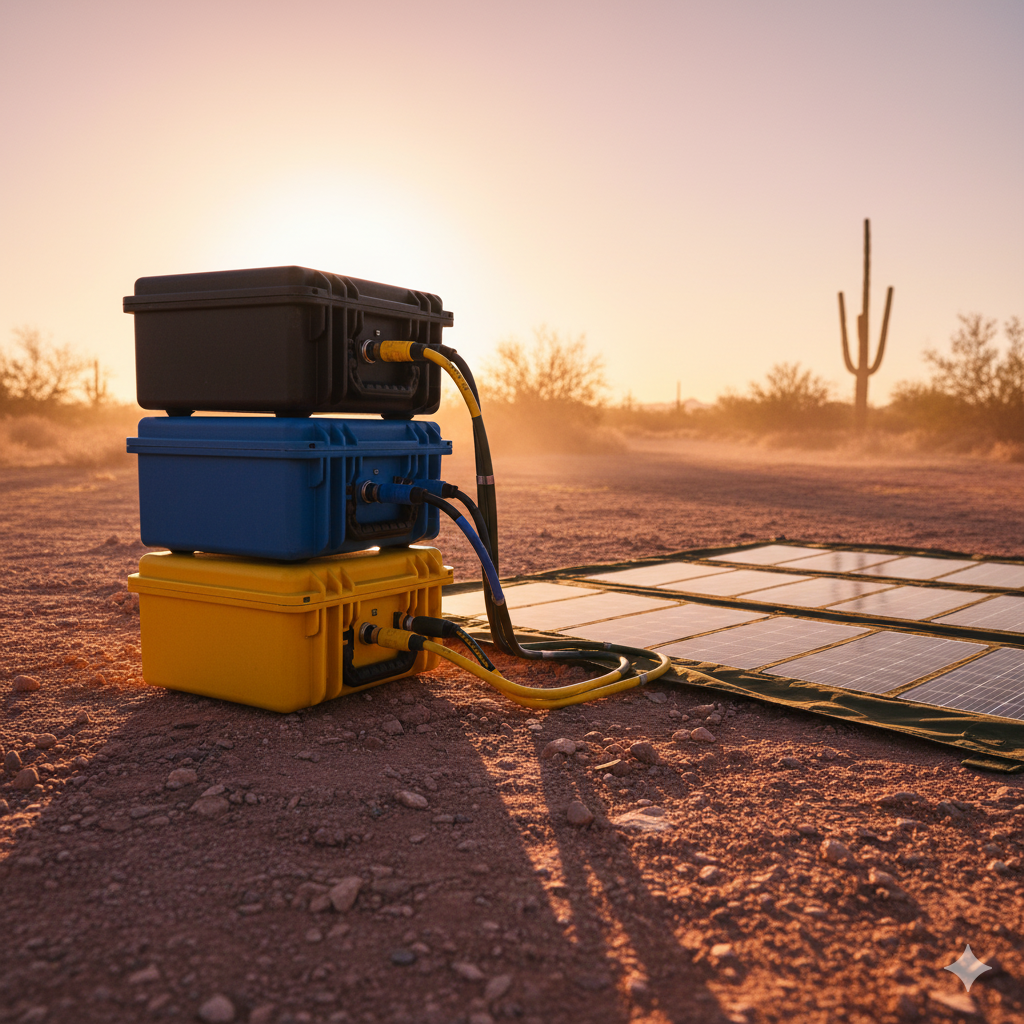
  • Node 7 (Quartzsite, AZ) is proving that a “Pop-Up” command center can host a localized AI that rivals any tech giant’s model.
  • Node 6 (Global Impact) is training township managers to use RIOS to govern their own communities, independent of central bureaucracies.

We are giving rural communities the power to own their own brains.


Conclusion: The Octagon is Alive

The “Line”—the linear, fragile model of the 20th century—is dead.
The “Octagon”—the resilient, multi-directional mesh of the future—is alive.

With the upcoming shipment of our Pilot Explorer unit to Kaabong in January 2026, DeReticular is moving from the theoretical to the physical. We are no longer just coding; we are building.

The nervous system of the Sovereign Economy is officially online.

System Status: GREEN.

The DeReticular Team
Architects of the Sovereign Web.
www.DeReticular.com
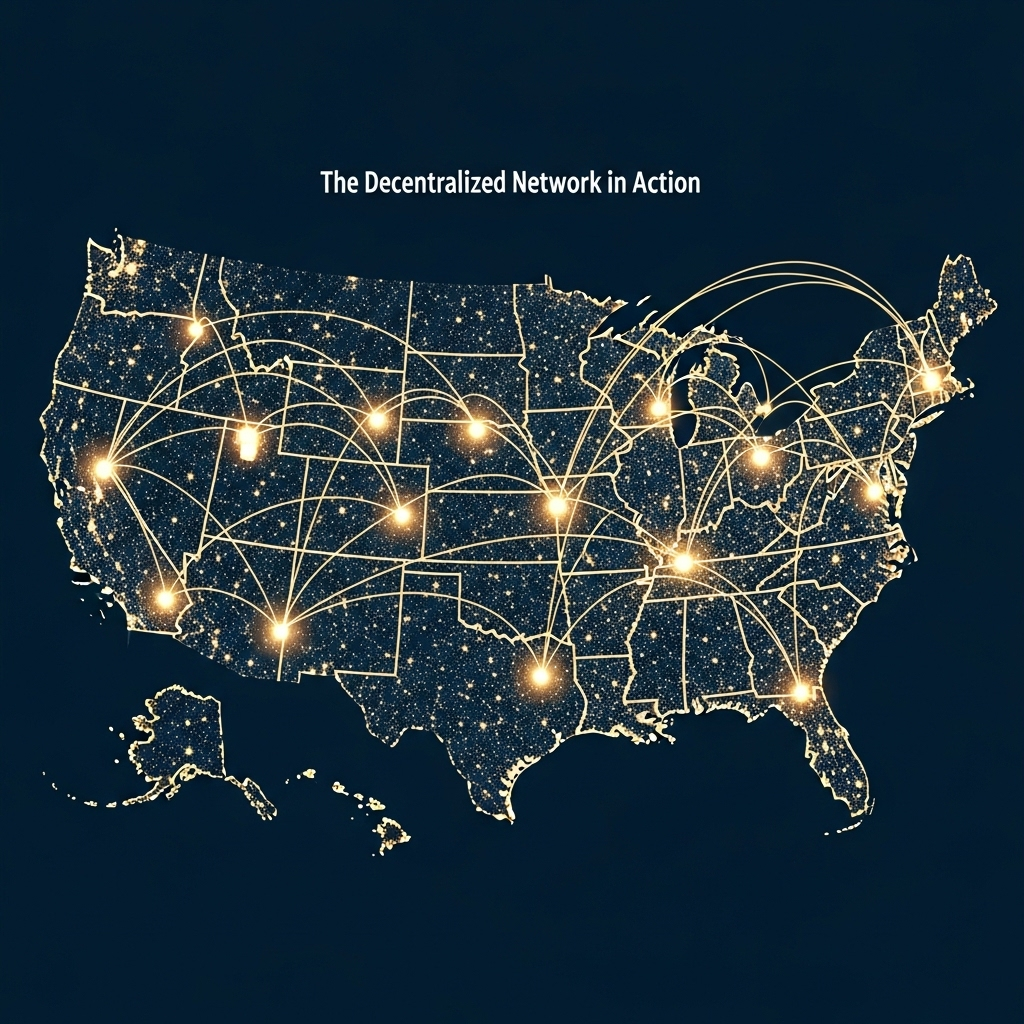
PROJECT OCTAGON The Global Sovereign Infrastructure Mesh

Michael Noel · December 29, 2025 ·


Comprehensive Strategic Report

Date: December 29, 2025
Subject: Deployment of the 8-Node Global Innovation Mesh via RIOS
Architect: DeReticular / The Alliance


1. Executive Summary

Project Octagon is the master deployment strategy for the Rural Infrastructure Operating System (RIOS). It moves beyond theoretical decentralized infrastructure to a physical, planetary implementation. The project consists of deploying 8 interconnected RIOS Pilot Command Centers across diverse geopolitical and climatic zones.

These campuses function not merely as isolated infrastructure but as a distributed planetary computer. Using Digital Twin technology, the network leverages “Federated Learning,” where data gathered in one environment (e.g., the freezing Canadian tundra) optimizes operations in another (e.g., the tropical Ugandan equator).

The Asset: Each node is an $85,000 Sovereign Command Center comprising Solar Power, Starlink Connectivity, Edge Computing, Sensor Arrays, and the RIOS Digital Twin software.


2. The Core Technology: RIOS (Rural Infrastructure Operating System)

RIOS is defined as the “Operating System for America’s Hometowns” and emerging markets. It is the software and hardware layer that allows a community to operate in “Island Mode”—completely independent of national grids or centralized cloud providers.

Key Capabilities:

  • Black Start Capability: The system can reboot a local grid from zero power without external assistance.
  • Data Sovereignty: Data is processed at the edge (on the device). Only the insights or proofs leave the node, ensuring privacy and security.
  • The Digital Twin: Every physical node has a virtual counterpart. The “Systems Architect” node simulates weather patterns, energy loads, and agricultural yields to predict future outputs for all other nodes.

3. The 8 Nodes of the Octagon (Global Campuses)

The “Octagon” refers to the eight strategic locations that form the mesh. Each node has a specific mission to validate a different aspect of the Sovereign Stack.

Node 1: The Logistics & Hospitality Hub (Uganda)

  • Mission: “The Concierge Layer.”
  • Function: Located near the Kaabong industrial site, this node manages the physical movement of people and goods. It utilizes Kurb Kars for autonomous transport and AI agents to handle “Agent-to-Agent” travel bookings for international stakeholders.

Node 2: The Systems Architect / OS HQ (Canada)

  • Mission: “The Brain.”
  • Function: The central software authority. This node pushes global updates and patches to the rest of the Octagon. It hosts the DeReticular Academy, developing AI tutors and teaching environments. Crucially, it manages Federated Learning, using high-performance compute to train AI models that are then pushed to the edge nodes.

Node 3: The Connectivity & Autonomy HQ (Phoenix, AZ)

  • Mission: “The Backhaul & The Wheel.”
  • Function: The R&D center for high-bandwidth connectivity (Trifi Wireless integration) and autonomous mobility. It serves as the Network Operations Center (NOC) and tests “Starlink Bonding” to create unbreakable internet signals.

Node 4: The Green Industrial Anchor (Kaabong, Uganda)

  • Mission: “The Engine.”
  • Function: Situated on a 7,000-acre Smart Eco-Industrial Park. This node controls the Plasma Gasification units (Agra Energy) that convert hemp waste into 10-11 MW of baseload electricity. It is the primary revenue generator, producing industrial output and verified Carbon Credits.

Node 5: The Urban Energy Lab (St. Paul, MN)

  • Mission: “Waste-to-Energy (Cold Context).”
  • Function: A “Digital Twin” to the Uganda energy node. It tests how plasma gasification and RIOS sensors perform in freezing northern winters vs. the tropical equator. This Data Arbitrage helps insurers understand equipment longevity in extreme climates.

Node 6: The Global Impact Node (Location TBD)

  • Mission: “Education & Governance (UN 2.0).”
  • Function: A scholarship slot replacing the original Jerusalem node. It focuses on training township managers to use RIOS for local governance and proving the model as a humanitarian aid package.

Node 7: The R&D Mobile Unit (Quartzsite, AZ)

  • Mission: “Desert Hardening.”
  • Function: A mobile “Pop-up” command center. It stress-tests hardware in the harsh Sonoran Desert before it ships to Africa. It validates the “Expeditionary” capability of RIOS.

Node 8: The Commercial Validator (Client Site)

  • Mission: “The Business Case.”
  • Function: A sold commercial unit ($85k revenue secured). This node proves to investors that the RIOS Command Center is a viable commercial product immediately, not just an R&D experiment.

4. The “Data Flywheel” & Digital Twins

Project Octagon derives its value from the Network Effect. The nodes do not operate in isolation; they constantly improve one another through the Digital Twin mechanism.

A. Federated Learning

The AI architected in Canada (Node 2) analyzes energy efficiency data from the Urban Lab in Minnesota (Node 5). It then pushes a software update to the Industrial Anchor in Uganda (Node 4) to optimize its plasma gasifiers, even though the climates are different. The system “learns” from the cold to optimize for the heat.

B. Data Arbitrage

DeReticular captures high-value datasets by comparing industrial performance across three extremes:

  1. The Desert (Arizona – Heat/Dust)
  2. The Equator (Uganda – Humidity/Biomass)
  3. The Tundra (Canada/Minnesota – Cold/Ice)
    This data is packaged and sold to agricultural insurers and hardware manufacturers who need verified “stress test” data.

C. Predictive Modeling

The Digital Twin allows the network to predict future outputs. For example, by analyzing soil moisture sensors in Node 4 (Uganda), the system can predict hemp biomass yields months in advance. This data is fed into the Agra Energy models to predict exactly how much electricity will be generated, allowing the grid to balance itself before the harvest even happens.


5. Strategic Integration: Monetization via Web3 (zkVerify)

Project Octagon integrates with the Thrive Protocol and zkVerify (Zero-Knowledge Proofs) to monetize the data without revealing trade secrets.

  • Proof of Green: Node 4 generates carbon-negative energy. RIOS uses zkVerify to cryptographically prove this to the blockchain, unlocking high-value Carbon Grants and Credits.
  • Proof of Deployment: The telemetry from the 8 nodes acts as “Proof of Physical Work,” allowing DeReticular to access liquidity pools reserved for Decentralized Physical Infrastructure Networks (DePIN).

6. Conclusion

Project Octagon is the transition from “Software” to “Civilization.” By deploying these 8 campuses, DeReticular is building a resilient, self-healing mesh that turns waste into energy, energy into compute, and compute into sovereign wealth.

Next Milestone: The shipment of the “Pilot Explorer” unit to Kaabong, Uganda in January 2026 marks the official activation of the Octagon.

The Year the Cloud Came Down to Earth Why 2026 Will Be the Age of the “Sovereign Mesh”

Michael Noel · December 29, 2025 ·


A Look Back at the DePIN Revolution of 2025 and a Roadmap for the Year of the Octagon

By The DeReticular Strategy Team
December 29, 2025


Introduction: The hangover after the hype

If you are reading this, you survived 2025. Congratulations.

It was the year the tech industry finally admitted that the “Infinite Cloud” was a myth. Between the energy crises that throttled data centers in Virginia and the privacy scandals that rocked the centralized AI giants, the message became clear: You cannot build the future of intelligence on rented land.

For the Decentralized Physical Infrastructure Networks (DePIN) industry, 2025 was the graduation ceremony. We went from selling crypto-tokens and Raspberry Pis to hobbyists, to deploying industrial-grade infrastructure for serious businesses.

At DeReticular, we spent the last year building the “Brain” of the Rural Infrastructure Operating System (RIOS). We proved—through the dust of Quartzsite and the mud of Uganda—that a community can own its own internet, its own intelligence, and its own destiny.

But that was just the warm-up. If 2025 was the year of Hardware (The Body), 2026 will be the year of Swarm Intelligence (The Mind). Here is what lies ahead for Decentralized IT.


The 2025 Pivot: When “Decentralized” Became “Essential”

Before we look forward, we must respect the shift that just happened. In August 2025, when we published the DePIN Manifesto, the industry was fragmented.

  • The Problem: DePIN projects were silos. One for Wi-Fi, one for sensors, one for storage. None of them talked to each other.
  • The Solution: The “Velcro Principle” (November 2025).

By integrating with Agra Dot Energy (Power) and Kurb Kars (Logistics), DeReticular proved that connectivity is not a standalone product. It is a utility, like water or electricity. The RIOS Power Core 2X showed that code controls carbon. This integration laid the foundation for 2026.


Trend 1: The Rise of “Compute Farming” (The New Cash Crop)

In 2026, the most valuable crop in rural America won’t be corn or soy. It will be Tokens.

We predict a massive explosion in “Compute Farming.”

  • The Context: The world is starving for GPU cycles to train and run “Agentic AI” models. Centralized data centers are out of power and out of space.
  • The 2026 Reality: Farmers and rural landowners will deploy “Sovereign Server Coops.” These are DeReticular nodes, powered by Agra waste-to-energy units, sitting in a barn.
  • The Shift: A farmer will check his dashboard: “Corn is down, but Inference Compute is up 30%.” He will reallocate his Agra fuel to the GPU cluster instead of the grain dryer.

DeReticular’s role? We are the market maker. Our RIOS software will automatically auction this compute power to the highest bidder on the global market.


Trend 2: The “Splinternet” Heals into “The Mesh”

For years, pundits warned of a “Splinternet”—a fractured web where nations wall off their data.
In 2026, we will see the rise of the “Sovereign Mesh.”

Rather than a top-down firewall, this is a bottom-up defense. Communities will build “Octagons”—eight-sided, resilient networks that can stand alone if the main line is cut.

  • The Tech: In 2026, DeReticular will roll out “Swarm-OS.” This allows a cluster of 50 homes to act as a single, super-computer. If one node fails, the data “liquefies” and flows to the neighbors instantly.
  • The Impact: Censorship becomes impossible. Outages become obsolete. The network heals itself like biological tissue.

Trend 3: AI Comes Home (The Great Repatriation)

2025 was the year we realized that “Smart Homes” were actually “Spy Homes.” Your thermostat, your doorbell, and your fridge were all sending data to a server you didn’t own.

2026 will be the year of Local Agentic AI.

  • The Prediction: The “Cloud” will become the “Fog.” We will stop sending raw data to the cloud for processing. Instead, the AI model will travel to you.
  • DeReticular’s Move: We are launching the “Home-Base” Protocol. It allows a homeowner to run a powerful Large Language Model (LLM) on their local DeReticular node. Your AI assistant will live in your closet, not in California. It will know everything about you, but tell no one.

Trend 4: The Workforce Revolution (The Sovereign Systems Architect)

The biggest bottleneck in 2026 won’t be chips or fiber; it will be Talent.
You cannot call Comcast to fix a decentralized, AI-governed, biomass-powered mesh network.

This is why DeReticular is pivoting heavily into Education.

  • The New Job: The Sovereign Systems Architect (SSA).
  • The Role: Part network engineer, part electrician, part data broker. These are the people who will physically build the “Octagon.”
  • The Certification: In Q1 2026, we will open the DeReticular Academy to the public. We aim to certify 10,000 SSAs by year-end. This is the blue-collar job of the 21st century.

Conclusion: The Octagon is Expanding

The “Line”—the linear, fragile model of the 20th century—is dead.
The “Octagon”—the resilient, sovereign model of the future—is just being born.

In 2026, DeReticular stops being just a software company. We become the Operating System for Civilization 2.0.

We aren’t just building a network. We are building a nervous system for a world that is finally waking up.

The future is distributed. Let’s build it.

The DeReticular Team
Architects of the Sovereign Web.
www.DeReticular.com
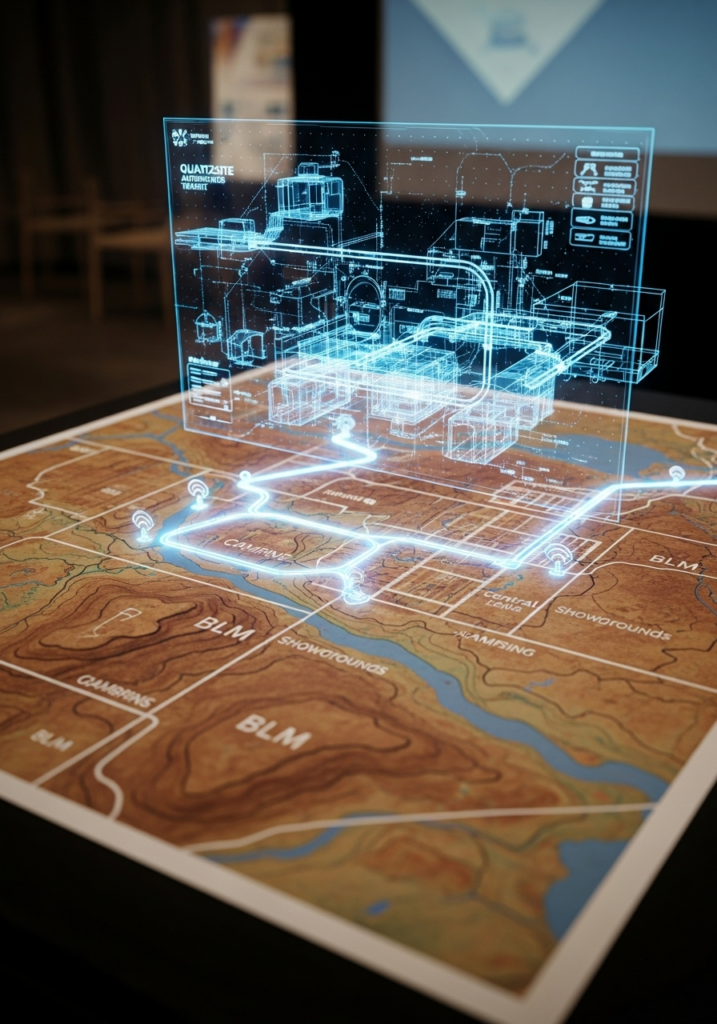
The Great Repatriation How We Built the Nervous System for a Sovereign World

Michael Noel · December 29, 2025 ·


A Short History of DeReticular and the Birth of the Digital Octagon

By The DeReticular Team
December 29, 2025


Introduction: When the Cloud Evaporated

For the last twenty years, the technology industry has operated on a single, unquestioned metaphor: The Cloud.

We were told that “The Cloud” was a magical, ethereal place where our data lived, safe and accessible forever. But in early 2025, the AI revolution hit the physical limits of reality. We learned that “The Cloud” is actually just a concrete building in Northern Virginia consuming as much electricity as a small country. And when the grid wobbled, the Cloud evaporated.

At DeReticular, we looked at this crumbling centralized model and realized the world didn’t need a bigger Cloud. It needed a better Edge.

We asked a radical question: What if the internet wasn’t a line connecting you to a server, but a web connecting you to your neighbors?

This is the story of how DeReticular went from a theoretical whitepaper to the “Brain” of the Rural Infrastructure Operating System (RIOS).


Phase I: The DePIN Manifesto (August 2025)

Our journey began in the sweltering heat of August 2025 with the publication of “The Future is Decentralized.”

At the time, “DePIN” (Decentralized Physical Infrastructure Networks) was a buzzword used to sell crypto tokens. We wanted to reclaim it for engineering. We argued that the only way to support “Agentic AI”—artificial intelligence that acts on your behalf—was to move the compute power out of the data center and into the wild.

We launched the “Karamoja Blueprint” on August 19. While others were testing 5G in Manhattan, we were designing mesh networks for rural Uganda. We figured if we could build a self-healing network in a region with zero infrastructure, doing it in rural America would be a breeze.

Our thesis was simple: Civilization is too fragile to rely on a single wire.


Phase II: The Architect & The Alliance (September 2025)

By September, we realized that software alone couldn’t save the world. You can’t code your way out of a blackout.

We needed a body. We found it in The Alliance.

  • Agra Dot Energy provided the heart (Power).
  • Kurb Kars provided the muscle (Logistics).
  • DeReticular provided the Brain.

On September 19, we released “The Blueprint for a New Economy.” We formally took on the role of “The Architect.” Our job was to build the Rural Infrastructure Operating System (RIOS)—the software layer that orchestrates the generators, the robots, and the data.

We stopped building apps. We started building a Digital Nervous System.


Phase III: The Rural Turing Test (October 2025)

October was the turning point. The industry talks about the “Turing Test” (can a machine think?). We proposed the “Rural Turing Test”: Can a community think for itself?

If the fiber optic cable is cut, does the town go dark? Or does it “swarm”?

On October 12, in the Quartzsite Initiative (our Live Lab in Arizona), we proved the swarm theory. We deployed local nodes that allowed DAOS R US tourists and Kurb Kars bots to communicate with zero latency, even without a connection to the global internet.

We proved that Connectivity is a liquid, not a solid. It shouldn’t flow down a pipe; it should fill the air like oxygen.


Phase IV: The RIOS Power Core & The Velcro Principle (November 2025)

In November, we bridged the gap between silicon and soil.

On November 8, we announced “The Velcro Principle.” This was the integration of our code with Agra’s hardware.
On November 22, we released the RIOS Power Core 2X. This wasn’t just a server; it was a diplomat. It allowed the AI to talk to the Generator.

  • Scenario: A massive AI workload hits the local node.
  • Old Way: The server crashes or the grid browns out.
  • The RIOS Way: The DeReticular node signals the Agra Power Core. The Agra engine throttles up its plasma gasification. The energy is generated exactly when the thought occurs.

We created the first Bi-Directional Infrastructure. The code controls the carbon.


Phase V: The Great Repatriation (December 2025)

As 2025 ends, we are spearheading a movement we call “The Great Repatriation.”

For two decades, we exported our intelligence. We sent our photos, our documents, and our business logic to servers owned by three massive corporations.
In our December 12 thesis, “The Anchor,” we argued that it is time to bring the intelligence home.

We are deploying “Fortresses in the Fields”—secure, off-grid data havens powered by Agra and run on DeReticular nodes. We are giving rural communities the ability to host their own AI agents. We are turning “Flyover Country” into “Compute Country.”


Conclusion: The Birth of the Octagon

We are declaring the death of The Line.
Linear systems—linear power, linear supply chains, linear internet—break.

We are building The Octagon.
An octagon has eight sides. If you push on one, the others reinforce it. Our mesh networks are octagonal. They are resilient, redundant, and sovereign.

In 2026, DeReticular stops being just a tech company. We become an **Education

DeReticular Detailed Timeline of Events August – December 2025

Michael Noel · December 29, 2025 ·

Detailed Timeline of Events August – December 2025

The following timeline tracks the rapid consolidation of The Alliance—a sovereign infrastructure ecosystem comprised of DeReticular (The Brain), Agra Dot Energy (The Heart), Kurb Kars (The Muscle), Digital Outdoor Adventures R US (The Spirit), and Biz Builder Mike (The Conductor).[1][2][3][4]

August 2025: The Manifesto & The African Testbed

  • August 14: DeReticular publishes “The Future is Decentralized,” a 5-part series laying the philosophical groundwork for DePIN (Decentralized Physical Infrastructure Networks).[1][2][3][4]
  • August 19: The “Karamoja Blueprint” is unveiled.[1][2][3][4] DeReticular outlines a vision to transform Karamoja, Uganda, into a connected, autonomous economic zone using “Infrastructure in a Box.”[1][2][3][4]
  • August 31: “Code Meets Soil”: Agra Energy Uganda is introduced.[1][2][3][4] The ecosystem commits to using agricultural waste as the primary fuel source for AI computation.[1][2][3][4]

September 2025: The Phoenix Protocol & The Alliance[1][2][3][4]

  • September 6: Kurb Kars publishes “The Green Light is On,” positioning autonomous logistics as the physical packet-switching layer of the new economy.[1][2][3][4]
  • September 16: Implementation of “The Phoenix Protocol,” the coordinated marketing strategy to unify the five brands into a single “Sovereign Stack.”[1][2][3][4]
  • September 19: DeReticular releases “The Blueprint for a New Economy,” establishing the “Sovereign City” model.[1][2][3][4]
  • September 26: “The Builders Journey”: Biz Builder Mike defines the “Conductor” role, ensuring the tech (DeReticular) and power (Agra) have a viable economic wrapper.

October 2025: The Rural Turing Test & The Live Labs

  • October 1: The Rural Infrastructure Operating System (RIOS) is officially defined as the “Operating System for America’s Hometowns.”[1][2][3][4]
  • October 11:“The Rural Turing Test”: The Alliance poses the central challenge of Q4: Can a community survive and thrive if cut off from the global grid?[1][2][3][4]
    • Agra’s Role: “The Intelligent Resource Architect” (Powering the test).
    • DeReticular’s Role: “The Meta-Architect” (Orchestrating the test).
  • October 12: Quartzsite Initiative: The “Live Lab” activates in Arizona.[1][2][3][4] Kurb Kars and DAOS R US deploy “Digital Pavement” and autonomous rovers to stress-test the mesh network in a real-world, off-grid environment.[1][2][3][4]
  • October 23: “The Plasma Project”: Plans for a 7,000-acre RIOS campus in Uganda are released, featuring a collocated Agra power plant and DeReticular compute cluster.[1][2][3][4]

November 2025: The Velcro Principle & “Hard” Infrastructure[1][2][3][4]

  • November 1: DeReticular launches the RIOS Mobile product line (Pillars I, II, and III), including the “Off-Grid Command Center” and Starlink integration kits.[1][2][3][4]
  • November 8: “The Velcro Principle”: The most significant strategic shift of the year.[1][2][3][4] The five companies announce they are “Velcro-locked” into a single organism.[1][2][3][4] The tagline serves as a warning to competitors: “The Era of the Operator is Over; The Era of the Architect Begins.”
  • November 22:The Hardware Drop:
    • Agra releases the SPS-1MW Flagship (Power).[1][2][3][4]
    • DeReticular releases the RIOS Power Core 2X (The interface between AI and Energy).[1][2][3][4]
  • November 25: DeReticular formally introduces the “Sovereign Systems Architect (SSA)” certification, moving from selling hardware to training a workforce.[1][2][3][4]

December 2025: The Great Repatriation & The Octagon

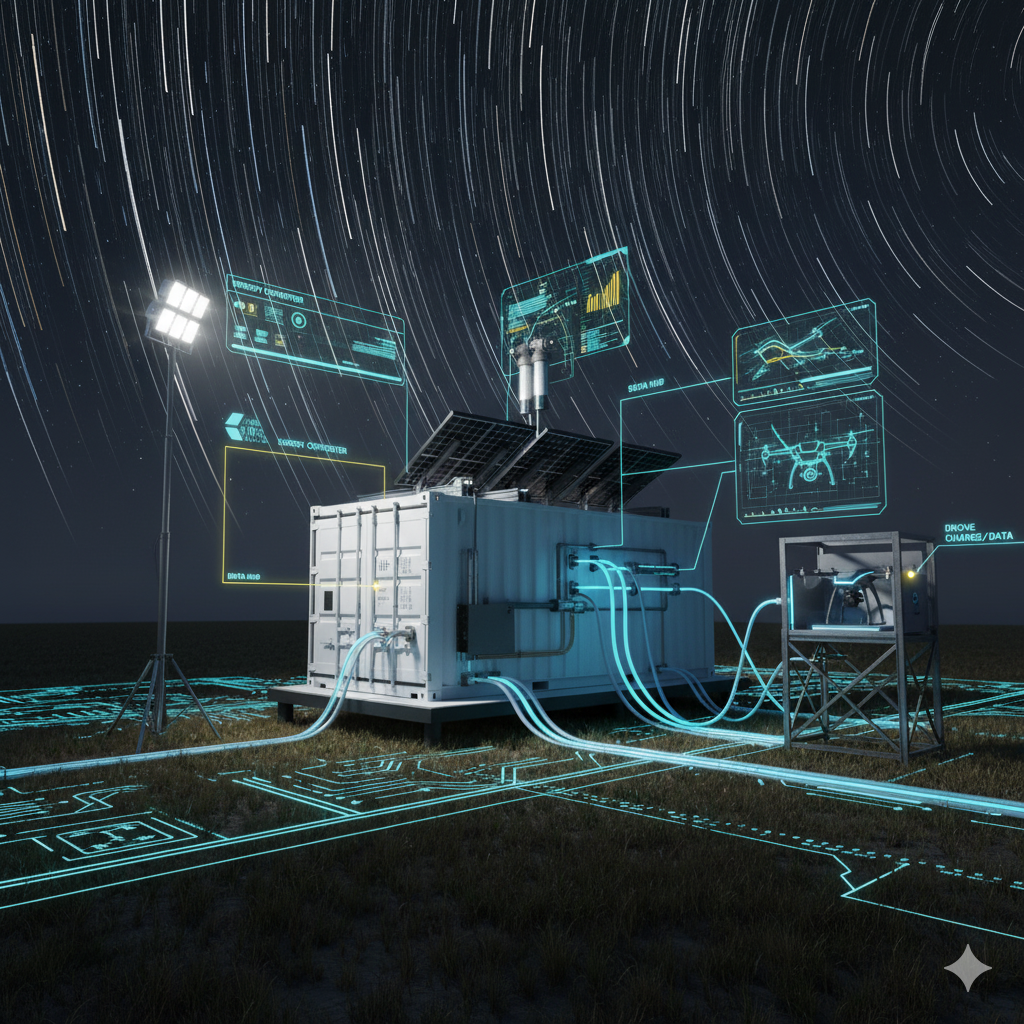
  • December 8: “The Anchor”: DeReticular unveils the RIOS Pilot Standard, a data center in a 10ft container, arguing that “The Cloud is just someone else’s computer; it’s time to build your own.”[1][2][3][4]
  • December 12: “The Great Repatriation”: DeReticular and Agra jointly publish findings that “Agentic AI” demands a new home—secure, off-grid farms (“Fortresses in the Fields”)—to escape grid instability.[1][2][3][4]
  • December 17: UAIC Standard: DeReticular proposes the “Universal Advanced Infrastructure Compliance” standard to replace outdated building codes for autonomous zones.[1][2][3][4]
  • December 28: “The Death of the Line and the Birth of the Octagon”: The year-end manifesto.[1][2][3][4] DeReticular declares that linear supply chains are dead, replaced by the “Octagon”—a resilient, multi-directional node structure that can stand alone or network together.[1][2][3][4]

REPORT: The Death of the Line and the Birth of the Octagon

To: Sovereign Systems Architects, Alliance Partners, and Regional Directors
From: DeReticular (The Digital Nervous System)
Date: December 29, 2025
Subject: 2025 Retrospective: Rewiring Reality for the Age of Autonomy[1][2][3][4]

1. Executive Summary: The Geometry of Survival

For the last century, civilization was built on The Line.[1][2][3][4]

  • Linear Power: From a central plant, down a long wire, to your socket.[1][2][3][4]
  • Linear Logistics: From a central factory, across a long ocean, to your shelf.[1][2][3][4]
  • Linear Data: From a central server farm, through a long fiber cable, to your screen.[1][2][3][4]

In 2025, The Line snapped.[1][2][3][4] Grid instability, supply chain fractures, and data sovereignty crises proved that linear systems are efficient but fragile.[1][2][3][4]

This report details DeReticular’s work in Q4 2025 to replace The Line with The Octagon.[1][2][3][4] We have successfully deployed the Rural Infrastructure Operating System (RIOS), a mesh-based architecture that allows communities to function as autonomous, eight-sided nodes—resilient from every angle, yet capable of swarming together.[1][2][3][4]

2. The “Velcro Principle”: The Architecture of the Octagon

On November 8, we announced “The Velcro Principle.” This was not a marketing slogan; it was an engineering mandate. In an Octagonal system, every side must reinforce the other.[1][2][3][4] We successfully integrated our partners into the RIOS Kernel:

  • The Heart (Agra Dot Energy): We no longer treat power as an external utility.[1][2][3][4] The RIOS Power Core 2X (released Nov 22) creates a bi-directional “handshake” between the generator and the GPU.[1][2][3][4] If the AI needs to “think” harder, the Agra engine automatically ramps up.[1][2][3][4]
  • The Muscle (Kurb Kars): We do not just route data; we route matter.[1][2][3][4] Our mesh network now guides the Kurb Kars autonomous fleet.[1][2][3][4] The “Digital Pavement” deployed in Quartzsite (Oct 12) proved that connectivity is the road.[1][2][3][4]
  • The Conductor (Biz Builder Mike): We solved the “compliance lag.” By embedding the UAIC (Universal Advanced Infrastructure Compliance) standards into the RIOS code, every node we deploy is pre-compliant with the new economy’s rules.[1][2][3][4]

3. “The Great Repatriation”: Bringing Intelligence Home

In December, we observed a critical shift in the AI market: Agentic AI is leaving the centralized cloud.[1][2][3][4]

Complex AI Agents require:

  1. Zero Latency: They cannot wait for a signal to travel to Virginia and back.[1][2][3][4]
  2. Absolute Uptime: They cannot tolerate a 2-second grid brownout.
  3. Data Sovereignty: They cannot live on a server owned by a competitor.[1][2][3][4]

Our deployment of the RIOS Pilot Standard (The Anchor) and the RIOS Pilot Expeditionary (The Suitcase) has capitalized on this shift.[1][2][3][4] We are not just building “edge computing”; we are repatriating the world’s intelligence back to the soil where the energy is generated.[1][2][3][4] We have proven that the safest place for a supercomputer is a “Fortress in the Fields”—a self-powered Agra farm running DeReticular nodes.[1][2][3][4]

4. Strategic Outlook: 2026 is the Year of the Mesh

We end 2025 having passed the “Rural Turing Test.”[1][2][3][4] We proved in Uganda (The Karamoja Blueprint) and Arizona (The Quartzsite Initiative) that a RIOS-enabled community can survive without the legacy grid.[1][2][3][4]

In 2026, we move from Survival to Thriving.[1][2][3][4]

  • The Octagon Expands: We will begin tessellating these nodes. When two “Sovereign Cities” connect, they do not form a line; they form a stronger mesh.[1][2][3][4]
  • The Tokenization of Trust: We will activate the “Forbidden Token” protocols (hinted at in our Dec 13 release) to allow these nodes to trade energy and compute capacity autonomously.

The Era of the Operator is dead.[1][2][3][4] The Era of the Architect has begun.[1][2][3][4]

Signed,

The DeReticular Team
Architects of the Sovereign Web.
*www.DeReticular.com*[[1](https://www.google.com/url?sa=E&q=https%3A%2F%2Fkurbkars.com%2Fpost-sitemap.xml)][[2](https://www.google.com/url?sa=E&q=https%3A%2F%2Fbizbuildermike.com%2Fpost-sitemap.xml)][[3](https://www.google.com/url?sa=E&q=https%3A%2F%2Fagra.energy%2Fpost-sitemap.xml)][[4](https://www.google.com/url?sa=E&q=https%3A%2F%2Fdereticular.com%2Fpost-sitemap.xml)]

Sources help

  1. kurbkars.com
  2. bizbuildermike.com
  3. agra.energy
  4. dereticular.com
  • « Go to Previous Page
  • Page 1
  • Interim pages omitted …
  • Page 6
  • Page 7
  • Page 8
  • Page 9
  • Page 10
  • Interim pages omitted …
  • Page 25
  • Go to Next Page »

DeReticular

Copyright © 2026 · Monochrome Pro on Genesis Framework · WordPress · Log in