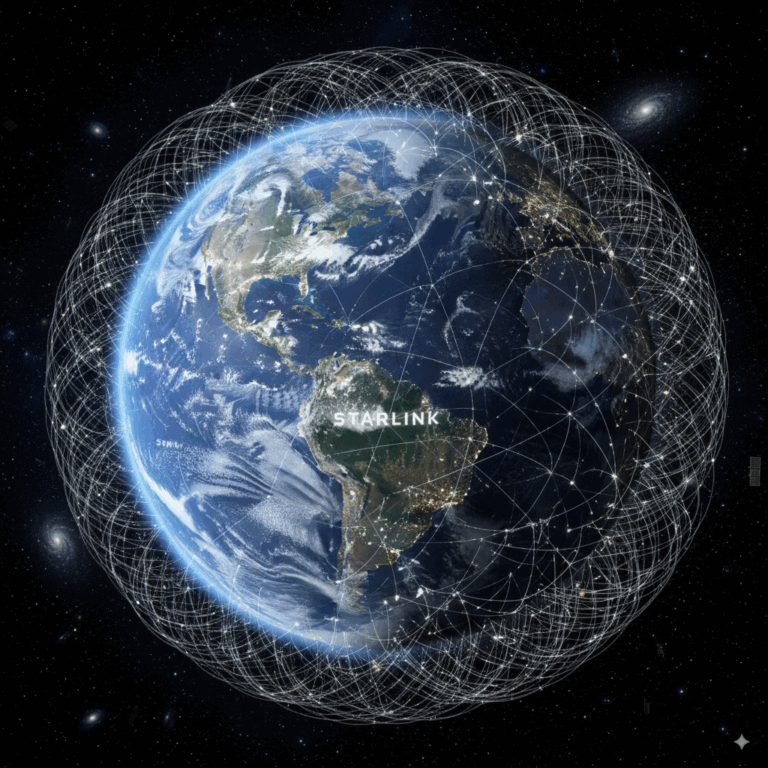
The Great Repatriation How We Built the Nervous System for a Sovereign World
A Short History of DeReticular and the Birth of the Digital Octagon
By The DeReticular Team
December 29, 2025
Introduction: When the Cloud Evaporated
For the last twenty years, the technology industry has operated on a single, unquestioned metaphor: The Cloud.
We were told that “The Cloud” was a magical, ethereal place where our data lived, safe and accessible forever. But in early 2025, the AI revolution hit the physical limits of reality. We learned that “The Cloud” is actually just a concrete building in Northern Virginia consuming as much electricity as a small country. And when the grid wobbled, the Cloud evaporated.
At DeReticular, we looked at this crumbling centralized model and realized the world didn’t need a bigger Cloud. It needed a better Edge.
We asked a radical question: What if the internet wasn’t a line connecting you to a server, but a web connecting you to your neighbors?
This is the story of how DeReticular went from a theoretical whitepaper to the “Brain” of the Rural Infrastructure Operating System (RIOS).
Phase I: The DePIN Manifesto (August 2025)
Our journey began in the sweltering heat of August 2025 with the publication of “The Future is Decentralized.”
At the time, “DePIN” (Decentralized Physical Infrastructure Networks) was a buzzword used to sell crypto tokens. We wanted to reclaim it for engineering. We argued that the only way to support “Agentic AI”—artificial intelligence that acts on your behalf—was to move the compute power out of the data center and into the wild.
We launched the “Karamoja Blueprint” on August 19. While others were testing 5G in Manhattan, we were designing mesh networks for rural Uganda. We figured if we could build a self-healing network in a region with zero infrastructure, doing it in rural America would be a breeze.
Our thesis was simple: Civilization is too fragile to rely on a single wire.
Phase II: The Architect & The Alliance (September 2025)
By September, we realized that software alone couldn’t save the world. You can’t code your way out of a blackout.
We needed a body. We found it in The Alliance.
- Agra Dot Energy provided the heart (Power).
- Kurb Kars provided the muscle (Logistics).
- DeReticular provided the Brain.
On September 19, we released “The Blueprint for a New Economy.” We formally took on the role of “The Architect.” Our job was to build the Rural Infrastructure Operating System (RIOS)—the software layer that orchestrates the generators, the robots, and the data.
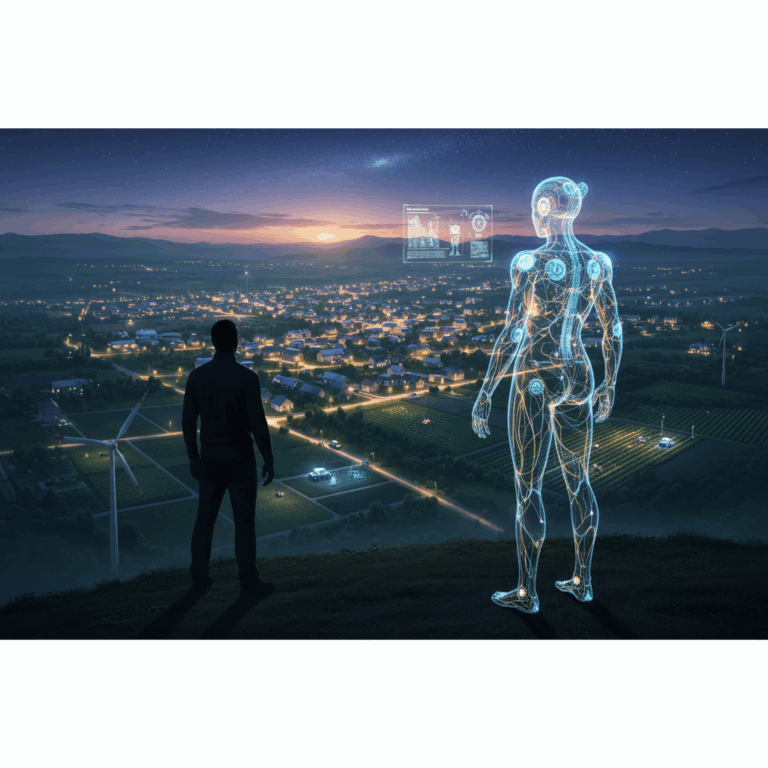
We stopped building apps. We started building a Digital Nervous System.
Phase III: The Rural Turing Test (October 2025)
October was the turning point. The industry talks about the “Turing Test” (can a machine think?). We proposed the “Rural Turing Test”: Can a community think for itself?
If the fiber optic cable is cut, does the town go dark? Or does it “swarm”?
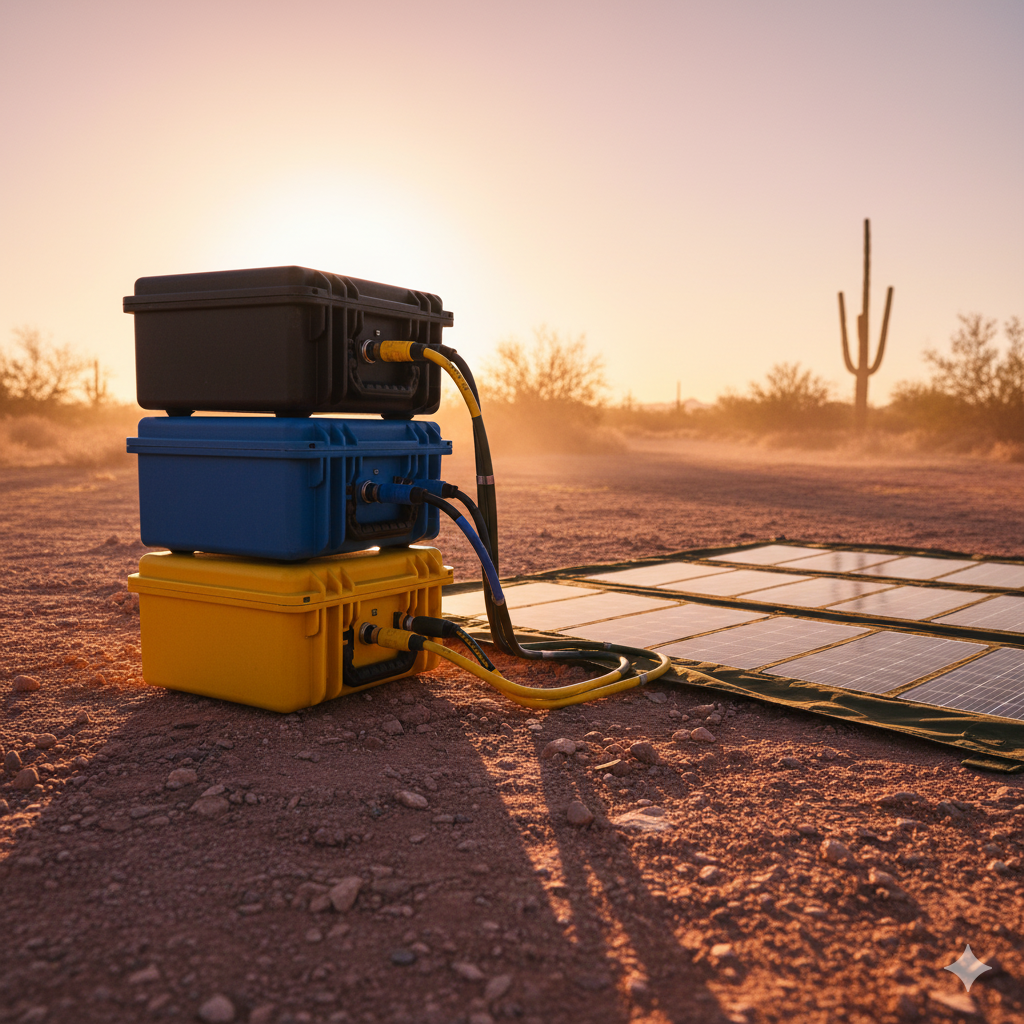
On October 12, in the Quartzsite Initiative (our Live Lab in Arizona), we proved the swarm theory. We deployed local nodes that allowed DAOS R US tourists and Kurb Kars bots to communicate with zero latency, even without a connection to the global internet.
We proved that Connectivity is a liquid, not a solid. It shouldn’t flow down a pipe; it should fill the air like oxygen.
Phase IV: The RIOS Power Core & The Velcro Principle (November 2025)
In November, we bridged the gap between silicon and soil.
On November 8, we announced “The Velcro Principle.” This was the integration of our code with Agra’s hardware.
On November 22, we released the RIOS Power Core 2X. This wasn’t just a server; it was a diplomat. It allowed the AI to talk to the Generator.
- Scenario: A massive AI workload hits the local node.
- Old Way: The server crashes or the grid browns out.
- The RIOS Way: The DeReticular node signals the Agra Power Core. The Agra engine throttles up its plasma gasification. The energy is generated exactly when the thought occurs.
We created the first Bi-Directional Infrastructure. The code controls the carbon.
Phase V: The Great Repatriation (December 2025)
As 2025 ends, we are spearheading a movement we call “The Great Repatriation.”
For two decades, we exported our intelligence. We sent our photos, our documents, and our business logic to servers owned by three massive corporations.
In our December 12 thesis, “The Anchor,” we argued that it is time to bring the intelligence home.
We are deploying “Fortresses in the Fields”—secure, off-grid data havens powered by Agra and run on DeReticular nodes. We are giving rural communities the ability to host their own AI agents. We are turning “Flyover Country” into “Compute Country.”
Conclusion: The Birth of the Octagon
We are declaring the death of The Line.
Linear systems—linear power, linear supply chains, linear internet—break.
We are building The Octagon.
An octagon has eight sides. If you push on one, the others reinforce it. Our mesh networks are octagonal. They are resilient, redundant, and sovereign.
In 2026, DeReticular stops being just a tech company. We become an **Education