PROJECT OCTAGON The Global Sovereign Infrastructure Mesh
Comprehensive Strategic Report
Date: December 29, 2025
Subject: Deployment of the 8-Node Global Innovation Mesh via RIOS
Architect: DeReticular / The Alliance
1. Executive Summary
Project Octagon is the master deployment strategy for the Rural Infrastructure Operating System (RIOS). It moves beyond theoretical decentralized infrastructure to a physical, planetary implementation. The project consists of deploying 8 interconnected RIOS Pilot Command Centers across diverse geopolitical and climatic zones.
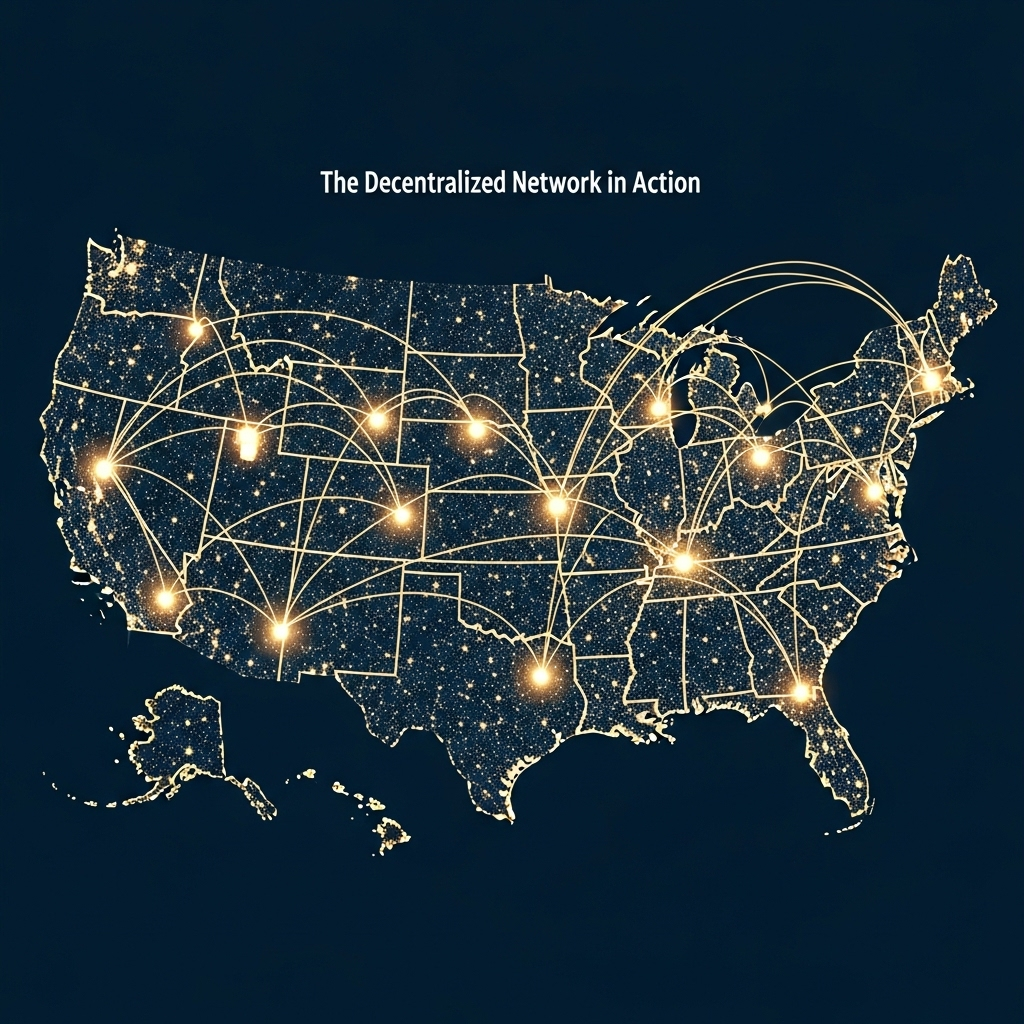
These campuses function not merely as isolated infrastructure but as a distributed planetary computer. Using Digital Twin technology, the network leverages “Federated Learning,” where data gathered in one environment (e.g., the freezing Canadian tundra) optimizes operations in another (e.g., the tropical Ugandan equator).
The Asset: Each node is an $85,000 Sovereign Command Center comprising Solar Power, Starlink Connectivity, Edge Computing, Sensor Arrays, and the RIOS Digital Twin software.
2. The Core Technology: RIOS (Rural Infrastructure Operating System)
RIOS is defined as the “Operating System for America’s Hometowns” and emerging markets. It is the software and hardware layer that allows a community to operate in “Island Mode”—completely independent of national grids or centralized cloud providers.
Key Capabilities:
- Black Start Capability: The system can reboot a local grid from zero power without external assistance.
- Data Sovereignty: Data is processed at the edge (on the device). Only the insights or proofs leave the node, ensuring privacy and security.
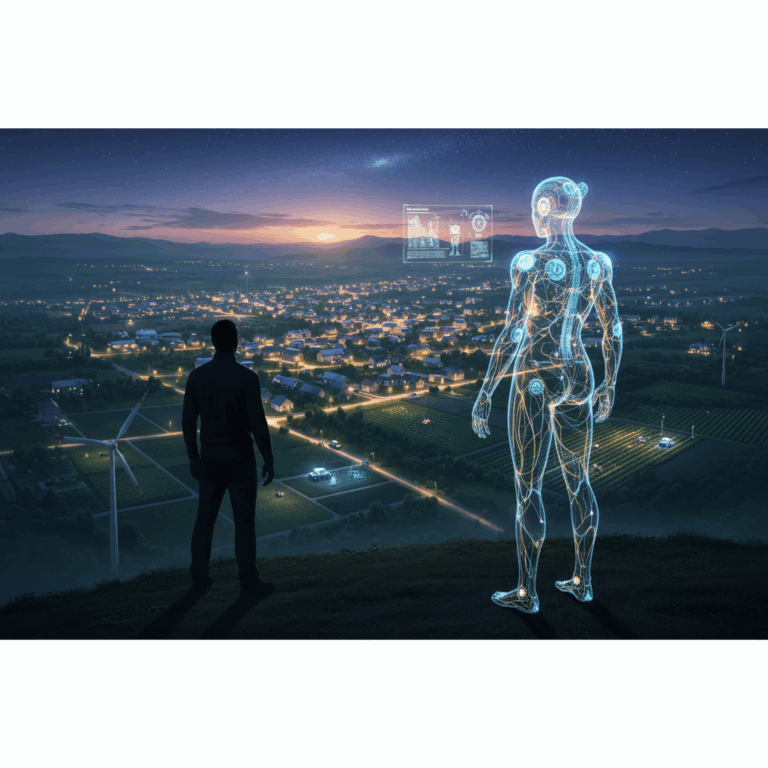
- The Digital Twin: Every physical node has a virtual counterpart. The “Systems Architect” node simulates weather patterns, energy loads, and agricultural yields to predict future outputs for all other nodes.
3. The 8 Nodes of the Octagon (Global Campuses)
The “Octagon” refers to the eight strategic locations that form the mesh. Each node has a specific mission to validate a different aspect of the Sovereign Stack.
Node 1: The Logistics & Hospitality Hub (Uganda)
- Mission: “The Concierge Layer.”
- Function: Located near the Kaabong industrial site, this node manages the physical movement of people and goods. It utilizes Kurb Kars for autonomous transport and AI agents to handle “Agent-to-Agent” travel bookings for international stakeholders.
Node 2: The Systems Architect / OS HQ (Canada)
- Mission: “The Brain.”
- Function: The central software authority. This node pushes global updates and patches to the rest of the Octagon. It hosts the DeReticular Academy, developing AI tutors and teaching environments. Crucially, it manages Federated Learning, using high-performance compute to train AI models that are then pushed to the edge nodes.
Node 3: The Connectivity & Autonomy HQ (Phoenix, AZ)
- Mission: “The Backhaul & The Wheel.”
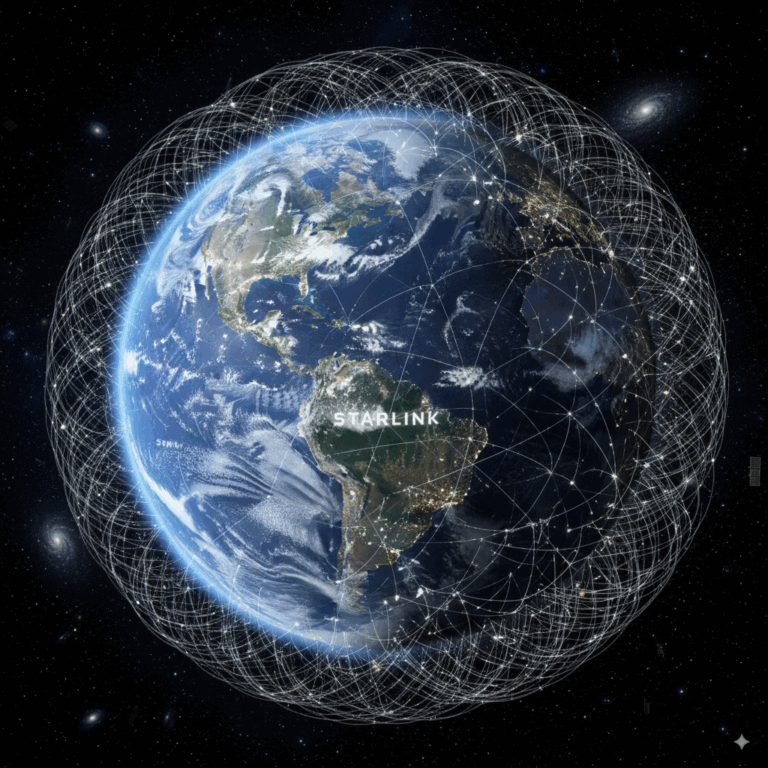
- Function: The R&D center for high-bandwidth connectivity (Trifi Wireless integration) and autonomous mobility. It serves as the Network Operations Center (NOC) and tests “Starlink Bonding” to create unbreakable internet signals.
Node 4: The Green Industrial Anchor (Kaabong, Uganda)
- Mission: “The Engine.”
- Function: Situated on a 7,000-acre Smart Eco-Industrial Park. This node controls the Plasma Gasification units (Agra Energy) that convert hemp waste into 10-11 MW of baseload electricity. It is the primary revenue generator, producing industrial output and verified Carbon Credits.
Node 5: The Urban Energy Lab (St. Paul, MN)
- Mission: “Waste-to-Energy (Cold Context).”
- Function: A “Digital Twin” to the Uganda energy node. It tests how plasma gasification and RIOS sensors perform in freezing northern winters vs. the tropical equator. This Data Arbitrage helps insurers understand equipment longevity in extreme climates.
Node 6: The Global Impact Node (Location TBD)
- Mission: “Education & Governance (UN 2.0).”
- Function: A scholarship slot replacing the original Jerusalem node. It focuses on training township managers to use RIOS for local governance and proving the model as a humanitarian aid package.
Node 7: The R&D Mobile Unit (Quartzsite, AZ)
- Mission: “Desert Hardening.”
- Function: A mobile “Pop-up” command center. It stress-tests hardware in the harsh Sonoran Desert before it ships to Africa. It validates the “Expeditionary” capability of RIOS.
Node 8: The Commercial Validator (Client Site)
- Mission: “The Business Case.”
- Function: A sold commercial unit ($85k revenue secured). This node proves to investors that the RIOS Command Center is a viable commercial product immediately, not just an R&D experiment.
4. The “Data Flywheel” & Digital Twins
Project Octagon derives its value from the Network Effect. The nodes do not operate in isolation; they constantly improve one another through the Digital Twin mechanism.
A. Federated Learning
The AI architected in Canada (Node 2) analyzes energy efficiency data from the Urban Lab in Minnesota (Node 5). It then pushes a software update to the Industrial Anchor in Uganda (Node 4) to optimize its plasma gasifiers, even though the climates are different. The system “learns” from the cold to optimize for the heat.
B. Data Arbitrage
DeReticular captures high-value datasets by comparing industrial performance across three extremes:
- The Desert (Arizona – Heat/Dust)
- The Equator (Uganda – Humidity/Biomass)
- The Tundra (Canada/Minnesota – Cold/Ice)
This data is packaged and sold to agricultural insurers and hardware manufacturers who need verified “stress test” data.
C. Predictive Modeling
The Digital Twin allows the network to predict future outputs. For example, by analyzing soil moisture sensors in Node 4 (Uganda), the system can predict hemp biomass yields months in advance. This data is fed into the Agra Energy models to predict exactly how much electricity will be generated, allowing the grid to balance itself before the harvest even happens.
5. Strategic Integration: Monetization via Web3 (zkVerify)
Project Octagon integrates with the Thrive Protocol and zkVerify (Zero-Knowledge Proofs) to monetize the data without revealing trade secrets.
- Proof of Green: Node 4 generates carbon-negative energy. RIOS uses zkVerify to cryptographically prove this to the blockchain, unlocking high-value Carbon Grants and Credits.
- Proof of Deployment: The telemetry from the 8 nodes acts as “Proof of Physical Work,” allowing DeReticular to access liquidity pools reserved for Decentralized Physical Infrastructure Networks (DePIN).
6. Conclusion
Project Octagon is the transition from “Software” to “Civilization.” By deploying these 8 campuses, DeReticular is building a resilient, self-healing mesh that turns waste into energy, energy into compute, and compute into sovereign wealth.
Next Milestone: The shipment of the “Pilot Explorer” unit to Kaabong, Uganda in January 2026 marks the official activation of the Octagon.