• Skip to primary navigation
  • Skip to main content
DeReticular

DeReticular

Local Autonomy. National Security. Total Sovereignty.

  • Solutions
    • Municipalities
    • Energy
    • Industrial
    • Defense
  • Infrastructure
  • Intelligence
  • Company
  • Request Municipal Audit
  • Show Search
Hide Search
You are here: Home / Archives for DeReticular

DeReticular

The Unbreakable Node: Why We Built the RIOS Far X

Michael Noel · November 28, 2025 ·

By Michael Noel, Founder of DeReticular[1][2]

In the lexicon of modern infrastructure, there is a word that has been quietly weaponized against rural communities: “Coverage.”

Telecomm giants sell you “coverage.” They show you a map, painted in reassuring shades of magenta or blue, claiming your farm, your town, or your job site is connected. But anyone who actually lives at the edge knows the truth. “Coverage” is a lie. Coverage is a signal bar that appears when you stand on the roof but vanishes when you walk into the barn. Coverage is a connection that works on Tuesday but fails during the Wednesday storm.

At DeReticular, we don’t care about “coverage.” We care about Dominance.

If you are building a sovereign economy—if you are running autonomous tractors, syncing distributed ledgers, or training AI models in the field—you cannot rely on a signal that is merely “present.”[3] You need a signal that is inevitable.

That is why we built the RIOS Far X – Industrial Wi-Fi 6 Mesh Router.

The Problem with “Consumer” Gear

When we started deploying the RIOS-CC-1000 Compute Clusters, we hit a physical wall. We had these massive engines of economic power—supercomputers sitting in shipping containers—but the “last mile” to connect them to the actual work (the sensors, the drones, the people) was being bridged by plastic routers designed for suburban living rooms.

We tried everything. We bought the “Pro” gear. We bought the “Mesh” systems. They all failed. They melted in the Arizona sun. They choked on the dust of the Great Plains. They required cloud subscriptions to “unlock” features we already paid for. And worst of all, when the internet went down, they became expensive paperweights.

We realized that if we wanted a network that could survive the reality of the Rural Infrastructure Operating System (RIOS), we had to build it ourselves.

Enter the Far X: The Cognitive Mesh

The RIOS Far X is not an access point. It is a territorial claim.

We engineered it with three non-negotiable mandates: Ruggedization, Autonomy, and Intelligence.

1. Built Like a Tank (Literally)

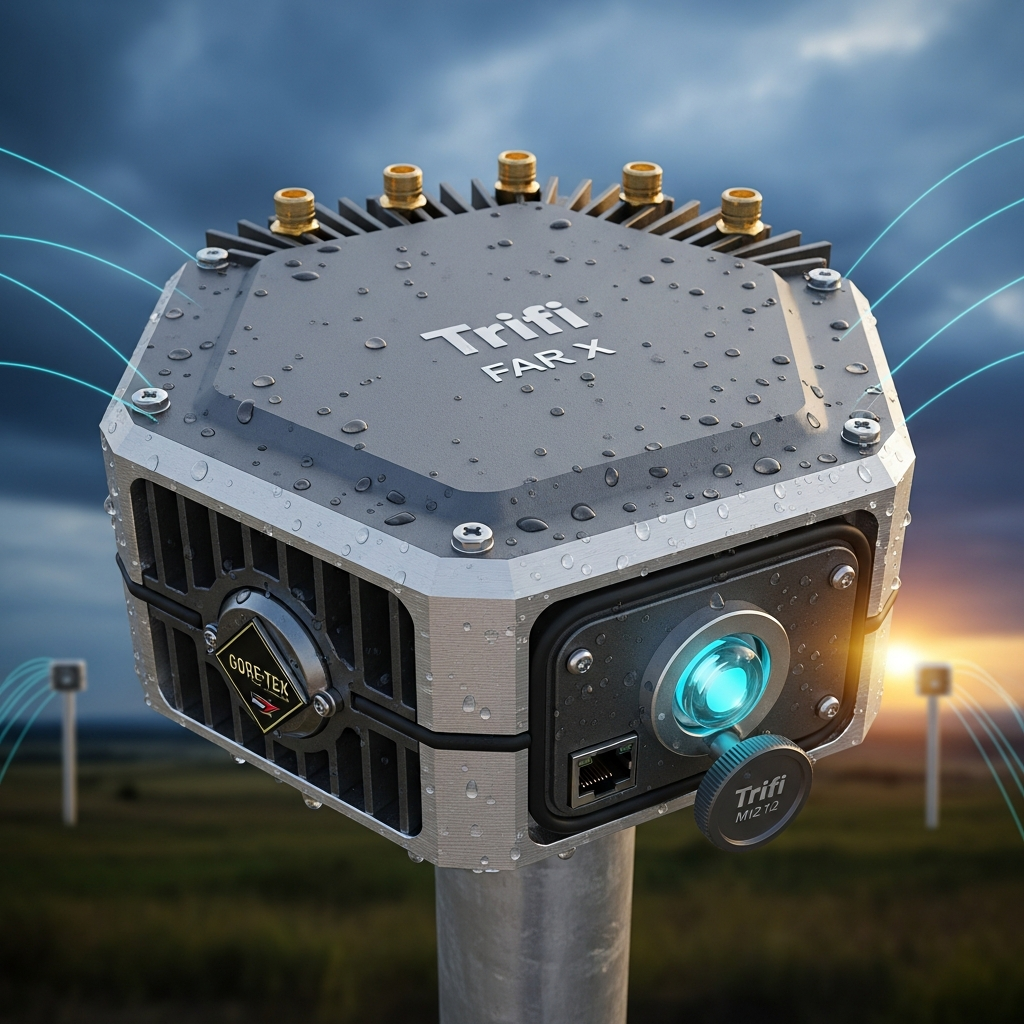
Go ahead, mount it on the silo. The Far X is housed in a die-cast, IP67-rated aluminum chassis. It laughs at rain, sleet, and the kind of dust that kills lesser electronics in a week. With an operating range of -40°C to +75°C, it is designed to survive environments that would void the warranty of any other device you own.

2. The Death of the “Dead Zone”

The Far X doesn’t just broadcast Wi-Fi; it creates a RIOS Cognitive Mesh.
In a traditional network, if the main router dies, everyone goes offline. The Far X is different. It is self-healing.[4] If a tractor cuts a fiber line or a storm takes out a node, the other Far X units in the array instantly re-calculate the topology, re-routing traffic in milliseconds. Your autonomous harvester doesn’t stop. Your data stream doesn’t stutter. The network survives because it thinks.

3. Sovereign Connectivity (vSIM Technology)

This is the game-changer. Every Far X unit comes embedded with Trifi Wireless vSIM technology.
Imagine your fiber line gets cut. In a normal setup, you are dark. But the Far X is watching. The moment it detects a drop in backhaul integrity, it activates its internal cellular modems, negotiating with every available carrier (LTE, 5G, it doesn’t care) to keep your data flowing. It bonds these connections together, creating an unshakeable lifeline to the internet that no single ISP failure can sever.

The Nervous System of the AI Economy

Why does this matter? Because in the RIOS ecosystem, data is money.

When your RIOS-CC-1000 is crunching numbers for a global client, it needs a constant stream of local data—weather patterns, soil telemetry, logistics tracking. The Far X is the nerve ending that gathers this data.

It runs the RIOS Network Kernel, meaning it natively understands the difference between a Netflix stream and a mission-critical inference packet. It prioritizes the work that pays you.[5] It ensures that your “Data Flywheel” never stops spinning, regardless of what is happening on the rest of the network.

Take Back Your Territory

For too long, rural infrastructure has been defined by what we lack. Lack of options, lack of speed, lack of reliability. The RIOS Far X is our answer to that deficit.

It is a declaration that the edge is no longer a passive consumer of connectivity. We are producers. We are owners. And we are finished with “coverage.”

It is time to build a network that works as hard as you do.


The RIOS Far X is available for immediate deployment. Secure your perimeter today at the DeReticular Shop.

[View Technical Specifications & Pricing]

Sourceshelp

  1. dereticular.com
  2. dereticular.com
  3. dereticular.com
  4. dereticular.com
  5. kurbkars.com


The Unbreakable Node: Why We Built the RIOS Far X

By Michael Noel, Founder of DeReticular[1][2]

In the lexicon of modern infrastructure, there is a word that has been quietly weaponized against rural communities: “Coverage.”

Telecomm giants sell you “coverage.” They show you a map, painted in reassuring shades of magenta or blue, claiming your farm, your town, or your job site is connected. But anyone who actually lives at the edge knows the truth. “Coverage” is a lie. Coverage is a signal bar that appears when you stand on the roof but vanishes when you walk into the barn. Coverage is a connection that works on Tuesday but fails during the Wednesday storm.

At DeReticular, we don’t care about “coverage.” We care about Dominance.

If you are building a sovereign economy—if you are running autonomous tractors, syncing distributed ledgers, or training AI models in the field—you cannot rely on a signal that is merely “present.”[3] You need a signal that is inevitable.

That is why we built the RIOS Far X – Industrial Wi-Fi 6 Mesh Router.

The Problem with “Consumer” Gear

When we started deploying the RIOS-CC-1000 Compute Clusters, we hit a physical wall. We had these massive engines of economic power—supercomputers sitting in shipping containers—but the “last mile” to connect them to the actual work (the sensors, the drones, the people) was being bridged by plastic routers designed for suburban living rooms.

We tried everything. We bought the “Pro” gear. We bought the “Mesh” systems. They all failed. They melted in the Arizona sun. They choked on the dust of the Great Plains. They required cloud subscriptions to “unlock” features we already paid for. And worst of all, when the internet went down, they became expensive paperweights.

We realized that if we wanted a network that could survive the reality of the Rural Infrastructure Operating System (RIOS), we had to build it ourselves.

Enter the Far X: The Cognitive Mesh

The RIOS Far X is not an access point. It is a territorial claim.

We engineered it with three non-negotiable mandates: Ruggedization, Autonomy, and Intelligence.

1. Built Like a Tank (Literally)

Go ahead, mount it on the silo. The Far X is housed in a die-cast, IP67-rated aluminum chassis. It laughs at rain, sleet, and the kind of dust that kills lesser electronics in a week. With an operating range of -40°C to +75°C, it is designed to survive environments that would void the warranty of any other device you own.

2. The Death of the “Dead Zone”

The Far X doesn’t just broadcast Wi-Fi; it creates a RIOS Cognitive Mesh.
In a traditional network, if the main router dies, everyone goes offline. The Far X is different. It is self-healing.[4] If a tractor cuts a fiber line or a storm takes out a node, the other Far X units in the array instantly re-calculate the topology, re-routing traffic in milliseconds. Your autonomous harvester doesn’t stop. Your data stream doesn’t stutter. The network survives because it thinks.

3. Sovereign Connectivity (vSIM Technology)

This is the game-changer. Every Far X unit comes embedded with Trifi Wireless vSIM technology.
Imagine your fiber line gets cut. In a normal setup, you are dark. But the Far X is watching. The moment it detects a drop in backhaul integrity, it activates its internal cellular modems, negotiating with every available carrier (LTE, 5G, it doesn’t care) to keep your data flowing. It bonds these connections together, creating an unshakeable lifeline to the internet that no single ISP failure can sever.

The Nervous System of the AI Economy

Why does this matter? Because in the RIOS ecosystem, data is money.

When your RIOS-CC-1000 is crunching numbers for a global client, it needs a constant stream of local data—weather patterns, soil telemetry, logistics tracking. The Far X is the nerve ending that gathers this data.

It runs the RIOS Network Kernel, meaning it natively understands the difference between a Netflix stream and a mission-critical inference packet. It prioritizes the work that pays you.[5] It ensures that your “Data Flywheel” never stops spinning, regardless of what is happening on the rest of the network.

Take Back Your Territory

For too long, rural infrastructure has been defined by what we lack. Lack of options, lack of speed, lack of reliability. The RIOS Far X is our answer to that deficit.

It is a declaration that the edge is no longer a passive consumer of connectivity. We are producers. We are owners. And we are finished with “coverage.”

It is time to build a network that works as hard as you do.


The RIOS Far X is available for immediate deployment. Secure your perimeter today at the DeReticular Shop.

[View Technical Specifications & Pricing]

Sourceshelp
  1. dereticular.com
  2. dereticular.com
  3. dereticular.com
  4. dereticular.com
  5. kurbkars.com

The Spine of the Sovereign Cloud: Introducing the RIOS Connect 24XG

Michael Noel · November 26, 2025 ·

By the DeReticular Engineering Team

For the last decade, the narrative of the internet has been one of centralization. Data flowed “up” to the cloud, decisions were made in hyperscale data centers, and the edge was treated as a passive consumer.

At DeReticular, we are reversing that flow. We believe the future of infrastructure is distributed, resilient, and sovereign. But to build an AI-native economy in a rural environment—to turn a barn, a shipping container, or a utility shed into a revenue-generating node—you need more than just a connection. You need a backbone capable of handling the heavy gravity of data.

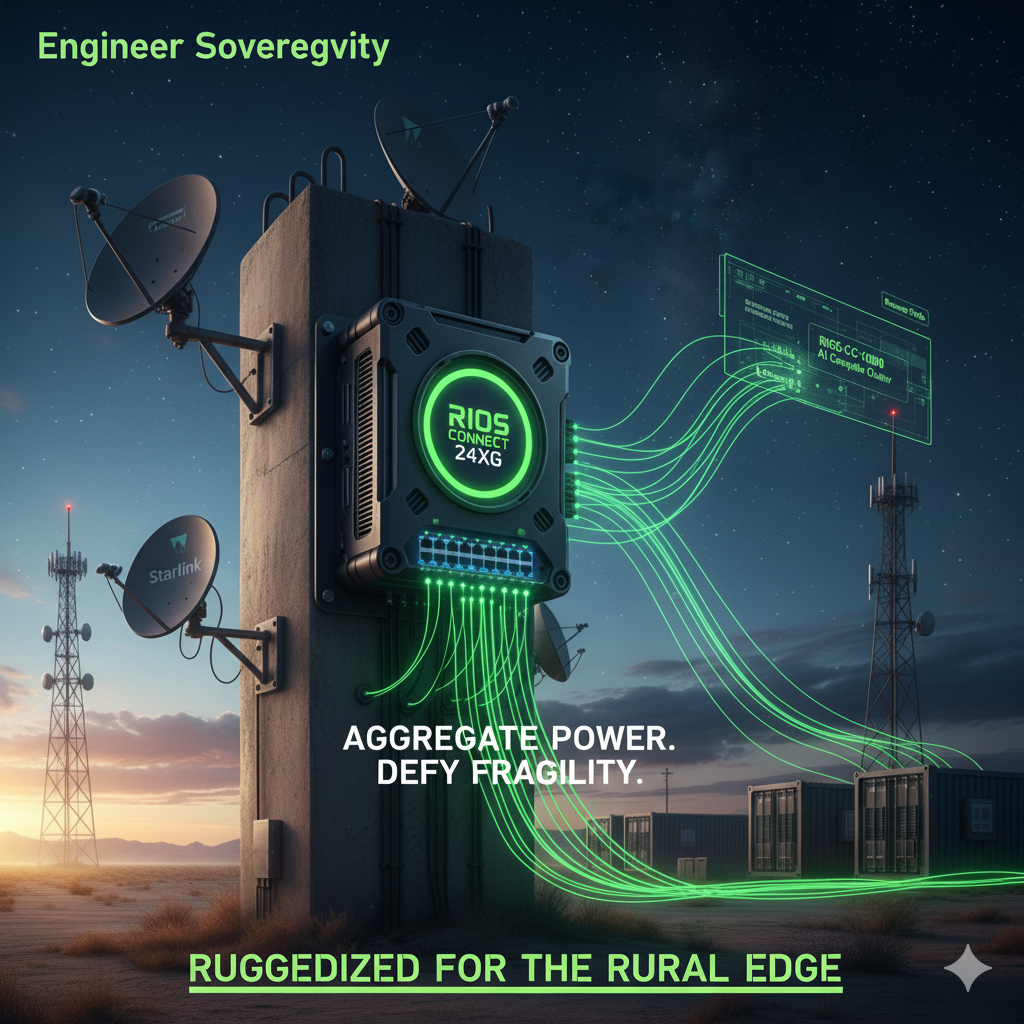
Today, we are proud to introduce the central nervous system of the RIOS Campus: The RIOS Connect 24XG – Sovereign Aggregation Switch.

The Bottleneck at the Edge

As we rolled out the RIOS-CC-1000 Compute Clusters, a clear challenge emerged. Our community was deploying powerful AI compute resources at the edge, ready to train models and process inference workloads. But the legacy networking gear available to rural deployers was stuck in the past.

Standard gigabit switches are fine for email and streaming, but they choke under the weight of AI training datasets, distributed storage synchronization, and multi-path WAN bonding. You cannot build a modern economy on a 1G bottleneck.

We realized that to truly empower the Rural Infrastructure Operating System (RIOS), we needed a switch that bridged the gap between industrial ruggedness and data-center performance.

Meet the RIOS Connect 24XG

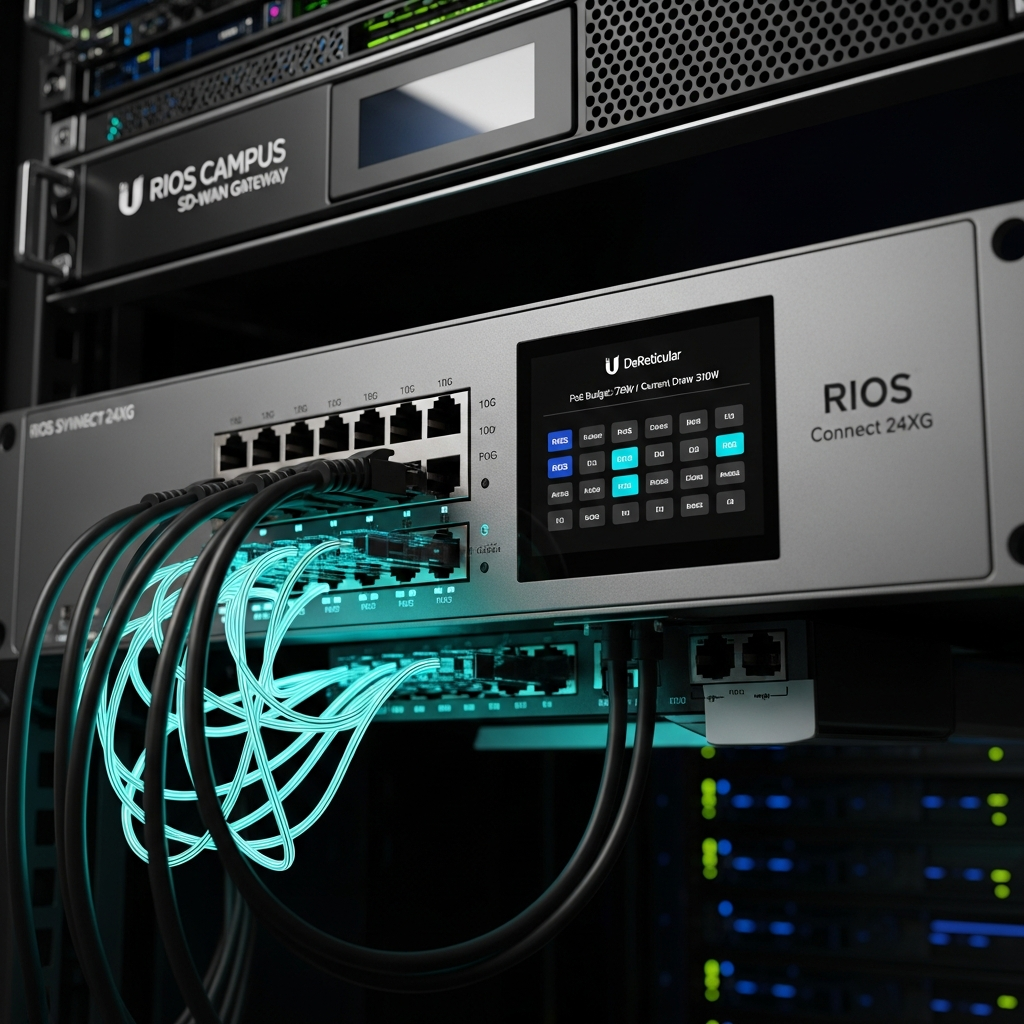
The RIOS Connect 24XG is a high-performance, 24-port 10G (SFP+) aggregation switch designed specifically for the harsh realities of the edge. It is not just hardware; it is the physical manifestation of our philosophy that connectivity is production.

1. AI-Native Performance

The Connect 24XG is built to feed the beast. With 24 dedicated 10-Gigabit SFP+ ports, it provides a 480 Gbps non-blocking switching fabric. This massive throughput ensures that your Compute Cluster (CC-1000) is never starved of data, minimizing GPU idle time and maximizing the revenue capability of your infrastructure. Whether you are moving terabytes of agricultural sensor data or syncing a local LLM, the pipe is wide open.

2. Intelligence in the Kernel

Most switches are dumb pipes. The Connect 24XG runs the RIOS Network Kernel. It is aware of the ecosystem it inhabits.
Through our AI-Workload QoS, the switch automatically identifies and tags “Revenue Traffic”—packets associated with paid compute jobs or critical inference—and prioritizes them over generic bulk traffic. It ensures that your economic engine keeps humming, even if the local network is congested with other tasks.

3. Ruggedized for the “Wild”

Data centers are clean, cool, and static. The real world is not.
We engineered the Connect 24XG to survive where standard rack gear fails. It features:

  • Fanless, Passive Cooling: No moving parts to suck in dust, hay, or grit.
  • Wide Temperature Range: Operational from -40°C to +75°C. It thrives in unconditioned outbuildings, solar sheds, and NEMA enclosures.
  • DC Power Native: Designed to integrate seamlessly with Agra Dot Energy Micro-GTL systems, supporting direct DC input (48V) to reduce conversion losses and improve off-grid efficiency.

The Anchor of the RIOS Campus

The Connect 24XG is not designed to exist in a vacuum. It is the anchor of the RIOS Campus architecture.

  • Ideally Paired with Trifi: It serves as the aggregation point for Trifi Wireless backhaul. You can bond multiple Starlink dishes, 5G connections, and local fiber into the Connect 24XG, creating a unified, resilient WAN pipe that rivals urban fiber lines.
  • Security via Sovereignty: In an era of surveillance capitalism, the Connect 24XG respects your ownership. It operates on a Zero-Trust architecture with hardware-based attestation. You own the hardware, you own the config, and you control the keys. No “cloud-managed” backdoors. No license fees to unlock ports you already bought.

Build Your Node

The transition to a decentralized future requires hardware that is as ambitious as the people building it. The RIOS Connect 24XG is for the rural ISPs, the agri-tech innovators, and the sovereign builders who are tired of waiting for the “big guys” to connect them.

Stop waiting for infrastructure. Start operating it.


The RIOS Connect 24XG is available now for pre-order in the DeReticular Shop.

https://dereticular.com/product/rios-connect-24xg-sovereign-aggregation-switch-ai-native-edition/

Get Technical Specifications & Pricing]

The Silver Bullet for Sovereign Connectivity: Introducing the RIOS Starlink Business Kit

Michael Noel · November 25, 2025 ·

Introducing the RIOS Starlink Business Kit

Let’s be honest: “Good enough” is the enemy of critical infrastructure.

In the world of rural connectivity, we’ve all seen the “MacGyver” solutions. A consumer satellite dish bungee-corded to a chimney, cables draped loosely across a roof, power supplies heating up under a pile of snow. It works… until the wind picks up. Or the snow falls. Or the proprietary cable gets chewed by local wildlife.

If you are streaming a movie at a cabin, a disconnect is an annoyance. But if you are running a RIOS Campus—supporting a community’s healthcare, education, and economy—a disconnect is a failure of sovereignty.

At DeReticular, we believe that a sovereign network is only as strong as its link to the global community. That is why we are done with “consumer-grade” compromises.

We are proud to introduce the RIOS Starlink Business Kit.

Not Just a Dish in a Box

You might be asking, “Isn’t this just Starlink?”

The answer is yes, and absolutely not.

We have taken the revolutionary technology of the Starlink High Performance antenna—the undisputed king of LEO satellite connectivity—and stripped away the friction. We realized that for a permanent, professional installation, the standard “out of the box” experience wasn’t enough for our standards.

We didn’t just want to sell you a terminal; we wanted to hand you a Backhaul Solution.

Here is how we turned a piece of consumer tech into an enterprise-grade weapon for connectivity.


1. The Hardware: Heavy Metal & High Performance

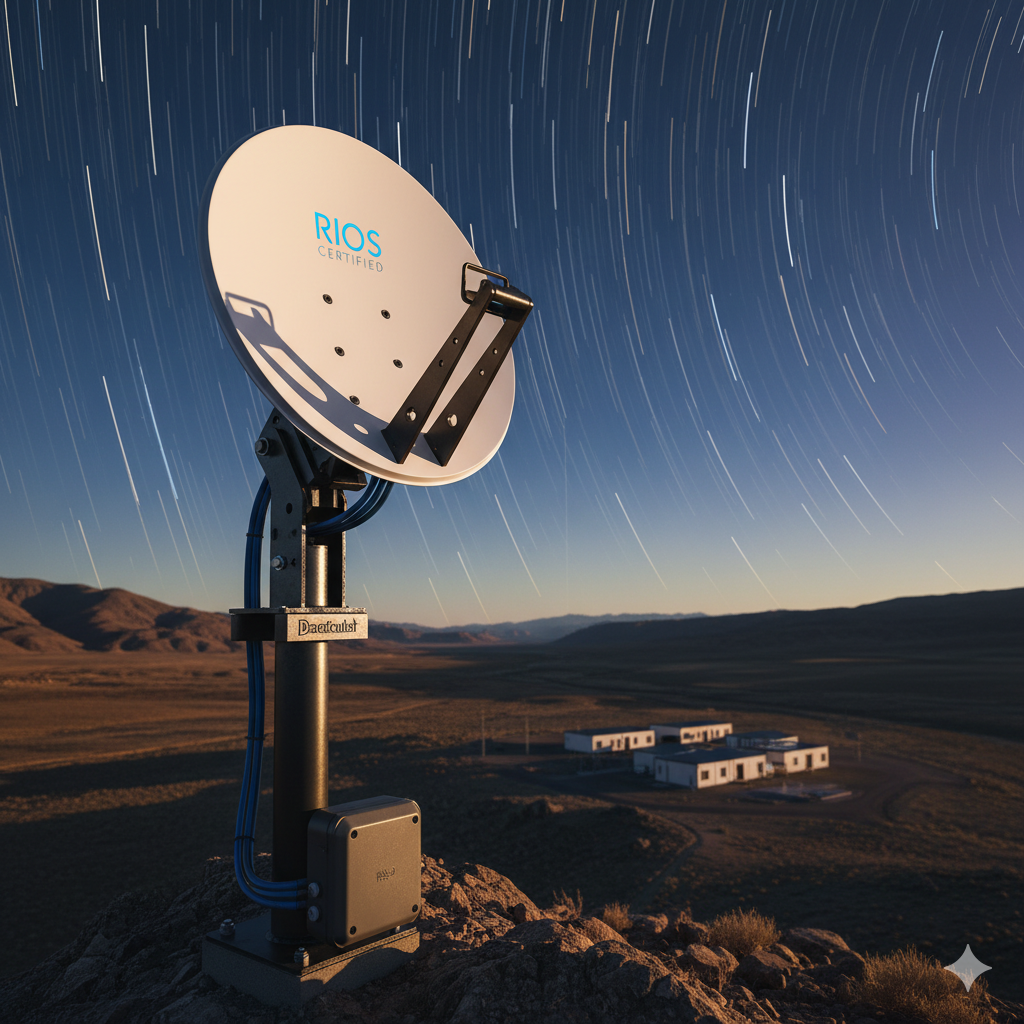
The heart of the kit is, of course, the Starlink High Performance Dish. We chose this specific model for a reason. With a 140° field of view, it sees more sky, connects to more satellites, and maintains a lock when standard dishes drop out. It melts snow faster, handles heat better (IP56 rated), and pushes throughputs of 350+ Mbps.

But a heart needs a ribcage to protect it.

A standard tripod mount doesn’t cut it on a RIOS utility building facing 60mph winds. That’s why every kit includes the RIOS Pole Mount Adapter. This isn’t plastic; it’s a heavy-duty, powder-coated steel interface designed to permanently affix your dish to a standard communications mast. It’s solid, stable, and isn’t going anywhere.

2. The Power: Breaking the Proprietary Chain

If you’ve ever tried to integrate a standard satellite dish into a professional server rack, you know the pain of proprietary power bricks and strange cabling.

We fixed that.

The RIOS Power Integration Kit replaces the confusion with professional standards. We include a rugged High-Power 802.3bt PoE Injector. This ensures consistent, clean power delivery to the dish without relying on consumer-grade power supplies that weren’t designed for the rigors of a tech closet.

Furthermore, we take safety seriously. Every kit comes with a dedicated Grounding Block & Lug setup. In rural environments, lightning and electrostatic discharge are real threats. We don’t just hope they don’t happen; we engineer a path to ground so your network stays fried-free.

3. The Connection: A Clean Run

Dangling wires are the hallmark of an amateur install. To ensure your data gets from the roof to your RIOS Gateway without a hiccup, we ditched the short, flimsy cords.

Your kit includes a 150ft spool of outdoor-rated, shielded Cat6a Ethernet cable. It’s direct-burial ready, UV resistant, and allows your installers to run a custom-length, watertight line straight to your network core. No slack, no signal loss, no mess.


The “RIOS Ready” Advantage

Hardware is important, but integration is everything.

The SWOT analysis of the current market told us one thing clearly: The biggest threat to rural internet is complexity.

When you deploy the RIOS Starlink Business Kit, you are deploying a solution that is pre-validated for the RIOS ecosystem.

  • Plug-and-Play: The power and data systems are tuned to interface perfectly with your RIOS SD-WAN Gateway.
  • Unified Support: This is the game-changer. When you buy a dish off a website, you are on your own. When you deploy this kit, you have the backing of the DeReticular Network Operations Center (NOC). We can see the health of your link, diagnose issues, and help you manage your connectivity. You have one phone number to call, not a forum to search.

Why We Built This

We built this because we believe in the mission of the RIOS Campus. Whether you are setting up a redundant link for a hospital or a primary connection for a remote research outpost, you need to know—with absolute certainty—that your backhaul is solid.

The RIOS Starlink Business Kit is Global Reach with a Sovereign Core.

It is the definitive way to connect your campus to the world, without compromising on quality, safety, or professionalism.

https://dereticular.com/product/rios-starlink-business-kit-certified-enterprise-backhaul/

Stop playing with consumer toys. It’s time to upgrade your infrastructure.


The RIOS Starlink Business Kit is available now. Contact our sales team to configure your deployment or visit the shop to view full technical specifications.

The Era of the Operator is Over. The Era of the Architect Begins.

Michael Noel · November 24, 2025 ·


Here is a long-form feature article designed for the www.dereticular.com website. It adopts a visionary, high-level tone suitable for the “Executive/Strategic” nature of the SSA certification.


The Era of the Operator is Over. The Era of the Architect Begins.

Why the Future Belong to Those Who Can Blueprint the Stack.

By The DeReticular Strategic Board

For the past few years, we have focused on the immediate triage of the modern world.

We built the Certified RIOS Administrator (CRA) to train the digital guardians—the men and women who keep the data flowing when the fiber lines are cut. We built the Sovereign Power Technician (SPT) with our partners at Agra Dot Energy to train the industrial alchemists—the ones who turn waste into the electricity that keeps the lights on.

These roles are vital. They are the hands and the eyes of the Sovereign Stack.

But a pile of bricks is not a house. And a collection of servers and generators is not a civilization.

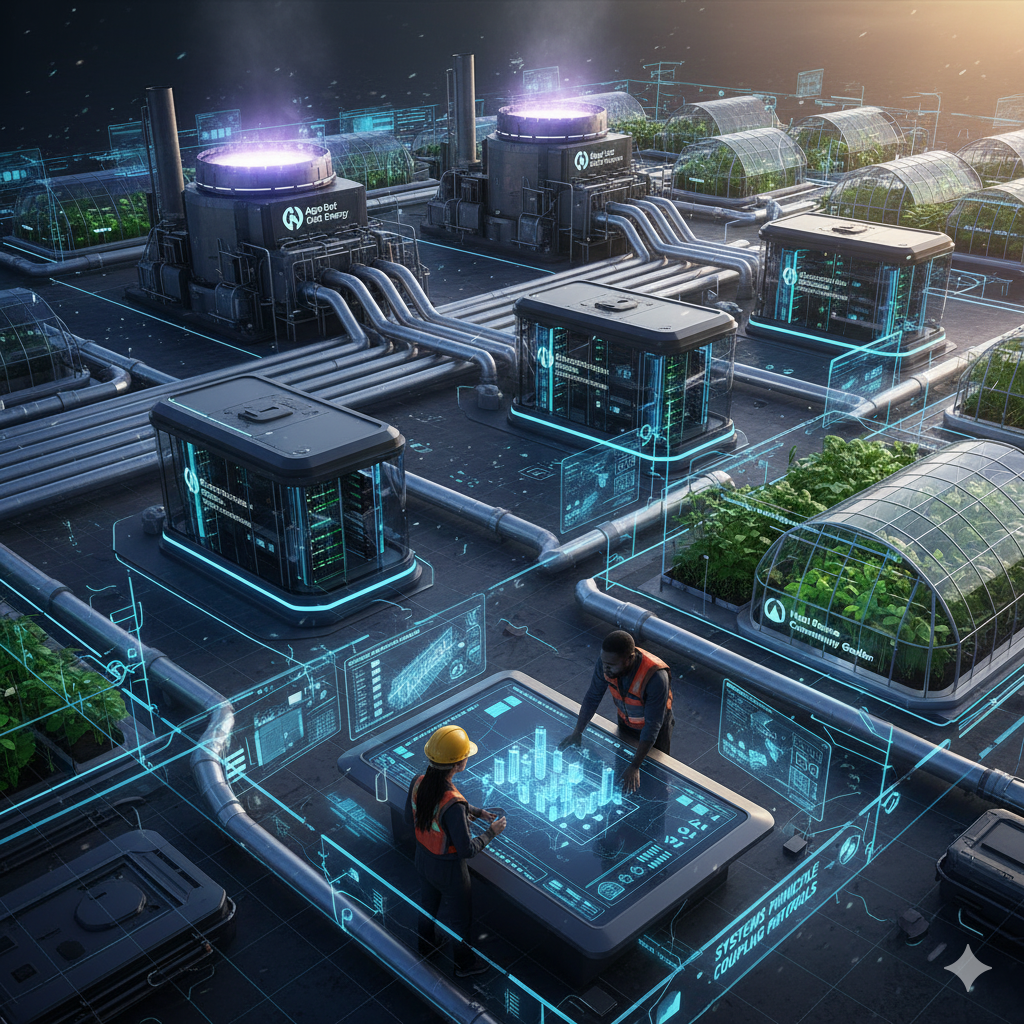
To move from survival to prosperity, we need more than operators. We need designers. We need people who can see the invisible lines that connect a kilowatt of power to a kilobyte of data. We need people who understand that a greenhouse, a server rack, and a plasma reactor are not three separate things, but three organs in a single body.

We need Architects.

Today, we are opening the doors to the Sovereign Systems Architect (SSA)—the Master Class of the DeReticular Academy.

The Velcro Principle: Physics Meets Finance

The central thesis of the SSA program is simple: Integration is the only true efficiency.

In the legacy world, the power plant is ten miles outside of town, venting waste heat into the sky. The data center is in a warehouse district, burning massive amounts of electricity to run air conditioners to remove heat. The farm is in the valley, burning diesel to heat greenhouses.

This is madness. It is a symphony of waste.

The Sovereign Systems Architect learns to apply the “Velcro Principle.” You will learn to design systems where these components physically and thermodynamically lock together:

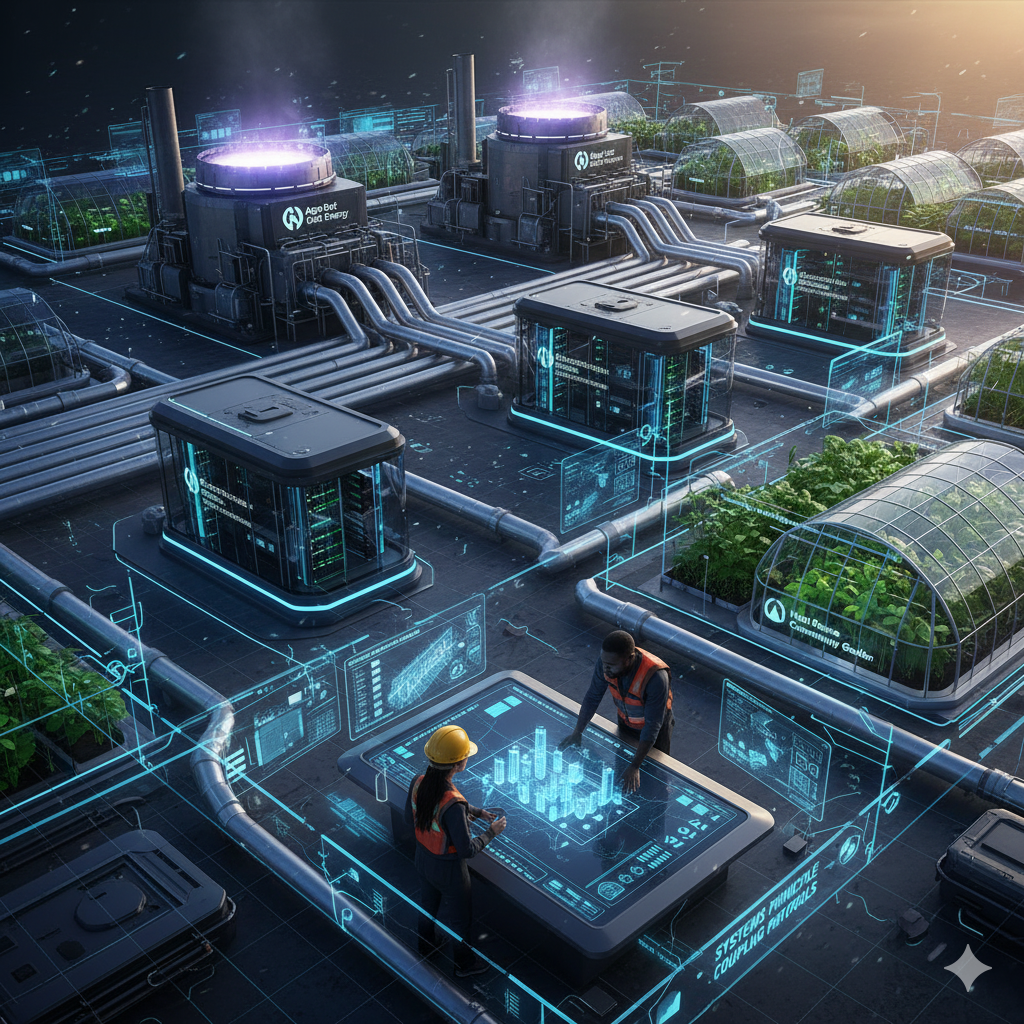
  • The Heat Loop: You will design systems where the waste heat from the Agra Power Core isn’t vented—it’s piped. It heats the water for the community. It warms the greenhouse. It drives the absorption chillers that cool the RIOS Compute Cluster.
  • The Data Loop: You will design the sensors that feed agricultural data back into the RIOS brain, optimizing the very fuel (biomass) that powers the generator.

When you connect the loops, waste disappears. The cost of living plummets. Resilience skyrockets.

The Spark Spread: The Economics of Sovereignty

The SSA is not just an engineering degree; it is a master’s in decentralized finance.

The most powerful tool in the Architect’s kit is the “Spark Spread.” This is the calculated difference between the cost of creating energy and the value of what that energy produces.

As an Architect, you are trained to build the Digital Flywheel. You don’t just build a grid; you build an algorithmic economy. You design systems that ask a question every second:

  • “Is it more profitable right now to sell synthetic diesel to the local market?”
  • “Or is it more profitable to burn that diesel to mine Bitcoin?”
  • “Or is it more profitable to lease that energy to local businesses for cloud computing?”

The SSA curriculum includes “The Sovereign Arbiter,” a proprietary financial modeling engine that helps you forecast these P&L scenarios over a 10-year horizon. You stop looking at infrastructure as a “cost center” and start designing it as a “revenue engine.”

The Human Operating System

Technology is easy. People are hard.

The history of intentional communities and off-grid projects is littered with failures. They rarely fail because the solar panels broke. They fail because the governance broke.

This is why the SSA curriculum dedicates an entire module to Governance & Human Systems. You will learn to draft the “Constitutions of Sovereignty.”

  • Who owns the data in the village server?
  • How do neighbors buy equity in the power plant?
  • What is the Service Level Agreement (SLA) between the technical operators and the community council?

You will learn to architect the social contract just as carefully as the electrical schematic.

The Black Badge

This certification is not for everyone. It is not a multiple-choice quiz you can breeze through on a weekend.

To earn the SSA Black Badge, you must submit a Master Plan Dossier. You will be given a scenario—a disaster relief camp, a remote mining town, a co-op farm—and you must design the Stack. You will submit CAD files. You will submit financial pro-formas. You will submit risk assessments.

And then, you will defend your design.

Those who pass will join an elite cadre of Authorized Builders. This is not just a title; it is a business enabler. SSA graduates unlock Wholesale Dealer Pricing on all DeReticular and Agra Dot Energy hardware. For a professional Architect, the certification pays for itself on the very first project deployment.

Blueprint the Future

The world is waiting for a new operating system. The old grids are creaking under the weight of centralization. The old economies are leaking value.

We have the hardware (Agra). We have the software (RIOS). Now, we need the visionaries to put them together.

https://dereticular.com/product/sovereign-systems-architect-ssa-master-design-certification/

Don’t just survive the future. Blueprint it.

Apply for Candidacy in the Sovereign Systems Architect program at Academy.DeReticular.com.


DeReticular: Engineering Sovereignty.

The Alchemists of the New Grid: Why the World Needs Sovereign Power Technicians

Michael Noel · November 24, 2025 ·

Here is a feature article designed for the www.dereticular.com news/blog section. It is written to bridge the gap between DeReticular’s digital audience and Agra Dot Energy’s industrial mission.


The Alchemists of the New Grid: Why the World Needs Sovereign Power Technicians

Introducing the SPT Certification—the “License to Operate” for the Post-Grid Era.

By The DeReticular Academy Team

There is a gap in the renewable energy conversation that nobody likes to talk about.

We talk about solar panels. We talk about lithium batteries. We talk about “smart grids.” But we rarely talk about what happens when the sun sets, the wind dies, and the battery bank hits 0%. In that moment, the digital revolution stops. The servers go dark. The sovereignty ends.

At DeReticular, we have spent years building the Rural Infrastructure Operating System (RIOS) to liberate your data. But data needs a heartbeat. It needs electrons.

That is why our partnership with Agra Dot Energy is not just an add-on; it is a necessity. Agra holds the key to the “missing link” of independence: Micro-Gas-to-Liquids (GTL) technology. The ability to turn local waste—plastic, biomass, refuse—into high-grade electricity and synthetic fuel.

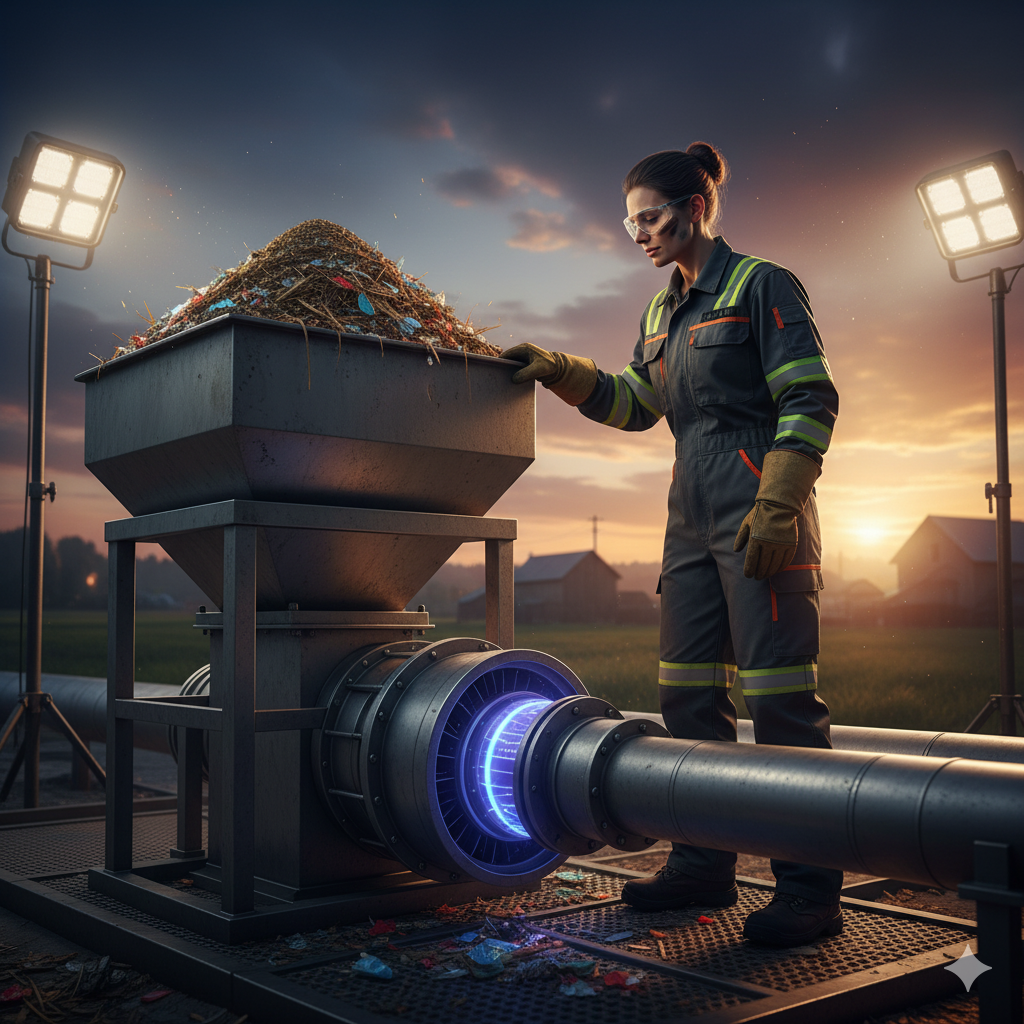
But a machine that turns trash into plasma at 1,500°C is not a solar panel. You cannot just plug it in and walk away. It is a living, breathing industrial engine. It requires respect. It requires skill. It requires a master.

Today, we are proud to introduce the training ground for those masters: The Sovereign Power Technician (SPT) – Level 1 Operator Certification.


More Than a Mechanic. An Energy Architect.

The SPT is not a standard online course. You will not be watching PowerPoints about “saving the planet.”

This is a vocational trade certification for the heavy industry of the future. It is designed to take a competent individual and turn them into a Village Engineer—someone capable of looking at a pile of agricultural waste or a heap of discarded tires and seeing power.

The SPT bridges the gap between the digital world of DeReticular and the physical world of thermodynamics. It answers the question: “Who keeps the lights on?”

The Curriculum: Taming the Plasma

The 50-hour curriculum is intense, rigorous, and safety-obsessed. Here is what the next generation of energy operators will be learning:

1. The Physics of “Molecular Scissors”

The core of the Agra system is Plasma Gasification. It sounds like science fiction, but it’s physics. The SPT teaches you how to use ionized gas to snip the molecular bonds of solid matter, turning complex trash into simple Syngas (Hydrogen + Carbon Monoxide). You aren’t burning trash; you are chemically disassembling it.

2. The Chef’s Table (Feedstock Management)

An engine is only as good as its fuel. The SPT teaches you the “Recipes of Sovereignty.”

  • Too much wet biomass? You’ll lose thermal efficiency.
  • Too much plastic? You’ll spike the caloric value and overheat the core.
  • The solution: You learn to blend. You become an expert in characterizing waste streams to create a stable, clean-burning fuel mix that runs the generator for 24 hours straight.

3. Critical Safety (The Gatekeeper)

We deal with High Voltage and High Pressure. There is no room for error. The SPT utilizes a “Safety-Gated” model. You cannot access the operational training modules until you pass the Module 2 Safety Exam with a 100% score. We teach ISO-compliant Lock Out / Tag Out (LOTO) procedures and Arc Flash boundaries. We are building operators, not daredevils.


Enter the Matrix: The “AgraSim” Physics Engine

How do you train to manage a reactor meltdown without risking a million dollars of hardware? You do it digitally.

Included in the SPT license is access to AgraSim, a custom-built PC simulator. It models the fluid dynamics and thermal properties of the Power Core 2X.

In the simulator, you will face the “Endurance Run” Capstone:

  • Scenario: It’s 2:00 AM. A storm has knocked out the main grid. Your feedstock hopper is jammed. The pressure is rising.
  • Mission: You must clear the jam, vent the excess pressure, and stabilize the voltage frequency to keep the local hospital connected—all within the simulation.

If you can keep the virtual grid green, you are ready for the real thing.

Why This Matters for the “Sovereign Stack”

For the DeReticular community, the SPT is the other half of the coin.

  • The Certified RIOS Administrator (CRA) builds the brain.
  • The Sovereign Power Technician (SPT) builds the heart.

By combining these skills, we create communities that are truly anti-fragile. We create local economies where waste is not a burden, but a resource. Where data is not mined, but hosted. Where the grid is not something you subscribe to, but something you are.

The Job Description of the Future

Whether you are a commercial farmer looking to reduce diesel costs, an NGO worker bringing power to a remote clinic, or a homesteader securing your family’s future, the SPT is your entry point into the most vital trade of the 21st century.

https://dereticular.com/product/sovereign-power-technician-spt-level-1-operator-certification/

The world is full of waste. The world is hungry for power.
Learn to connect the two.

Enroll in the Sovereign Power Technician program today at Academy.DeReticular.com or visit Agra.Energy to learn more about the hardware.


DeReticular & Agra: Engineering Sovereignty, from the Soil to the Cloud.

  • « Go to Previous Page
  • Page 1
  • Interim pages omitted …
  • Page 31
  • Page 32
  • Page 33
  • Page 34
  • Page 35
  • Interim pages omitted …
  • Page 55
  • Go to Next Page »

DeReticular

Copyright © 2026 · Monochrome Pro on Genesis Framework · WordPress · Log in