
Understanding the RIOS Pilot Standard Your Off-Grid Command Center
Introduction: What is the RIOS Pilot Standard?
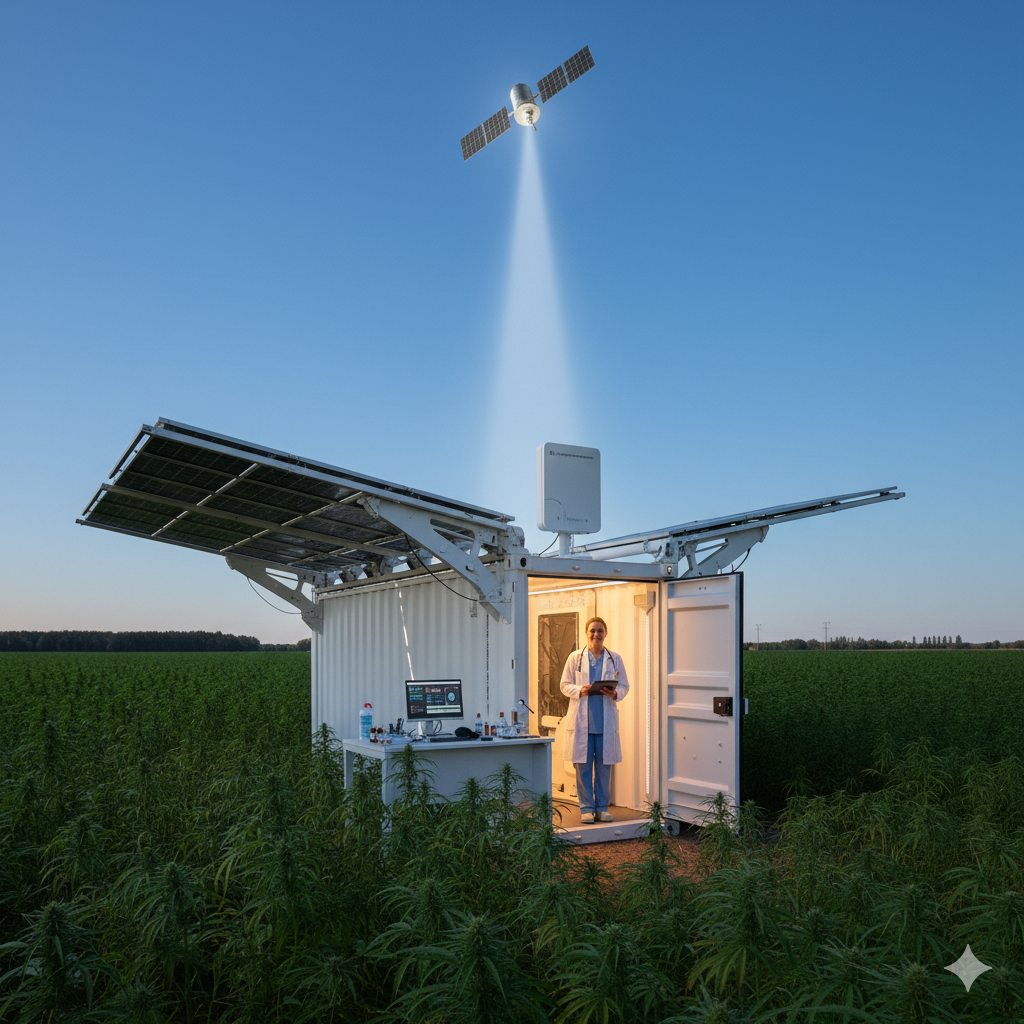
Imagine a smart, self-powered command hub that you can drop anywhere in the world, instantly creating a permanent base of operations. This is the core idea behind the RIOS Pilot Standard, a product best described by its official mission: “The Anchor. From Temporary Ops to Permanent Sovereignty.”
Its primary purpose is to serve as a permanent “Civilization Anchor” for remote sites. It provides power, connectivity, and a secure workspace where none existed before, transforming an empty spot on the map into a center of operations.
To understand how it achieves this, we can break it down into three core components: its tough outer Body, its powerful Heart, and its intelligent Brain.
——————————————————————————–
1. The Body: A Secure and Habitable Shell
Think of the RIOS unit’s body as a high-tech vault or an armored thermos—a structure designed not just for storage, but for protection and active use in the harshest environments.
1.1 The Foundation: More Than a Steel Box
The base of the unit is a modified 10ft High-Cube New “One-Trip” ISO container, ensuring a pristine, high-quality foundation. It’s compact enough to fit in a standard parking space, but two key modifications make it far more than a simple steel box:
- Heat-Reflective White Paint: This isn’t just for looks. It’s a special ceramic paint that acts like a mirror to the sun, reflecting intense heat to help keep the interior cool and stable.
- Closed-Cell Spray Foam Insulation: Inside the walls is a thick, seamless blanket of industrial insulation (R-Value 25+). This traps the cool air generated inside and keeps extreme heat out, much like a high-end portable cooler.
1.2 The Workspace: An Office in the Wild
The interior is far more than a server closet; it is a fully climate-controlled, habitable workspace. It includes a dedicated operator desk and an ergonomic chair, creating a professional office environment.
This human-centric design is critical. It allows a site manager to work safely and comfortably for extended periods, meeting labor regulations that require a conditioned workspace, even in the middle of a desert or a remote field. For security, the unit is reinforced with heavy steel cargo doors featuring a biometric locking bar and security grates on the windows, solidifying its role as a secure vault.
But a strong body is nothing without a powerful heart to make it run.
——————————————————————————–
2. The Heart: A Grid-Forming Power Plant
The RIOS Pilot Standard has a Grid-Forming heart. It doesn’t just sustain itself; it generates, stores, and distributes energy to create its own stable, local power grid, ensuring the unit and the site it supports never have to sleep.
2.1 Capturing Energy: The Solar “Wings”
The primary power source is a robust 4.4kW hybrid solar array. What makes it unique is the “Slide-Out Wings” feature. Once the container is in place, extra solar panels slide out from the roof on heavy-duty rails, essentially doubling the surface area to catch as much sunlight as possible. These are bifacial panels, meaning they can also capture reflected light from the white roof surface, maximizing energy generation.
2.2 Storing Power: The Energy Bank
All the captured sunlight is stored in a 20kWh LiFePO4 battery bank. Think of this as a massive, industrial-grade power bank for the entire unit. This large capacity is key to its reliability; it can run the entire system—including the power-hungry servers and air conditioning—through three full days of heavy cloud cover or bad weather.
2.3 Distributing Power: The Translator
The final piece of the power puzzle is the industrial inverter (Sol-Ark or Victron). This component acts as the “translator” for the stored energy. It expertly converts the raw DC power from the batteries into standard 120V/240V AC electricity. This is what’s needed to run everything from the onboard computers and lights to heavy-duty external tools like welders or water pumps.
Now that we have a constant flow of power, let’s look at the intelligent brain that uses this energy to get the real work done.
——————————————————————————–
3. The Brain: The Onboard Intelligence and Communications Hub
If the power system is the heart, the compute and connectivity hardware is the brain and nervous system. It processes information, makes decisions, and communicates with the outside world, all from its protected shell.
3.1 The Core Processor: The Thinker
The Intel Xeon server is the main part of the brain, responsible for general-purpose thinking and running the local network. A key function is hosting a “Digital Twin” of the entire site—a complete data model of the operation. This means essential resources like instructional wikis, sensor databases, or training videos are always accessible to the local team, even if the primary satellite internet connection goes down.
3.2 The AI Specialist: The Watcher
Working alongside the main processor is an NVIDIA A2 GPU. This is a specialized part of the brain that’s an expert at pattern recognition. Its mission is Continuous Inference. Unlike battery-constrained systems, the RIOS unit’s massive power system allows the AI to run at full throttle 24/7. It can continuously monitor over 50 security camera streams at once to automatically detect a coyote crossing a fence line, or analyze sensor data from an agricultural field in real-time to manage irrigation.
3.3 The Nervous System: Staying Connected
The brain communicates with the world through a sophisticated nervous system with two primary channels:
- To the World (Starlink): A roof-mounted, high-performance Starlink satellite dish provides a direct, high-speed connection to the internet. This allows the unit to send and receive data from anywhere on the planet.
- To the Local Site (Telescoping Mast): A 20-foot telescoping mast acts as a “watchtower.” It allows the unit to communicate with local sensors and devices over a long range (8+ miles), creating a wide, reliable communication mesh across the entire operational area.
With a tough body, a tireless heart, and a powerful brain, let’s see what the RIOS Pilot Standard can actually accomplish in the real world.
——————————————————————————–
4. Putting It All Together: What It Does
The combination of a secure shell, grid-forming power, and onboard intelligence allows the RIOS Pilot Standard to serve as the command center for a wide range of remote operations.
| Use Case | How It Works | Key Benefit |
| Smart Farming | The Shell provides a climate-controlled office to manage a 50-acre hemp field, for example. The Heart’s grid-forming power runs irrigation pumps 24/7. The Brain uses its A2 GPU for continuous analysis of soil sensors, hosting a “Digital Twin” of the field and automating irrigation relays. | Enables high-tech, automated agriculture on remote land without needing to be connected to the grid. |
| Rural Medical Clinic | The Shell offers a secure, climate-controlled, and sterile space. The Heart provides reliable, uninterruptible power for sensitive medical equipment. The Brain hosts patient records locally for security and uses Starlink for vital telemedicine consultations. | Creates a modern medical outpost anywhere, ensuring data security and operational uptime for critical care. |
| Remote Construction HQ | The Shell serves as the site manager’s compliant, conditioned office. The Heart powers floodlights, security systems, and heavy-duty tools. The Brain runs AI 24/7 on CCTV feeds, performing continuous inference to monitor the site for theft or safety issues. | Establishes a secure, compliant, and intelligent headquarters on day one, long before permanent structures are built. |
——————————————————————————–
5. Conclusion: Your Permanent Anchor
The RIOS Pilot Standard is more than just a product; it’s designed to be a capital asset that provides a permanent “Civilization Anchor” wherever it’s deployed. It is a complete, self-reliant system that brings security, power, intelligence, and a habitable workspace to any remote location on the planet. It’s built from the ground up to be The Anchor. From Temporary Ops to Permanent Sovereignty.