The Sovereign Executive (OpenClaw Office Edition): Comprehensive Analysis
Executive Summary
The Sovereign Executive (OpenClaw Office Edition) is an autonomous administrative assistant framework designed for local deployment on private hardware. Developed by the DeReticular Software Division, the system serves as a “private secretary” that automates high-frequency administrative tasks—including voice transcription, document filing, and calendar management—without relying on cloud-based AI services.
By operating entirely within a “Sovereign Sentry” or “Nomad Link” node, the software eliminates the privacy trade-offs inherent in mainstream AI tools (such as Siri, Copilot, or Gemini). The product is positioned as a perpetual-license solution for “Sovereign” business owners, lawyers, and consultants who require the efficiency of modern AI but must maintain an absolute air-gap for sensitive client data and financial records.
1. Core Identity and Philosophy
The Sovereign Executive is defined by its commitment to data sovereignty, encapsulated in the motto: “Stop Renting Your Productivity.”
- Product Role: An autonomous administrative assistant, archivist, and scheduler.
- Target Audience: Solopreneurs, private consultants, lawyers, and business owners who prioritize privacy and data ownership.
- Pricing Model: A $199.00 one-time perpetual license, replacing the subscription-based “SaaS” model typical of modern AI assistants.
- Deployment Method: A hardened, pre-configured Docker container (OpenClaw agent) optimized for RIOS (Ubuntu/Debian-based) hardware.
——————————————————————————–
2. Functional Modules: The “Invisible Workforce”
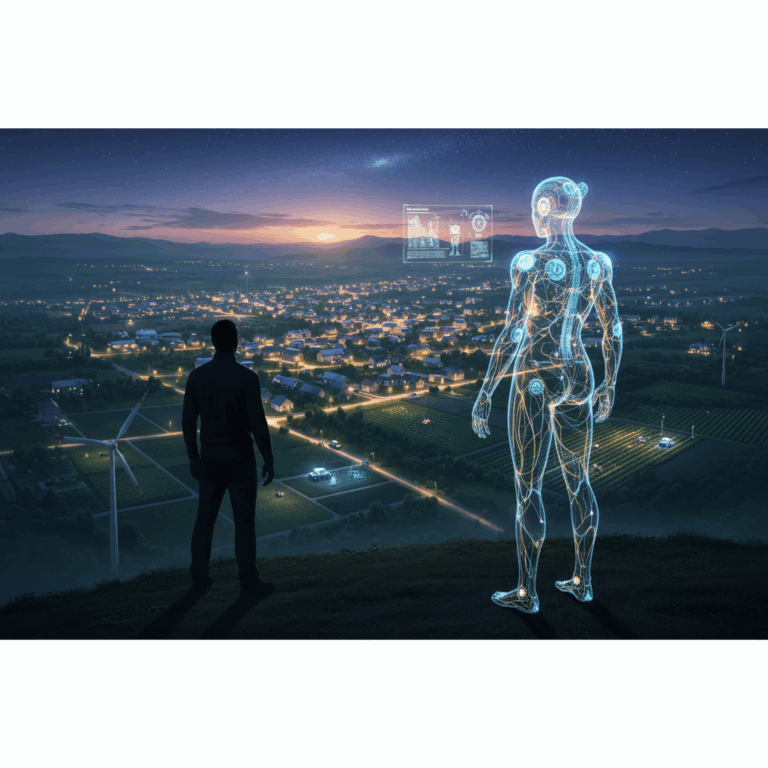
The system is structured into three primary functional modules, each visualized as a specialized digital employee living within the user’s hardware.
A. The Scribe (Voice-to-CRM)
The Scribe automates the transition from spoken thought to structured data.
- Mechanism: Utilizes Local Whisper AI (OpenAI Whisper-small) to transcribe audio files (.ogg, .mp3, .wav) with human-level accuracy.
- Workflow: The user records a voice note via secure messaging (WhatsApp, Signal, or Telegram). The agent downloads the file, transcribes it locally, extracts intent (e.g., “Invoice,” “Contract”), and logs the entry into a local PostgreSQL database.
- Use Case: A realtor on the move can dictate showing notes; the agent logs the feedback and drafts follow-up emails automatically.
B. The Archivist (Intelligent OCR)
The Archivist transforms disorganized physical and digital documents into structured archives.
- Mechanism: Powered by the Tesseract OCR engine, which scans PDFs and images (.jpg) for text.
- Workflow: Users drop raw scans or photos into a designated “Watch Folder.” The agent identifies key metadata—such as vendor name, date, and total amount—using regex parsing.
- Action: It renames files according to a standardized format (e.g.,
YYYY-MM-DD_Vendor_Amount.pdf) and moves them to appropriate directories (e.g.,/Archive/2026/Expenses).
C. The Gatekeeper (Calendar & Scheduling)
The Gatekeeper manages time negotiation without exposing the user’s schedule to third-party booking platforms.
- Mechanism: Integrates with CalDAV and local
.icsfiles. - Workflow: When prompted (e.g., “Find time for a call with Bob”), the agent checks the local calendar for free slots and generates a text list or a self-hosted booking link.
- Privacy Focus: It avoids external booking links (like Calendly) to maintain an air-gap between the user’s schedule and the public internet.
——————————————————————————–
3. Technical Infrastructure and Specifications
The software is engineered for high-performance local execution, requiring specific hardware to manage its AI memory footprint.
| Component | Requirement/Specification |
| Minimum Hardware | Sovereign Sentry (Standard) or Raspberry Pi 5 (8GB) |
| Warning | Do not use 4GB models; Whisper AI will cause memory thrashing. |
| Operating System | RIOS (Ubuntu/Debian based) with Docker & Docker Compose |
| Storage | 10GB minimum (System + User Data); NVMe recommended for OCR speed |
| AI Models | Whisper-small (Audio), Tesseract-ocr (Vision), Llama-3-8b-quant (Logic) |
| Database | PostgreSQL 16-alpine (Containerized) |
| Connectivity | Filtered internet for Signal/Telegram API polling (No inbound ports) |
4. Security and Data Privacy Architecture
The Sovereign Executive is designed around the concept of Zero Data Exfiltration.
- Local-First Processing: All AI inference (transcription, OCR, and summarization) occurs on the local CPU/NPU (specifically optimized for the Intel N100 chip).
- Air-Gap Maintenance: The setup wizard includes a “Privacy Warning” modal that discourages syncing with Google Calendar, recommending Nextcloud instead to prevent metadata leaks.
- Secure Interfaces: Interaction occurs through encrypted channels like Signal CLI, Telegram Bot API, or WhatsApp Business API.
——————————————————————————–
5. Deployment and Operational Workflow
Fulfillment and installation are handled through a digital-first, automated pipeline:
- Entitlement: Upon purchase, a SHA-256 License Key is generated, and the user’s “Sovereign ID” (email) is whitelisted on the private DeReticular Docker Registry.
- Installation: The user executes a curl-based install script via SSH. This script pulls the necessary Docker images and builds the local database.
- Configuration: A web-based “Setup Wizard” prompts the user for the License Key, Bot Tokens (from Telegram/Signal), and CalDAV credentials.
- Activation: A “Handshake” is performed by sending a
/startcommand to the bot, which initializes the “Watch Folder” service and the database.
——————————————————————————–
6. Risk Management and Support
The document identifies several operational risks and their corresponding mitigations:
- OCR Bottlenecks: To prevent system freezes during large document dumps, the Archivist script uses “Queue Logic” with a low CPU priority (“nice” value).
- API Volatility: Support is limited to installation and core functionality; it does not cover third-party API changes (e.g., Telegram changing its protocol).
- Maintenance: Security patches and updates are pushed automatically via a “Watchtower” Docker service, provided the user has an active 1-year repository access window.