The Digital Hamlet: Weaving a Supercomputer into the Fabric of a Community
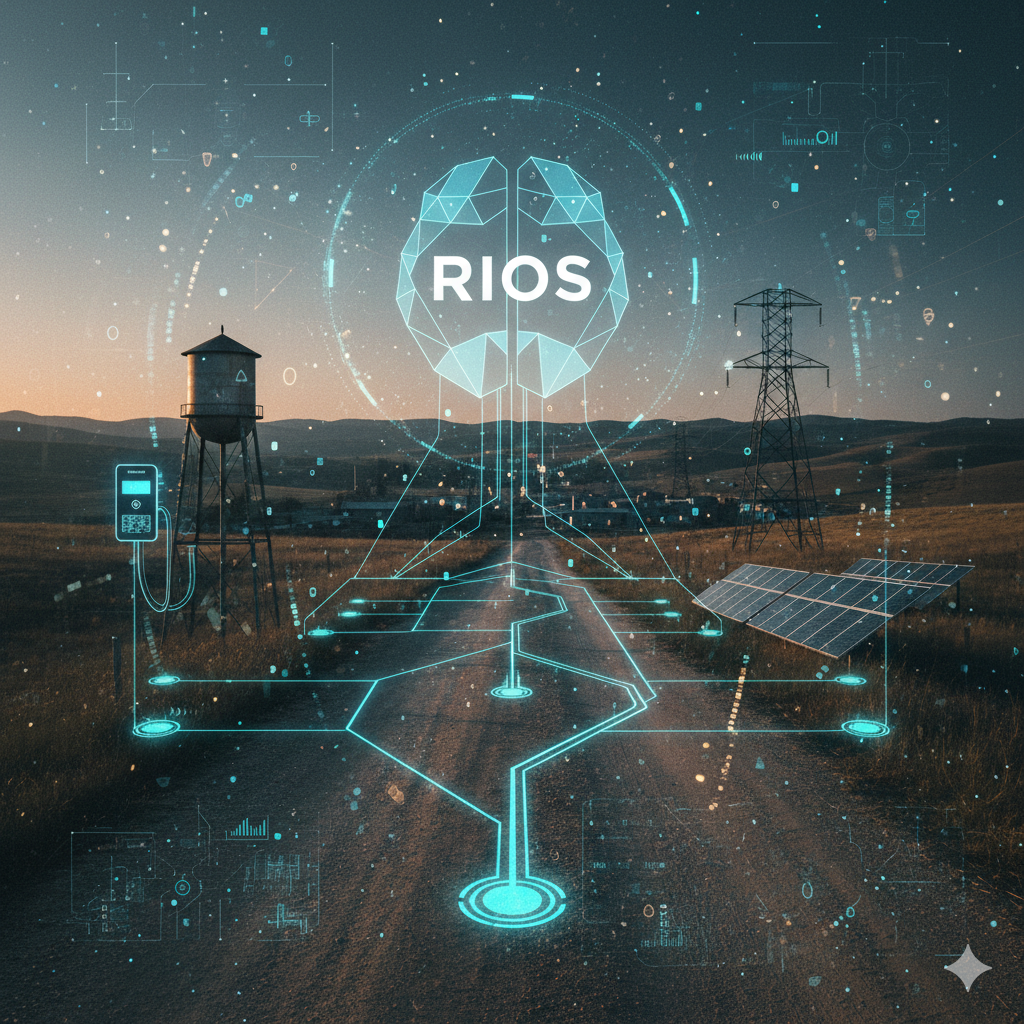
A DeReticular Special Report
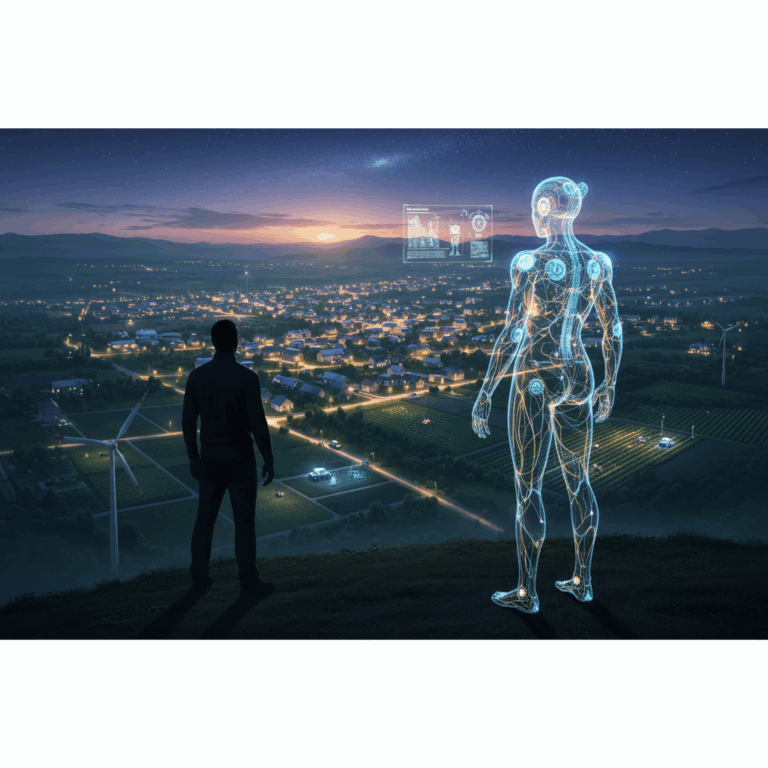
Welcome to the bleeding edge, where audacious ideas are forged into reality. The proposition is as bold as it is revolutionary: to deploy one thousand NVIDIA H100 AI servers, not in a sterile, centralized data center, but distributed throughout a community—a city, a village, a rural landscape—and connect them with a Wi-Fi 7E mesh network. The goal? To cultivate not just a supercomputer, but a super-community, sparking unprecedented growth and opportunity.
Let’s dissect this grand vision, calculate its staggering potential, and lay out a blueprint for turning this digital dream into a thriving, monetizable reality.
Part 1: Sizing the Leviathan – The Raw Compute Capacity
First, let’s wrap our minds around the sheer computational force of 1,000 H100 GPUs. A single H100, optimized for the 8-bit floating-point (FP8) operations that are the lifeblood of modern AI, can execute nearly 2 quadrillion operations per second (2 PetaFLOPS) with sparsity features. Using the more conservative non-sparsity figure for the PCIe version (989 TFLOPS) gives us a baseline.
Now, multiply that by a thousand.
- Peak AI Performance (FP8): 1,000 GPUs * 989 TFLOPS/GPU = 989,000 TFLOPS or 989 PetaFLOPS.
This is nearly an ExaFLOP of AI processing power. It’s a force of nature, capable of moving digital mountains. But what does that mean on a monthly basis? With approximately 2.6 million seconds in a month, the total capacity becomes astronomical.
- Monthly Compute Capacity: 989 PetaFLOPS * 2,628,000 seconds/month ≈ 2.6 ZettaFLOPS-seconds of AI compute per month.
To be clear, that’s 2.6 sextillion floating-point operations. This is a resource of national, if not global, significance. But raw power is meaningless without connectivity, which brings us to the most daring part of this proposal.
Part 2: The Grand Challenge – The Wi-Fi 7E Mesh Interconnect
Connecting a thousand H100s via a Wi-Fi 7E mesh is an idea of such radical ambition that it forces us to completely rethink the nature of a supercomputer.
Let’s be brutally honest: for traditional, tightly-coupled high-performance computing (HPC) tasks—like training a single, monolithic AI model—this network is the Achilles’ heel. The H100s are designed to communicate with each other at 900 GB/s over NVLink. Wi-Fi 7E, while a monumental leap for wireless technology, operates in a completely different universe. Latency, jitter, and bandwidth limitations over a distributed mesh would mean the GPUs would spend more time waiting for data than computing. It would be like having a thousand geniuses in a room who can only communicate by passing handwritten notes.
But what if this weakness is actually a revolutionary strength?
This architecture is not built for one big task; it’s built for a million small ones. It’s not a centralized brain; it’s a distributed nervous system. This changes the entire paradigm of how we sell and use its capacity.
Part 3: Monetizing the Digital Nervous System
You cannot sell this cluster like a traditional cloud provider. You must sell its unique advantages: its distributed nature, its proximity to the real world, and its community integration.
1. The Hyper-Local Edge Cloud: AI for the Real World
This is the killer application. Each H100 node is a micro-powerhouse at the very edge of the network. This opens up markets that centralized clouds can’t touch.
- Smart City & Agri-Tech: Sell processing power to the municipality for real-time traffic analysis from local cameras, or to farmers for analyzing drone footage of crops without sending massive video files to a distant data center.
- Retail & Logistics: Local businesses can run sophisticated AI analytics on in-store customer behavior or optimize delivery routes with zero latency.
- Community Safety & Services: Power advanced, real-time analytics for emergency services, identifying incidents from public camera feeds faster than humanly possible.
2. The “Embarrassingly Parallel” Powerhouse
Many complex computational problems can be broken down into millions of independent tasks. For these, the network speed between nodes is less critical.
- 3D Rendering & VFX: Sell rendering services to animation studios and freelance artists. Each frame can be rendered independently on a different H100. You could render an entire blockbuster movie in a fraction of the time.
- Scientific Research (SETI@home on Steroids): Partner with universities and research institutions for projects in drug discovery, materials science, or climate modeling that require massive parallel simulations.
- Financial Modeling: Run millions of Monte Carlo simulations for investment banks and hedge funds to assess risk.
3. The Federated Learning Co-operative
This distributed model is a privacy game-changer. Federated learning allows AI models to be trained on local data without the data ever leaving the node.
- Healthcare: Hospitals and clinics within the community can collaborate on training diagnostic AI models using patient data that remains secure and private within their own H100 node.
- Local Business Intelligence: A consortium of local retailers could train a powerful predictive model on their collective sales data without ever sharing sensitive customer information with each other.
4. The Community Compute & Education Platform
A portion of the cluster’s time can be dedicated to its most valuable resource: the community itself.
- AI Incubator: Offer subsidized compute credits to local startups and entrepreneurs. The next great AI company could be born in the village garage.
- Educational Resource: Partner with local schools and colleges to give students hands-on access to world-class AI hardware, creating a local talent pipeline and inspiring the next generation of innovators.
Part 4: The Blueprint for Implementation
This is not just a technical challenge; it’s a socio-economic one.
Phase 1: The Physical Fabric – The “Digital Barn Raising”
- Node Deployment: Identify hosts for the 1,000 servers. These could be local businesses, community centers, schools, or even individual “server homesteaders.”
- Incentive Model: Hosts would need incentives. This could be a share of the revenue generated by their node, free ultra-high-speed internet, or a monthly stipend. This injects capital directly into the community.
- Infrastructure: Each location needs adequate power, cooling, and physical security. A standardized, resilient “pod” for each server would need to be designed and deployed.
Phase 2: The Orchestration Layer – The Digital Weaver
- Software Stack: A sophisticated software layer is needed to manage this distributed network. Tools like Kubernetes (specifically edge-focused versions like K3s or KubeEdge) would be essential for managing the workloads.
- Job Scheduler: A custom scheduler would be the “brain” of the operation, intelligently assigning tasks based on their type. Tightly-coupled jobs would be rejected, while parallel and edge tasks would be routed to the appropriate nodes based on location and availability.
- User Portal: A simple, web-based platform where customers can purchase compute time, submit jobs, and monitor their progress. This is the “front door” to your supercomputer.
Phase 3: The Go-to-Market & Community Integration
- Business Development: Forge partnerships with the local municipality, businesses, universities, and hospitals. Show them how this resource can solve their specific, real-world problems.
- The “Compute Co-op” Model: Frame the entire operation as a community cooperative. Local residents and businesses could even own shares, ensuring the benefits and profits are reinvested locally, creating a powerful economic flywheel.
- Marketing & Storytelling: The story here is irresistible. It’s not just about FLOPS; it’s about revitalizing a community, creating opportunities, and building the future of computing from the ground up.
This isn’t just a cluster of servers; it’s a new model for technological and economic development. By embedding a world-class supercomputer into the heart of a community, you create a living, breathing ecosystem where innovation, education, and commerce can flourish. You’re not just selling compute cycles; you’re selling a stake in the future.