• Skip to primary navigation
  • Skip to main content
DeReticular

DeReticular

Local Autonomy. National Security. Total Sovereignty.

  • Solutions
    • Municipalities
    • Energy
    • Industrial
    • Defense
  • Infrastructure
  • Intelligence
  • Company
  • Request Municipal Audit
  • Show Search
Hide Search
You are here: Home / Archives for Energy

Energy

The Era of the Operator is Over. The Era of the Architect Begins.

Michael Noel · November 24, 2025 ·


Here is a long-form feature article designed for the www.dereticular.com website. It adopts a visionary, high-level tone suitable for the “Executive/Strategic” nature of the SSA certification.


The Era of the Operator is Over. The Era of the Architect Begins.

Why the Future Belong to Those Who Can Blueprint the Stack.
By The DeReticular Strategic Board

For the past few years, we have focused on the immediate triage of the modern world.

We built the Certified RIOS Administrator (CRA) to train the digital guardians—the men and women who keep the data flowing when the fiber lines are cut. We built the Sovereign Power Technician (SPT) with our partners at Agra Dot Energy to train the industrial alchemists—the ones who turn waste into the electricity that keeps the lights on.

These roles are vital. They are the hands and the eyes of the Sovereign Stack.

But a pile of bricks is not a house. And a collection of servers and generators is not a civilization.

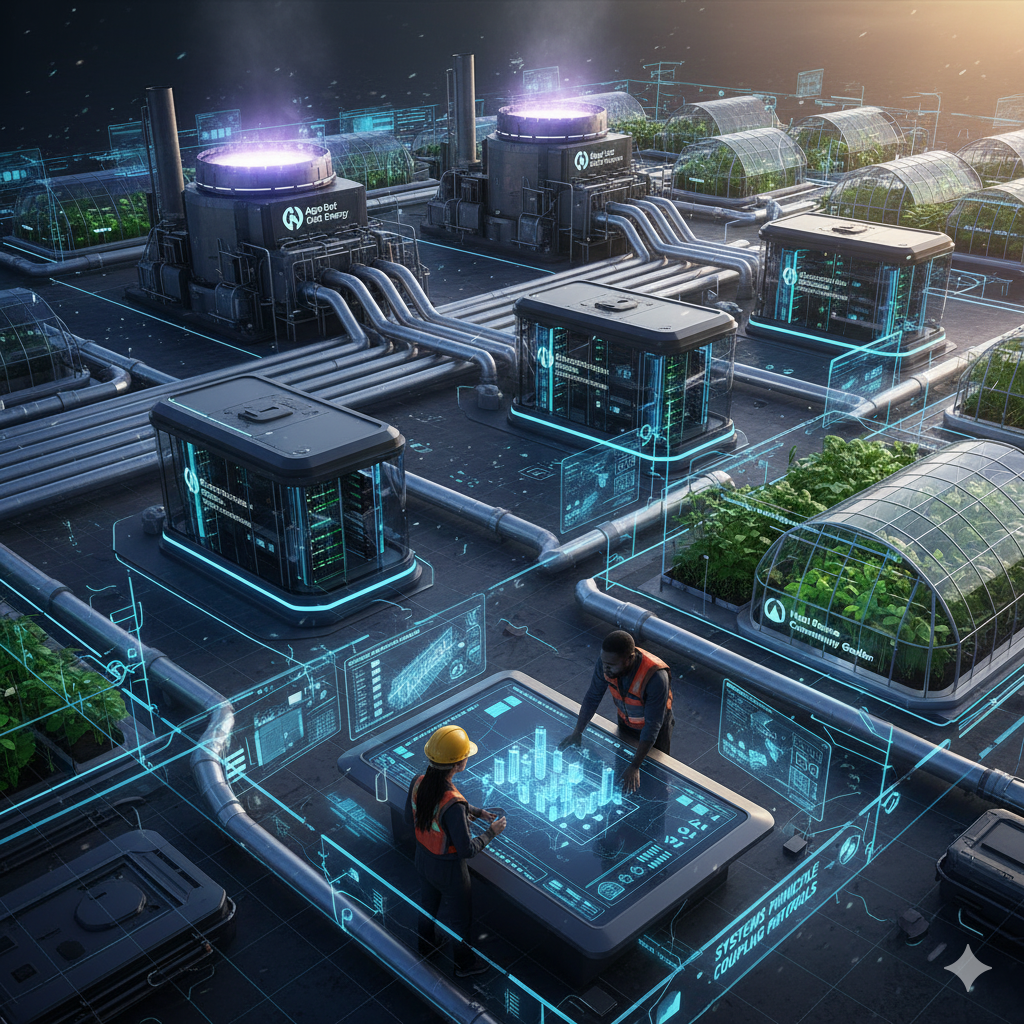
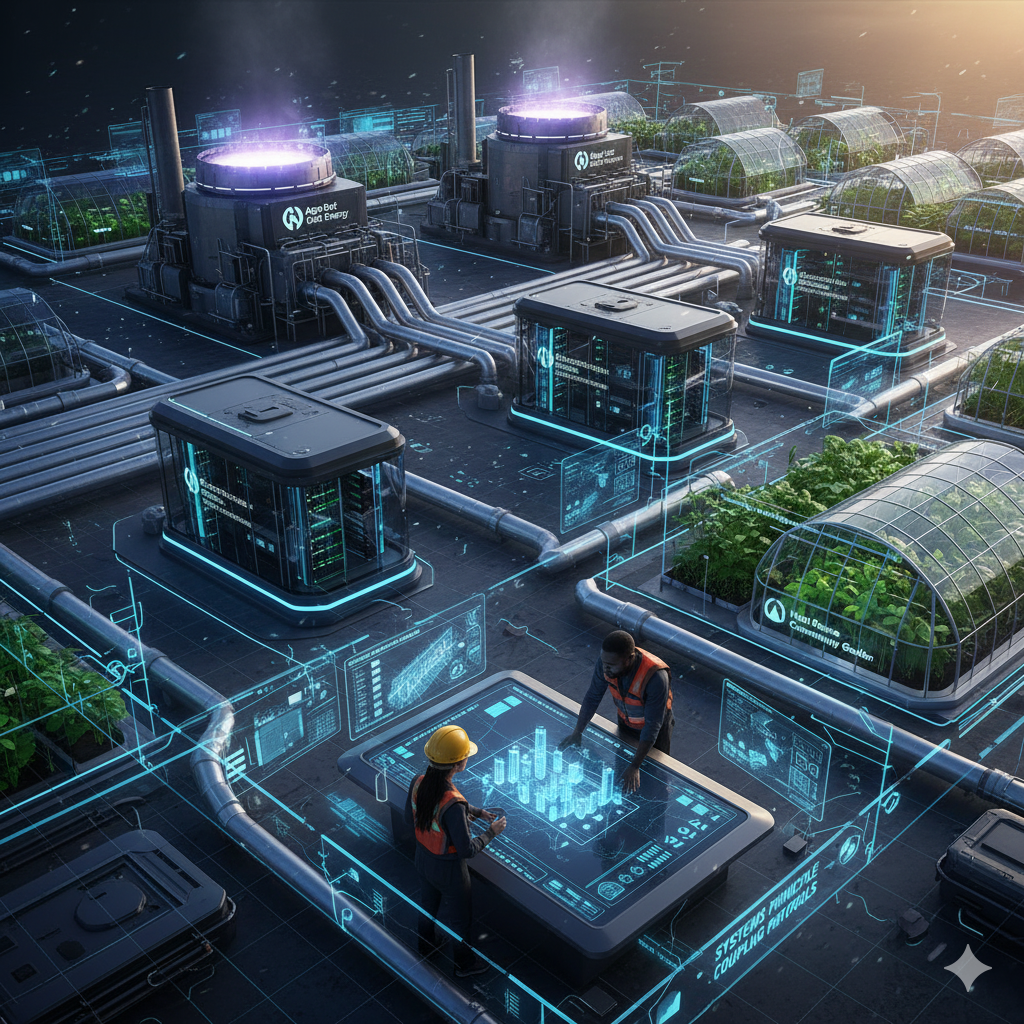
To move from survival to prosperity, we need more than operators. We need designers. We need people who can see the invisible lines that connect a kilowatt of power to a kilobyte of data. We need people who understand that a greenhouse, a server rack, and a plasma reactor are not three separate things, but three organs in a single body.

We need Architects.

Today, we are opening the doors to the Sovereign Systems Architect (SSA)—the Master Class of the DeReticular Academy.
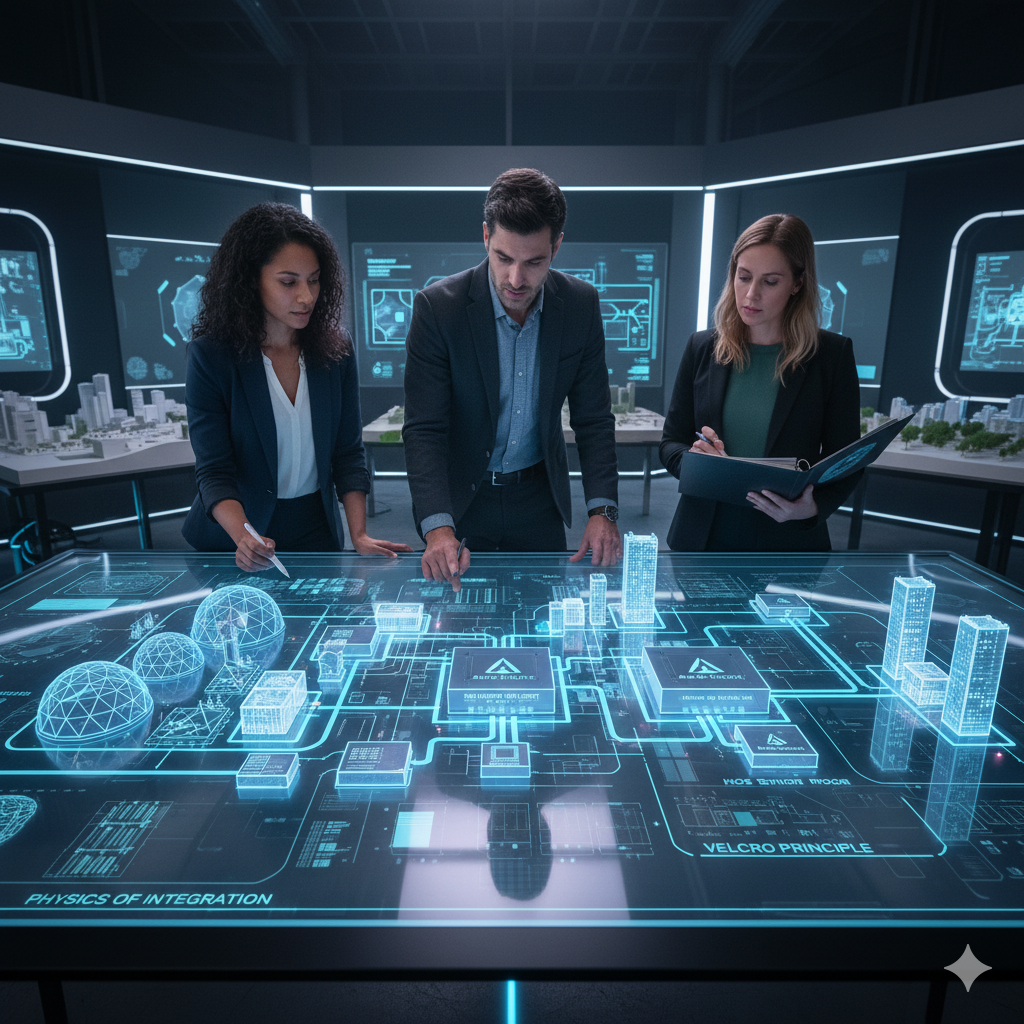
The Velcro Principle: Physics Meets Finance

The central thesis of the SSA program is simple: Integration is the only true efficiency.

In the legacy world, the power plant is ten miles outside of town, venting waste heat into the sky. The data center is in a warehouse district, burning massive amounts of electricity to run air conditioners to remove heat. The farm is in the valley, burning diesel to heat greenhouses.

This is madness. It is a symphony of waste.

The Sovereign Systems Architect learns to apply the “Velcro Principle.” You will learn to design systems where these components physically and thermodynamically lock together:

  • The Heat Loop: You will design systems where the waste heat from the Agra Power Core isn’t vented—it’s piped. It heats the water for the community. It warms the greenhouse. It drives the absorption chillers that cool the RIOS Compute Cluster.
  • The Data Loop: You will design the sensors that feed agricultural data back into the RIOS brain, optimizing the very fuel (biomass) that powers the generator.

When you connect the loops, waste disappears. The cost of living plummets. Resilience skyrockets.

The Spark Spread: The Economics of Sovereignty

The SSA is not just an engineering degree; it is a master’s in decentralized finance.

The most powerful tool in the Architect’s kit is the “Spark Spread.” This is the calculated difference between the cost of creating energy and the value of what that energy produces.

As an Architect, you are trained to build the Digital Flywheel. You don’t just build a grid; you build an algorithmic economy. You design systems that ask a question every second:

  • “Is it more profitable right now to sell synthetic diesel to the local market?”
  • “Or is it more profitable to burn that diesel to mine Bitcoin?”
  • “Or is it more profitable to lease that energy to local businesses for cloud computing?”

The SSA curriculum includes “The Sovereign Arbiter,” a proprietary financial modeling engine that helps you forecast these P&L scenarios over a 10-year horizon. You stop looking at infrastructure as a “cost center” and start designing it as a “revenue engine.”

The Human Operating System

Technology is easy. People are hard.

The history of intentional communities and off-grid projects is littered with failures. They rarely fail because the solar panels broke. They fail because the governance broke.

This is why the SSA curriculum dedicates an entire module to Governance & Human Systems. You will learn to draft the “Constitutions of Sovereignty.”

  • Who owns the data in the village server?
  • How do neighbors buy equity in the power plant?
  • What is the Service Level Agreement (SLA) between the technical operators and the community council?

You will learn to architect the social contract just as carefully as the electrical schematic.

The Black Badge

This certification is not for everyone. It is not a multiple-choice quiz you can breeze through on a weekend.

To earn the SSA Black Badge, you must submit a Master Plan Dossier. You will be given a scenario—a disaster relief camp, a remote mining town, a co-op farm—and you must design the Stack. You will submit CAD files. You will submit financial pro-formas. You will submit risk assessments.

And then, you will defend your design.

Those who pass will join an elite cadre of Authorized Builders. This is not just a title; it is a business enabler. SSA graduates unlock Wholesale Dealer Pricing on all DeReticular and Agra Dot Energy hardware. For a professional Architect, the certification pays for itself on the very first project deployment.

Blueprint the Future

The world is waiting for a new operating system. The old grids are creaking under the weight of centralization. The old economies are leaking value.

We have the hardware (Agra). We have the software (RIOS). Now, we need the visionaries to put them together.

https://dereticular.com/product/sovereign-systems-architect-ssa-master-design-certification/

Don’t just survive the future. Blueprint it.

Apply for Candidacy in the Sovereign Systems Architect program at Academy.DeReticular.com.


DeReticular: Engineering Sovereignty.
The Alchemists of the New Grid: Why the World Needs Sovereign Power Technicians

Michael Noel · November 24, 2025 ·

Here is a feature article designed for the www.dereticular.com news/blog section. It is written to bridge the gap between DeReticular’s digital audience and Agra Dot Energy’s industrial mission.


The Alchemists of the New Grid: Why the World Needs Sovereign Power Technicians

Introducing the SPT Certification—the “License to Operate” for the Post-Grid Era.

By The DeReticular Academy Team

There is a gap in the renewable energy conversation that nobody likes to talk about.

We talk about solar panels. We talk about lithium batteries. We talk about “smart grids.” But we rarely talk about what happens when the sun sets, the wind dies, and the battery bank hits 0%. In that moment, the digital revolution stops. The servers go dark. The sovereignty ends.

At DeReticular, we have spent years building the Rural Infrastructure Operating System (RIOS) to liberate your data. But data needs a heartbeat. It needs electrons.

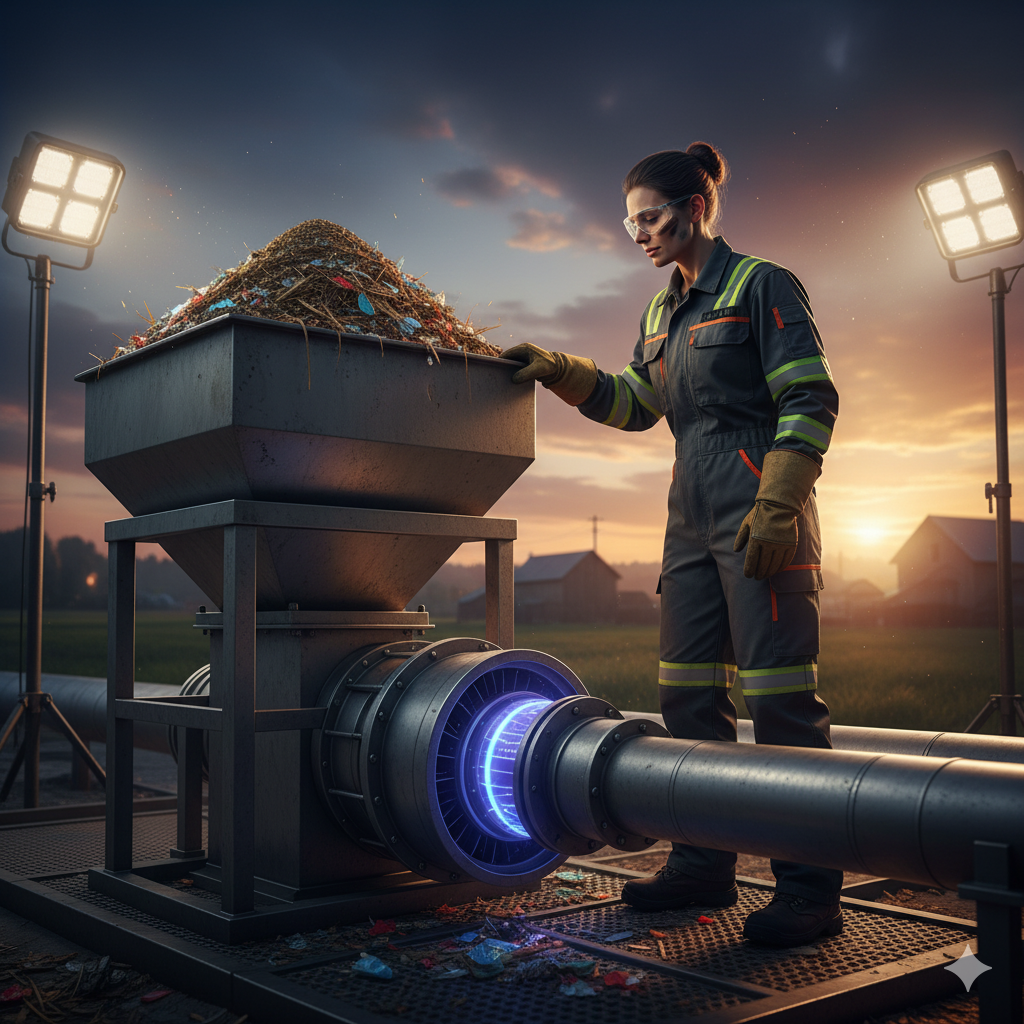
That is why our partnership with Agra Dot Energy is not just an add-on; it is a necessity. Agra holds the key to the “missing link” of independence: Micro-Gas-to-Liquids (GTL) technology. The ability to turn local waste—plastic, biomass, refuse—into high-grade electricity and synthetic fuel.

But a machine that turns trash into plasma at 1,500°C is not a solar panel. You cannot just plug it in and walk away. It is a living, breathing industrial engine. It requires respect. It requires skill. It requires a master.

Today, we are proud to introduce the training ground for those masters: The Sovereign Power Technician (SPT) – Level 1 Operator Certification.


More Than a Mechanic. An Energy Architect.

The SPT is not a standard online course. You will not be watching PowerPoints about “saving the planet.”

This is a vocational trade certification for the heavy industry of the future. It is designed to take a competent individual and turn them into a Village Engineer—someone capable of looking at a pile of agricultural waste or a heap of discarded tires and seeing power.

The SPT bridges the gap between the digital world of DeReticular and the physical world of thermodynamics. It answers the question: “Who keeps the lights on?”

The Curriculum: Taming the Plasma

The 50-hour curriculum is intense, rigorous, and safety-obsessed. Here is what the next generation of energy operators will be learning:

1. The Physics of “Molecular Scissors”

The core of the Agra system is Plasma Gasification. It sounds like science fiction, but it’s physics. The SPT teaches you how to use ionized gas to snip the molecular bonds of solid matter, turning complex trash into simple Syngas (Hydrogen + Carbon Monoxide). You aren’t burning trash; you are chemically disassembling it.

2. The Chef’s Table (Feedstock Management)

An engine is only as good as its fuel. The SPT teaches you the “Recipes of Sovereignty.”

  • Too much wet biomass? You’ll lose thermal efficiency.
  • Too much plastic? You’ll spike the caloric value and overheat the core.
  • The solution: You learn to blend. You become an expert in characterizing waste streams to create a stable, clean-burning fuel mix that runs the generator for 24 hours straight.

3. Critical Safety (The Gatekeeper)

We deal with High Voltage and High Pressure. There is no room for error. The SPT utilizes a “Safety-Gated” model. You cannot access the operational training modules until you pass the Module 2 Safety Exam with a 100% score. We teach ISO-compliant Lock Out / Tag Out (LOTO) procedures and Arc Flash boundaries. We are building operators, not daredevils.


Enter the Matrix: The “AgraSim” Physics Engine

How do you train to manage a reactor meltdown without risking a million dollars of hardware? You do it digitally.

Included in the SPT license is access to AgraSim, a custom-built PC simulator. It models the fluid dynamics and thermal properties of the Power Core 2X.

In the simulator, you will face the “Endurance Run” Capstone:

  • Scenario: It’s 2:00 AM. A storm has knocked out the main grid. Your feedstock hopper is jammed. The pressure is rising.
  • Mission: You must clear the jam, vent the excess pressure, and stabilize the voltage frequency to keep the local hospital connected—all within the simulation.

If you can keep the virtual grid green, you are ready for the real thing.

Why This Matters for the “Sovereign Stack”

For the DeReticular community, the SPT is the other half of the coin.

  • The Certified RIOS Administrator (CRA) builds the brain.
  • The Sovereign Power Technician (SPT) builds the heart.

By combining these skills, we create communities that are truly anti-fragile. We create local economies where waste is not a burden, but a resource. Where data is not mined, but hosted. Where the grid is not something you subscribe to, but something you are.

The Job Description of the Future

Whether you are a commercial farmer looking to reduce diesel costs, an NGO worker bringing power to a remote clinic, or a homesteader securing your family’s future, the SPT is your entry point into the most vital trade of the 21st century.

https://dereticular.com/product/sovereign-power-technician-spt-level-1-operator-certification/

The world is full of waste. The world is hungry for power.
Learn to connect the two.

Enroll in the Sovereign Power Technician program today at Academy.DeReticular.com or visit Agra.Energy to learn more about the hardware.


DeReticular & Agra: Engineering Sovereignty, from the Soil to the Cloud.

When the Digital Cloud Evaporates, Will You Be Standing?

Michael Noel · November 23, 2025 ·

Introducing the Certified RIOS Administrator (CRA): The Survival Guide for the Digital Age.

By The DeReticular Academy Team

Let’s be honest for a moment. We have built a civilization that balances precariously on a wire. We treat the internet like the air we breathe—invisible, infinite, and guaranteed. We assume that when we click “Save,” our data is safe. We assume that when we tap a screen, money moves. We assume the lights will always turn on.

But at DeReticular, we don’t like assumptions. We prefer engineering.

We know that “The Cloud” is just a marketing term for someone else’s computer in a server farm three states away. We know that centralized power grids are aging, fragile beasts. And we know that when the storm comes—whether it’s a literal hurricane or a geopolitical crisis—the only infrastructure you can trust is the infrastructure you can touch.

We have spent years building the Rural Infrastructure Operating System (RIOS)—the hardware and software backbone for true digital sovereignty. But hardware is just metal and silicon until a human being gives it purpose.

That is why today, we are proud to announce the launch of the Certified RIOS Administrator (CRA).

It’s not just a certification. It’s a declaration of independence.


The Technician as the New Architect

The CRA isn’t your standard IT certification. You won’t be memorizing corporate help-desk scripts or learning how to reset a password for a printer in a cubicle farm.

This course is designed for the Edge. It is for the field technician in a Land Rover in Sub-Saharan Africa. It is for the homesteader in Idaho who wants to run a crypto node off solar power. It is for the community leader who wants to become their village’s ISP.

The CRA posits a simple question: If the world went dark tomorrow, could you reboot civilization’s operating system?

What You Will Learn (The Curriculum)

The CRA program is a 40-hour deep dive into the Sovereign Stack. We have stripped away the fluff and focused on the tactical skills required to deploy, secure, and maintain a RIOS Campus.

Here is a look inside the syllabus:

1. The Anatomy of the Iron Box

You can’t manage what you don’t understand physically. We start by cracking open the RIOS-CC-1000 Compute Cluster. You’ll learn the thermodynamics of cooling, how to hot-swap NVMe blades without dropping a packet, and how to balance DC power rails.

  • The Symbiosis: We also cover the critical handshake between our digital systems and our partners at Agra Dot Energy. You’ll learn how data load affects fuel consumption and how to keep your servers running on synthetic gas when the sun isn’t shining.

2. Weaving the Invisible Web

How do you get internet where there is no internet? You build it. We teach you how to bridge high-latency satellite backhauls (like Starlink Roam) into low-latency local WiFi 6 Mesh networks. You’ll learn to map RF propagation, eliminate dead zones, and create a “Zero-Trust” bubble that covers your entire community.

3. Project Phoenix: The Sovereign Cloud

This is where the magic happens. You will learn to deploy “The Lighthouse,” our proprietary OS environment. You’ll spin up local, offline-first alternatives to the apps you use every day.

  • Need chat? Deploy Element.
  • Need storage? Deploy Nextcloud.
  • Need code repos? Deploy Gitea.
  • The Kicker: You’ll learn to run all of this without an internet connection. If the uplink fails, your community keeps working.

4. Fortress Logic

In a decentralized world, you are your own security team. The CRA teaches you RF Fingerprinting—using Software Defined Radio (SDR) to “see” devices before they even connect to your network. You’ll learn to implement KyC-native identity protocols, ensuring that your network is open to your neighbors but closed to bad actors.


A New Way to Learn: The “Hybrid-Edge” Model

We realized early on that we couldn’t host a course about off-grid sovereignty strictly on a centralized video platform. That would be ironic, and frankly, reckless.

The CRA utilizes our Hybrid-Edge Delivery System:

  1. Offline Sync: If you own a RIOS unit, you can download the entire course—videos, labs, manuals—directly to your local drive. You can get certified in the middle of the desert.
  2. Meet “Remnant”: You aren’t learning alone. You’ll have 24/7 access to Remnant, our specialized AI Tutor. Remnant has been trained on every schematic, line of code, and field report in DeReticular history. Stuck on a configuration? Ask Remnant. It’s like having a Senior Architect in your pocket.
  3. The Simulator: Don’t want to risk bricking your live hardware? Our browser-based RIOS Simulator allows you to practice disaster recovery scenarios in a safe, virtual sandbox.

The Capstone: The “Black Start” Exam

We don’t believe in multiple-choice questions about definitions. We believe in pressure.

To earn your badge, you must pass the Black Start.

It’s a 60-minute immersive simulation. The scenario? A catastrophic grid failure has occurred. Your battery backups are draining. The satellite dish is misaligned. Your job is to prioritize power, restore the local medical database, and establish an emergency broadcast beacon—all before the clock runs out.

Pass that, and you’ll earn the CRA Digital Badge, cryptographically signed and minted on the RIOS Blockchain. It’s a credential that proves you didn’t just read the book; you did the work.

Join the Ranks

The world is moving faster, and it is becoming more volatile. The era of passive reliance on centralized utilities is ending. The era of the Sovereign Architect is beginning.

Whether you are looking to start a business, secure your family’s future, or bring critical infrastructure to a developing region, the CRA is your starting line.

https://dereticular.com/product/certified-rios-administrator-cra-level-1-certification/

Stop being a user. Start being an Admin.

Enroll in the Certified RIOS Administrator program today at Academy.DeReticular.com.


DeReticular: Engineering Sovereignty.
Product Description for the Certified RIOS Administrator (CRA)

Michael Noel · November 23, 2025 ·

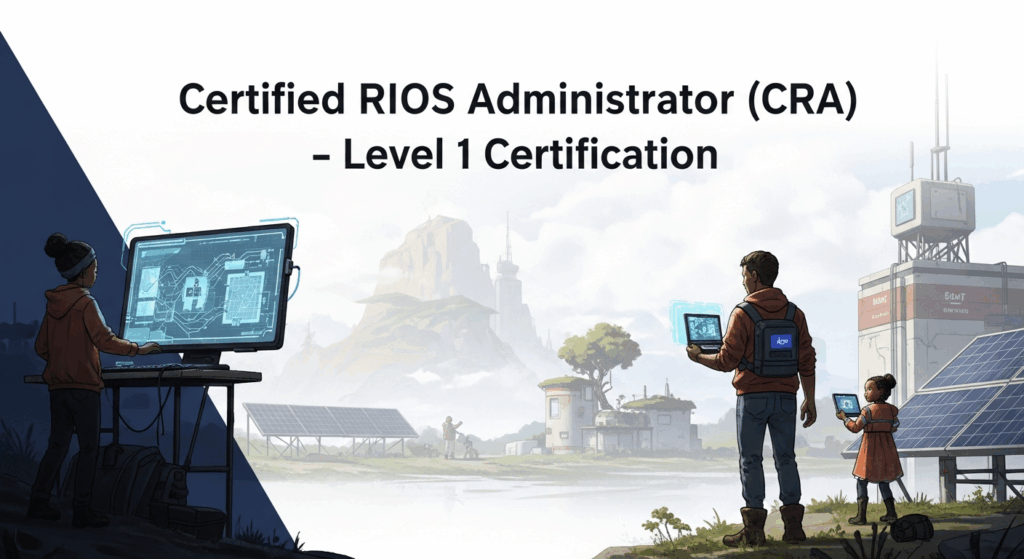
This document serves as the official Product Description for the Certified RIOS Administrator (CRA). It is designed for use on the DeReticular Academy website, in marketing brochures, and in procurement proposals for government and NGO partners.


Product Name: Certified RIOS Administrator (CRA)

SKU: CRA-DIG-2025
Category: Professional Certification / Infrastructure Operations
Certification Body: The DeReticular Academy


The Headline

“Stop Being a User. Start Being an Architect. Master the Operating System of the Post-Grid World.”

Product Overview

The Certified RIOS Administrator (CRA) is the premier technical credential for the decentralized age. It is the only accredited training program designed specifically for the Rural Infrastructure Operating System (RIOS)—the digital backbone of the DeReticular Sovereign Stack.

In a world where centralized grids are fragile and data privacy is vanishing, the CRA validates your ability to deploy, secure, and maintain a fortress of digital autonomy. This course transforms generalist IT practitioners into Sovereign Network Operators, capable of taking a community from “Zero Connectivity” to a fully functional, offline-first digital economy in under 48 hours.

Whether you are an aid worker in a conflict zone, a rural ISP entrepreneur, or a sovereignty-focused homesteader, the CRA provides the tactical knowledge to keep the lights on and the data flowing when the rest of the world goes dark.


Key Learning Outcomes

By the end of this certification, you will be able to:

  1. Deploy the Stack: Physically install and configure the RIOS-CC-1000 Compute Cluster, managing power, cooling, and blade architecture.
  2. Bridge the Gap: Integrate Starlink Roam satellite backhaul with local WiFi 6 Mesh networks to create a seamless “Zero-Trust” coverage bubble.
  3. Secure the Vault: Implement military-grade RF Fingerprinting and KyC-Native identity protocols to prevent unauthorized physical and digital intrusion.
  4. Host the Cloud: Deploy “Project Phoenix”—a suite of locally hosted applications (Chat, Storage, Finance) that function 100% offline.
  5. Execute the “Black Start”: Restore critical digital infrastructure from a cold shutdown state within 45 minutes of a catastrophic grid failure.

Target Audience

  • Field Technicians: Engineers working in remote, off-grid, or developing regions (Global South focus).
  • Sovereign Individuals: Preppers, homesteaders, and privacy advocates building independent compounds.
  • NGO & Relief Workers: Response teams needing rapid-deployment communication networks in disaster zones.
  • Network Entrepreneurs: Local leaders looking to monetize connectivity by becoming a “Village ISP.”

What’s Included in the Package

1. The Comprehensive Digital Curriculum (40 Hours)

  • 5 Core Modules: From hardware physics to economic modeling.
  • Interactive Field Manuals: Searchable, offline-ready PDFs and schematics.
  • Video Lectures: High-definition breakdowns by DeReticular Lead Architects.

2. The “Remnant” AI Tutor

  • 24/7 Access to Remnant, a specialized AI agent trained on the entire DeReticular technical documentation library.
  • Feature: Ask Remnant complex troubleshooting questions like, “My mesh node 3 is latency-spiking during the rain, how do I adjust the 5GHz backhaul?” and get instant, context-aware answers.

3. The RIOS Virtual Simulator

  • A browser-based (and offline-cacheable) sandbox environment.
  • Practice configuring the OS, setting up firewalls, and managing drive arrays without risking physical hardware.

4. The “Black Start” Capstone Exam

  • One (1) Exam Token.
  • A 60-minute immersive simulation testing your ability to handle a crisis scenario.
  • The Reward: A cryptographically signed CRA Digital Badge (NFT/Verifiable Credential) minted on the RIOS Blockchain.

Curriculum Synopsis

  • Module 1: The Iron Box (Hardware Anatomy)
    • Deep dive into the RIOS-CC-1000 chassis.
    • Power management (DC/AC integration with Agra Energy systems).
    • Hot-swapping compute blades and NVMe storage.
  • Module 2: The Invisible Web (Connectivity)
    • Satellite uplink optimization.
    • Mesh topography planning.
    • Offline DNS and Edge Routing.
  • Module 3: Project Phoenix (Sovereign Cloud)
    • Running the “Lighthouse” OS.
    • Deploying local apps (Element, Nextcloud, Gitea).
    • Data sovereignty and encryption at rest.
  • Module 4: Fortress Logic (Security)
    • The “Zero-Trust” Physical perimeter.
    • Using Software Defined Radio (SDR) for threat detection.
    • User identity and access management (IAM).
  • Module 5: The Crash (Disaster Recovery)
    • Telemetry interpretation.
    • System health monitoring.
    • Total system restoration protocols.

Technical Requirements

  • To Take the Course: A computer or tablet with a modern web browser. (Course can be downloaded for offline viewing).
  • To Run the Simulator: 8GB RAM minimum recommended.
  • Prerequisites: A basic understanding of computers (files, folders, settings) is required. Previous networking experience is helpful but not mandatory.

Pricing & Availability

  • Commercial License (Tier 1):$799.00 USD
    • For private individuals and corporate entities.
  • Development License (Tier 2):$99.00 USD
    • Subsidized pricing for verified NGOs, Non-Profits, and residents of qualifying developing nations.
  • Hardware Bundle:FREE
    • Included with the purchase of any RIOS-CC-1000 unit.

Why This Certification Matters

The internet is fragile. The grid is aging. The Certified RIOS Administrator doesn’t just learn how to fix a computer; they learn how to hold the line.

Enroll today at Academy.DeReticular.com

Certified RIOS Administrator (CRA) Sovereign Power Technician (SPT) Sovereign Systems Architect (SSA) certification tracks of the DeReticular Academy

Michael Noel · November 23, 2025 ·

Here are the detailed syllabi for the three certification tracks of the DeReticular Academy. These documents are designed to be used by instructional designers and instructors to guide the learning process.


1. Certified RIOS Administrator (CRA)

Focus: Digital Infrastructure, Networking, & Sovereign Cloud Operations
Duration: 40 Hours (Self-Paced + Virtual Labs)
Prerequisite: Basic Digital Literacy
Description: This course trains operators to deploy, secure, and manage the Rural Infrastructure Operating System (RIOS). Graduates are qualified to manage the “Nerve System” of a Sovereign Stack, ensuring 100% uptime for local communications and data processing.

Syllabus Breakdown

Module 1: Hardware Anatomy (The RIOS-CC-1000)

  • 1.1 Chassis & Architecture: Understanding the ruggedized blade server design, cooling airflow, and physical tamper-proofing.
  • 1.2 Power Interfaces: Connecting to DC (Solar/Battery) and AC (Grid/Generator) sources; managing the internal UPS.
  • 1.3 Peripheral Management: Integrating external sensors, cameras, and LoRaWAN gateways.
  • Lab 1: Virtual Teardown: Identify and “replace” a hot-swappable drive and a cooling fan in the VR simulator.

Module 2: Connectivity & Mesh Dynamics

  • 2.1 The Uplink: Configuring Starlink Roam integration for satellite backhaul.
  • 2.2 The Local Mesh: deploying WiFi 6 access points to create a self-healing community network.
  • 2.3 Edge Networking: Understanding DNS masking, local routing, and offline-first architecture.
  • Lab 2: The Dead Zone: Troubleshoot and re-establish a mesh link in a simulated interference environment.

Module 3: Project Phoenix (The Sovereign Cloud)

  • 3.1 The OS Environment: Navigation of the RIOS Linux-based kernel.
  • 3.2 Application Deployment: Installing local instances of chat (Matrix/Element), storage (Nextcloud), and finance tools.
  • 3.3 Data Sovereignty: Configuring the “Data Vault” for encrypted, locally hosted storage.
  • Lab 3: Cloud Construction: Deploy a functional local file-sharing server and create user accounts for 50 simulated villagers.

Module 4: Sovereign Security Protocols

  • 4.1 Zero-Trust Architecture: Principles of “Never Trust, Always Verify” in a physical setting.
  • 4.2 RF Fingerprinting: Using Software Defined Radio (SDR) to detect rogue devices entering the mesh.
  • 4.3 Identity Management: Implementing KyC/AML-native access controls for network users.
  • Lab 4: The Intruder: Identify and isolate a rogue device attempting to spoof a network admin login.

Module 5: Disaster Recovery & Maintenance

  • 5.1 System Health Monitoring: Reading telemetry dashboards (Temperature, Load, Bandwidth).
  • 5.2 “Project Phoenix” Protocol: Procedures for a total system rebuild from cold storage.
  • 5.3 Physical Maintenance: Dust mitigation, port cleaning, and thermal paste application cycles.
  • Final Exam: A timed “Black Start” scenario—restore a wiped RIOS cluster to full operational status within 45 minutes.

2. Sovereign Power Technician (SPT)

Focus: Micro-GTL Systems, Thermodynamics, & Feedstock Management
Duration: 50 Hours (Includes Safety Certification)
Prerequisite: Basic Mechanical Aptitude
Description: This course certifies individuals to operate Agra Dot Energy Sovereign Power Systems (SPS). It focuses on the physics of plasma gasification, the conversion of waste to energy, and the maintenance of high-uptime power generation units.

Syllabus Breakdown

Module 1: Physics & Safety (The Core)

  • 1.1 Plasma Physics 101: Understanding how plasma torches dissociate molecular bonds.
  • 1.2 Gas-to-Liquids (GTL) Theory: The Fischer-Tropsch process simplified—turning gas into diesel/naptha.
  • 1.3 Critical Safety: High-voltage handling, pressurized gas safety, and thermal containment protocols.
  • Assessment: Safety Gateway Exam (Must pass with 100% to proceed).

Module 2: Feedstock Mastery

  • 2.1 Waste Stream Identification: Classifying biomass, plastics (HDPE/LDPE), and tires.
  • 2.2 Pre-Processing: Shredding, drying, and pelletizing feedstock for optimal burn rates.
  • 2.3 Feedstock Contaminants: Identifying materials that damage the reactor (PVC, heavy metals).
  • Lab 1: The Sorting Floor: Virtual sorting exercise to create the perfect fuel blend for a 12-hour runtime.

Module 3: Operations & Control

  • 3.1 Start-Up Sequence: The 20-step checklist for cold-starting the Power Core 2X.
  • 3.2 Process Monitoring: Reading syngas quality, temperature deltas, and pressure output.
  • 3.3 Load Balancing: Managing the output between electricity generation and liquid fuel production.
  • Lab 2: Pilot Seat: Manage a simulated reactor fluctuation caused by “wet biomass” and stabilize the plasma arc.

Module 4: Power Distribution & Output

  • 4.1 Electrical Output: Inverters, rectifiers, and connecting to the RIOS microgrid.
  • 4.2 Liquid Offtake: Safe handling, storage, and testing of synthetic diesel fuel.
  • 4.3 Agrivoltaics Integration: Managing inputs from solar arrays alongside the GTL generator.
  • Lab 3: Grid Sync: Synchronize the Agra generator frequency with a solar inverter setup.

Module 5: Maintenance & Lifecycle

  • 5.1 Consumables: Replacing plasma torch electrodes and filtration media.
  • 5.2 Slag Management: Safe removal and vitrification of inert waste byproducts.
  • 5.3 Troubleshooting: Diagnosing common faults (flameout, pressure drops, clog detection).
  • Final Exam: The Endurance Run: Maintain a simulated system at peak efficiency for a virtual 48-hour cycle, responding to three random hardware failures.

3. Sovereign Systems Architect (SSA)

Focus: System Integration, Economic Modeling, & Strategic Planning
Duration: 30 Hours (Capstone Focus)
Prerequisite: Completion of CRA and SPT (or equivalent experience)
Description: The “Master” level certification. This track teaches how to design the full ecosystem, integrating Digital (RIOS) and Physical (Agra) systems into a profitable, self-sustaining economy.

Syllabus Breakdown

Module 1: The Velcro Principle (System Integration)

  • 1.1 The Symbiosis: Calculating the energy load of a RIOS Data Center and matching it to Agra GTL output.
  • 1.2 Heat Reuse: Designing systems to channel waste heat from servers/generators into greenhouses or water distillation.
  • 1.3 The “Interlocking Business Plan”: How reliable power increases data value; how data optimization increases power efficiency.

Module 2: Site Design & Deployment

  • 2.1 Site Surveying: Topography, solar access, feedstock logistics, and RF line-of-sight planning.
  • 2.2 The “Zero-Trust” Physical Layout: Designing secure perimeters for critical infrastructure.
  • 2.3 Scalability: Planning for “Modular Growth”—adding nodes without disrupting service.
  • Lab 1: The Blueprint: Use CAD tools to design a Sovereign Stack layout for a specific real-world location (e.g., a remote clinic or farm).

Module 3: Economic Modeling & The Flywheel

  • 3.1 The Spark Spread: Calculating real-time profitability (Sell Syngas vs. Burn for Electricity vs. Store as Diesel).
  • 3.2 Asset Monetization: Pricing models for ISP services, cloud storage, and synthetic fuel sales.
  • 3.3 Return on Sovereignty (RoS): Long-term financial forecasting for community investors.
  • Lab 2: The CFO Desk: Build a 5-year P&L spreadsheet for a proposed deployment, accounting for variable feedstock costs and energy prices.

Module 4: Governance & Community

  • 4.1 Policy Architecture: Establishing Terms of Service (ToS) for community networks.
  • 4.2 Stakeholder Management: Working with local governments, tribes, and cooperatives.
  • 4.3 The “Kurb Kar” Integration: Managing logistics and mobility assets within the ecosystem.

Module 5: Capstone Project

  • 5.1 Project Umoja Simulation: A comprehensive scenario requiring the Architect to plan a deployment for a village of 5,000 people.
  • Requirements:
    • Full Site Map (Power & Data).
    • Hardware Bill of Materials (BOM).
    • Operational Staffing Plan.
    • Economic Feasibility Report.
  • Final Defense: Presentation of the Capstone Project to a board of senior DeReticular/Agra instructors (or AI Proxy).
  • « Go to Previous Page
  • Page 1
  • Interim pages omitted …
  • Page 11
  • Page 12
  • Page 13
  • Page 14
  • Page 15
  • Interim pages omitted …
  • Page 25
  • Go to Next Page »

DeReticular

Copyright © 2026 · Monochrome Pro on Genesis Framework · WordPress · Log in