The DeReticular Academy Digital Learning
Overview: The DeReticular Academy Digital Learning Package
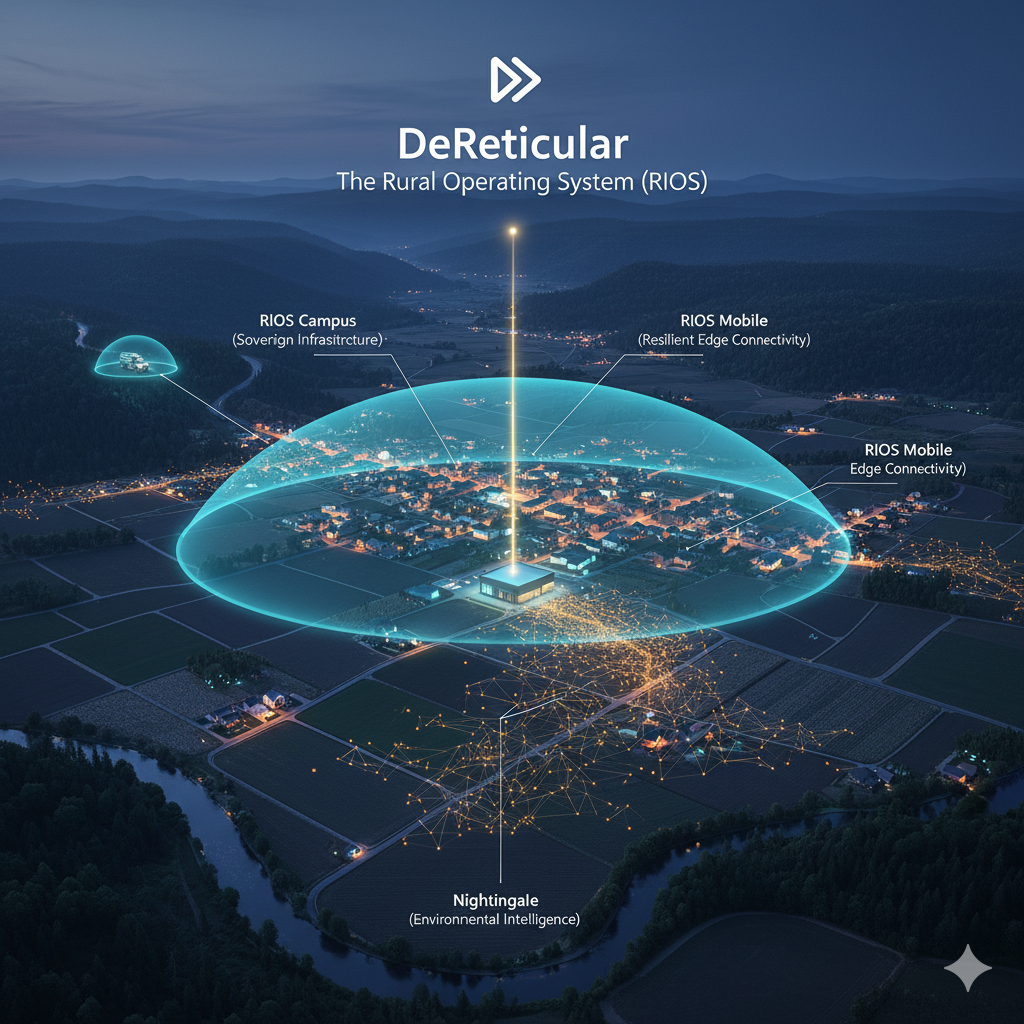
Program Name: The Sovereign Infrastructure Certification Program (SICP)
Delivered By: DeReticular Academy
Target Audience: Rural community leaders, infrastructure technicians, network engineers, and energy entrepreneurs.
Objective: To train and certify individuals in the deployment, maintenance, and economic management of the Rural Infrastructure Operating System (RIOS) and Agra Dot Energy Sovereign Power Systems (SPS).
Course Structure & Curriculum
The package is divided into four core pillars, mirroring the ecosystem’s structure:
Philosophy & Strategy, RIOS Infrastructure (Digital),
Agra Energy Systems (Physical/Power), and
Economic Operations.
Pillar 1: Foundations of Sovereignty
Introduction to the core philosophy driving DeReticular and Agra Dot Energy.
- Module 1.1: The Sovereign Stack Philosophy
- Module 1.2: The Velcro Principle & Strategic Alignment
- Concept: How interconnected systems create resilience (The “Interlocking Business Plans”).
- Case Study: The synergy between a RIOS Campus and an Agra Micro-GTL power plant.
Pillar 2: The RIOS Ecosystem (Digital Infrastructure)
Technical training on DeReticular’s flagship digital products.
- Module 2.1: RIOS Campus Deployment
- Module 2.2: RIOS Mobile & “Project Unplugged”
- Focus: Mobile infrastructure and the Starlink Roam Kit.
- Topics:
- Rapid deployment of “Plug-and-Play” hardware in post-conflict or remote areas.
- Establishing ad-hoc mesh networks for mission-critical mobility.
- Module 2.3: Network Sovereignty & Security
Pillar 3: Agra Dot Energy Sovereign Power Systems (SPS)
Technical training on energy independence and waste-to-value systems.
- Module 3.1: Introduction to Micro-GTL Technology
- Focus: Micro Gas-to-Liquids (GTL) Systems.
- Topics:
- Understanding the physics of Plasma Gasification and GTL.
- Converting local waste streams (biomass, plastic, refuse) into synthetic fuels and electricity.
- Module 3.2: SPS Module Management
- Module 3.3: The Energy-Agriculture Nexus
- Focus: Agrivoltaics and biomass.
- Topics: Balancing food production with energy generation; using agricultural byproducts as fuel sources.
Pillar 4: The Economic Engine
Training on the business models that make the infrastructure self-funding.
- Module 4.1: The DeReticular Digital Flywheel
- Concept: How the microgrid powers the digital ecosystem, creating a feedback loop of resilience and growth.
- Topics: Monetizing excess compute and energy capacity.
- Module 4.2: Infrastructure as a Revenue Asset
- Focus: Transforming the RIOS-CC-1000 from a cost center to a profit center.
- Topics:
- Selling “Sovereign Cloud” services to local businesses.
- Managing revenue from “Kurb Kars” (Non-Emergency Medical Transportation) integrations.
- Module 4.3: Community Economic Development
- Focus: Using the RIOS Mobile suite to stimulate local commerce.
- Case Study: “The Kaabong Blueprint” (Project Umoja) – A narrative guide for stakeholders on scaling operations in developing regions.
Certification Tracks
Upon completion of the relevant modules, students can earn the following digital badges/certifications:
- Certified RIOS Administrator (CRA): Focuses on Pillar 2. Qualified to manage a RIOS Campus and Sovereign Cloud.
- Sovereign Power Technician (SPT): Focuses on Pillar 3. Qualified to install and maintain Agra Dot Energy Micro-GTL systems.
- Sovereign Systems Architect (SSA): Master certification covering all pillars. Qualified to design and deploy full community ecosystems.
Learning Resources Included
- The Master Catalogs: Access to the DeReticular RIOS Ecosystem Comprehensive Component Catalog and the Agra Dot Energy Sovereign Power Systems Master Catalog.[1]
- AI Tutor Access: 24/7 access to “Remnant”, the DeReticular AI agent, for technical support and query resolution.
- Simulation Labs: Virtual environments to practice configuring a RIOS-CC-1000 and balancing a Micro-GTL load before physical deployment.
Research Summary
- DeReticular (www.dereticular.com): An AI-focused Research & Innovation firm led by Michael Noel.[1][2] Their core product is the Rural Infrastructure Operating System (RIOS), which includes the RIOS Campus (fixed infrastructure), RIOS Mobile (mobile infrastructure), and Project Phoenix (Sovereign Cloud). They focus on “Engineering Sovereignty.”[1][2]
- Agra Dot Energy (www.agra.energy): A partner/subsidiary focused on Sovereign Power Systems (SPS). Their flagship technology is the Micro Gas-to-Liquids (GTL) system that turns waste into energy, designed to be containerized and autonomous.[1]
- DeReticular Academy: A proposed initiative to provide training and certification for these complex systems, ensuring local communities can operate and maintain the “Sovereign Stack” independently.