Sovereign Infrastructure Certification Program (SICP).
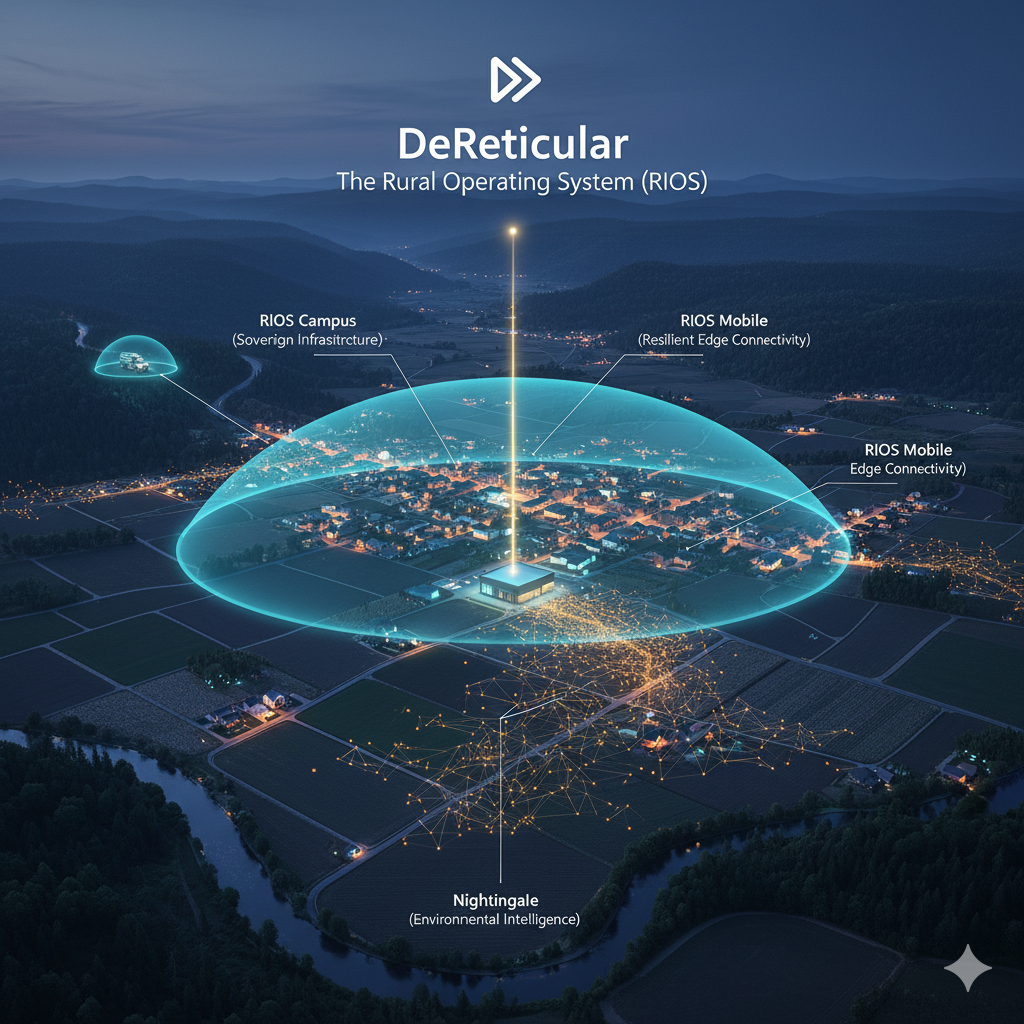
This document outlines the detailed course structure and storyboard for the Sovereign Infrastructure Certification Program (SICP). It transforms the high-level strategic framework into a linear, actionable curriculum designed for instructional designers and content creators.
Course Delivery Platform:
- Primary: Localized LMS hosted on the RIOS-CC-1000 (Offline-First).
- Secondary: Web-based portal for remote certification updates (Online).
Phase 1: Foundation (The “Why”)
Target Audience: All Learners (Mandatory Prerequisite)
Goal: Establish the philosophy of sovereignty and the symbiotic relationship between DeReticular and Agra.
| Module ID | Module Title | Key Concepts / Storyboard Script | Visual / Media Assets | Activity / Assessment |
| 101 | The Sovereign Stack | Intro: Welcome by Michael Noel (Avatar/Video).<br>Concept: Defining the “Stack”—why we move from Centralized to Decentralized.<br>Key Term: “Engineering Sovereignty.” | • Animation: A centralized grid failing vs. a distributed node staying lit.<br>• Diagram: The 4 Layers of the Stack. | Quiz: “Centralized vs. Decentralized” identification scenario. |
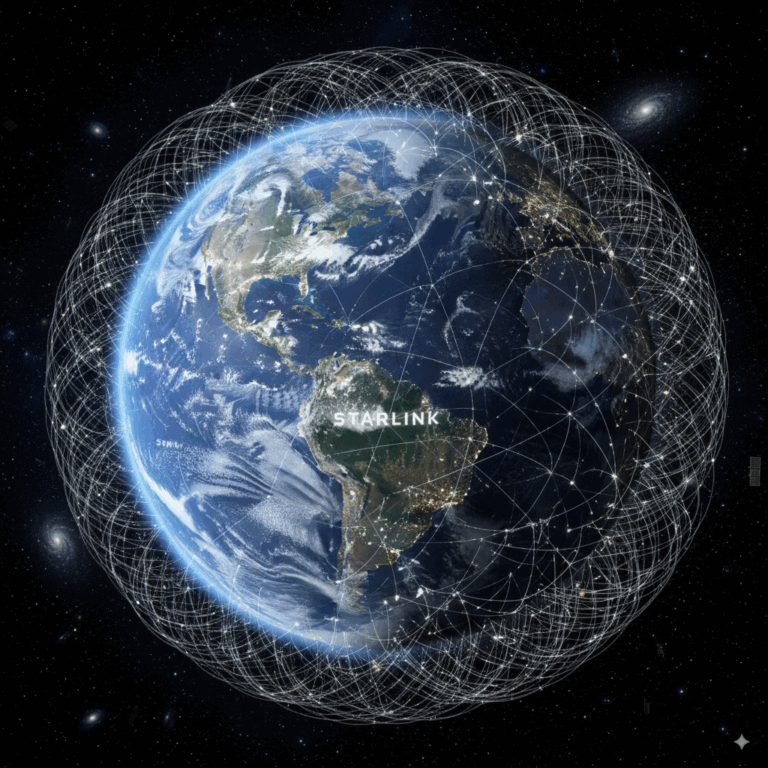
| 102 | The Velcro Principle | Concept: How Digital (DeReticular) and Physical (Agra) lock together.<br>Narrative: “Data needs Power; Power needs Intelligence.”<br>Outcome: Understanding the interdependency. | • 3D Model: Exploded view of a RIOS Campus powered by an Agra Micro-GTL unit.<br>• Flowchart: Energy flow vs. Data flow. | Drag-and-Drop: Match the component (e.g., Starlink, GTL Unit) to its role (Connectivity, Power). |
| 103 | Safety & Ethics | Concept: The responsibility of holding sovereignty. <br>Safety: High Voltage + High Data Privacy.<br>Ethics: Zero-Trust environments. | • Video: Site safety gear walkthrough.<br>• Infographic: The “Sovereign Code of Conduct.” | Pledge: Digital signature on the Safety & Ethics Protocol. |
Phase 2: Technical Streams (The “How”)
Learners select Track A (Digital), Track B (Power), or Both (Architect).
Track A: RIOS Digital Infrastructure (DeReticular Focus)
| Module ID | Module Title | Key Concepts / Storyboard Script | Visual / Media Assets | Activity / Assessment |
| 201 | Anatomy of the RIOS-CC-1000 | Hardware: Tour of the Compute Cluster.<br>Components: Blade servers, cooling, power inputs, hardened casing. | • AR Overlay: Interactive 3D model of the RIOS-CC-1000 allowing users to “open” the chassis. | Simulation: Virtual component replacement drill. |
| 202 | Project Phoenix: The Cloud | Software: Deploying the “Sovereign Cloud Suite.”<br>Task: Setting up local storage, chat, and productivity apps.<br>Goal: 100% offline functionality. | • Screen Capture: UI walkthrough of the RIOS OS dashboard.<br>• Diagram: Local Mesh vs. World Wide Web. | Lab: Configure a local “Emergency Broadcast” page on the simulator. |
| 203 | Network & Security | Comms: Integrating Starlink Roam + WiFi 6 Mesh.<br>Security: Implementing RF Fingerprinting and KyC/AML protocols. | • Animation: “The Zero-Trust Bubble” visualizer (showing how the network repels unauthorized access). | Scenario: Troubleshoot a “Red Alert” intrusion attempt simulation. |
Track B: Sovereign Power Systems (Agra Energy Focus)
| Module ID | Module Title | Key Concepts / Storyboard Script | Visual / Media Assets | Activity / Assessment |
| 301 | Physics of Micro-GTL | Science: What is Plasma Gasification?<br>Process: Waste →→ Syngas →→ Liquid Fuel/Electricity.<br>Differentiation: Why this isn’t just “burning trash.” | • Animation: Molecular breakdown of plastic into synthetic gas.<br>• Video: The Plasma Torch in action. | Quiz: Identify valid vs. invalid feedstock materials. |
| 302 | SPS Hardware Operations | Equipment: The Standardized Module Catalog.<br>Ops: Startup, Steady State, Shutdown procedures.<br>Safety: Managing heat and pressure. | • Virtual Reality (VR) View: 360-degree tour of an Agra Container Unit.<br>• Checklist: The “Pre-Flight” ignition sequence. | Simulation: Successfully balance the pressure gauges in a virtual startup. |
| 303 | Maintenance & Agrivoltaics | Maintenance: Cleaning filters, checking torches.<br>Agrivoltaics: Integrating solar/biomass with farming (The Food/Energy Nexus). | • Video: Technician changing a consummable part.<br>• Diagram: The circular economy of a farm. | Task: Schedule a preventative maintenance calendar based on usage hours. |
Phase 3: Economic Operations (The “Sustainability”)
Target Audience: Entrepreneurs & Architects
Goal: Turn the infrastructure into a business.
| Module ID | Module Title | Key Concepts / Storyboard Script | Visual / Media Assets | Activity / Assessment |
| 401 | The Digital Flywheel | Strategy: Reinvesting energy profits into digital expansion.<br>Model: The more power you make, the more compute you can sell. | • Animated Graph: The “Flywheel Effect” showing revenue growth over time. | Case Study Analysis: Review the “Project Umoja” financial model. |
| 402 | Monetizing Assets | Revenue Streams:<br>1. Selling “Sovereign Cloud” seats.<br>2. Selling Synthetic Diesel.<br>3. Carbon Credits.<br>4. Kurb Kar (Logistics) integration. | • Dashboard Mockup: The “Sovereign Ledger” showing income streams.<br>• Calculator Tool: ROI Estimator. | Project: Build a 12-month P&L statement for a hypothetical village deployment. |
| 403 | Community Governance | Policy: Managing the “Data Vault.”<br>Growth: Scaling from one node to a regional mesh.<br>Diplomacy: Working with local government/tribal councils. | • Roleplay Video: Negotiating a site lease with a community leader. | Essay/Plan: Draft a “Community Benefit Agreement.” |
Phase 4: Capstone & Certification
Goal: Verify competence and award the Sovereign Badge.
- Scenario Challenge (The “Blackout” Drill):
- Context: The main grid has failed. A storm has damaged the primary internet uplink.
- Task: The student must virtually reboot the Agra generator using local biomass, stabilize the RIOS-CC-1000, and establish a local emergency mesh network for first responders.
- Oral Board (AI Assisted):
- A conversational assessment with “Remnant” (the AI Tutor) to verify the student understands the reasoning behind their technical decisions.
- Certification:
- Issuance of a Cryptographically signed Digital Badge (stored on the RIOS Blockchain).
Development Priorities (Storyboard Notes)
- Tone: The aesthetic should be “Industrial Futurism.” Clean lines, schematics, dark modes, high contrast. Avoid corporate stock photography; use field-deployment style imagery.
- Accessibility: All videos must have transcripts. All simulations must run on low-bandwidth connections or purely offline via the RIOS-CC-1000 local cache.
- Gamification: Progress bars should be represented as “System Charge” or “Network Health.” Completion of the course = “System Online.”