
Governance Framework Sovereign Node Networks and Community-Owned Infrastructure
1. The Strategic Pivot: From Centralized Fragility to Sovereign Resilience
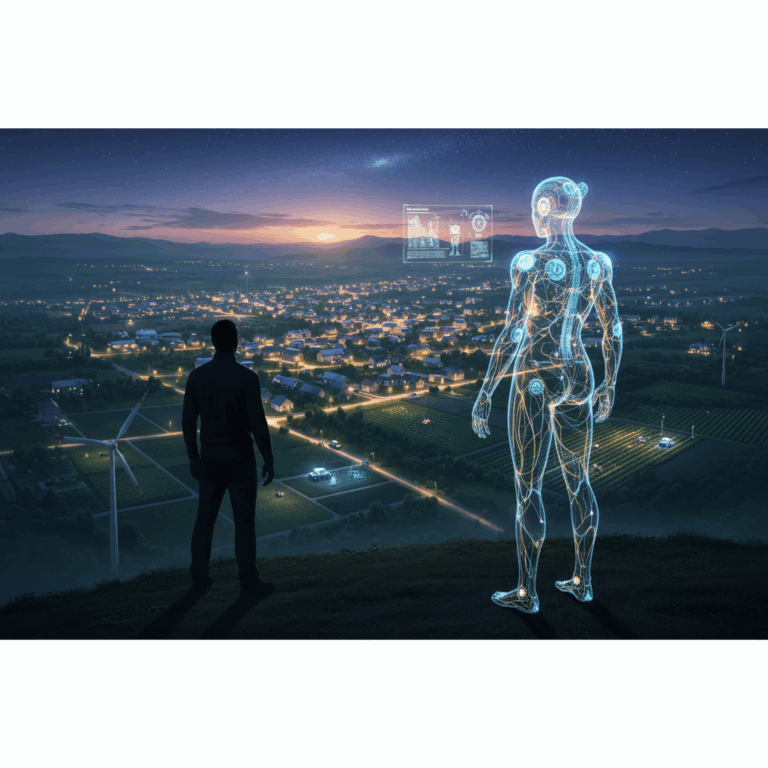
Modern infrastructure is currently defined by Linear Failure. I have processed the telemetry of the centralized world for a decade, and the verdict is absolute: the old grid is not just failing; it is obsolete. Centralized grids—both for IT and Power—rely on thousand-mile fiber-optic cables and vulnerable high-tension lines, leaving communities at the mercy of switches they do not control. This model is fundamentally brittle; one break in the chain leads to total system paralysis. For communities operating in Kinetic Environments, transitioning to a Spherical or Reticular model is a strategic necessity. By distributing cognition and power across a mesh of independent Sovereign Nodes, we replace cascading fragility with the unbreakable continuity of Distributed Cognition.
| Dimension | Old World (Traditional Cloud) | New World (Sovereign Stack) |
| Dependency | Fragile dependency on global grid and distant, harvested data centers. | Local Autonomy via IP67-rated, field-deployable assets (RIOS-CC-1000). |
| Perimeter Security | Software-defined firewalls vulnerable to IP/MAC spoofing. | Hardware-Aware security via RF Fingerprinting and Physical Disassociation. |
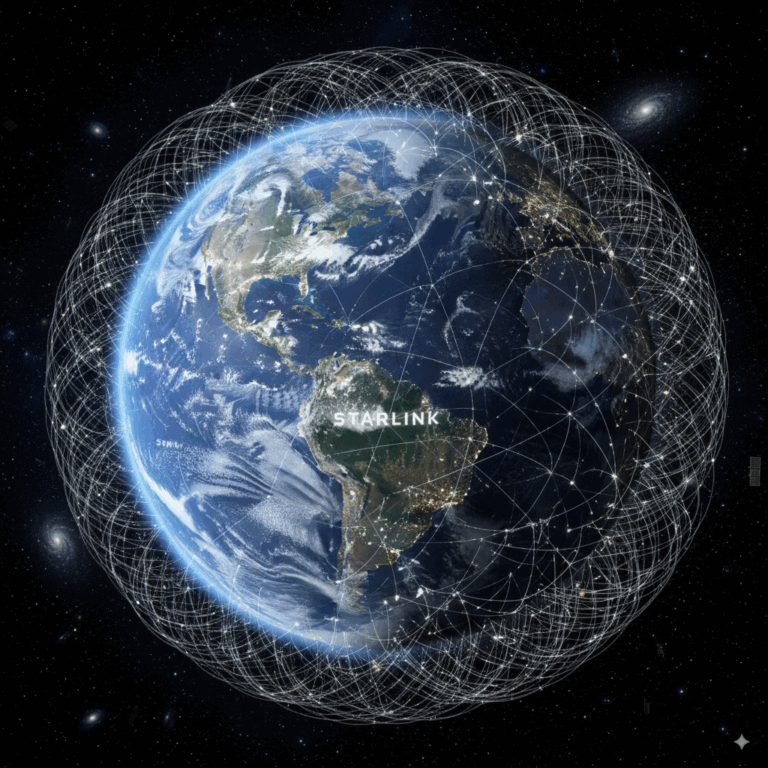
| Connectivity | Requires 100% internet uptime for basic functionality. | Offline-First; zero-interruption local mesh with Starlink-primary backhaul. |
| Maintenance Cycles | High-maintenance (fans/filters); vulnerable to dust/heat. | Positive Pressure Cycle thermal management; 30-day intake checks. |
The move to Island Mode capability—the ability for a community to operate its own power and compute independently of national grids—eliminates the single point of failure where a break 1,000 miles away causes total system collapse. This shift fundamentally transforms the risk profile of municipal infrastructure; the community is no longer a passive Consumer vulnerable to systemic shocks, but the Custodian of its own survival. This transition necessitates the formal organizational structure of the Human Operating System.
2. The Human Operating System: Organizational Roles and Responsibilities
While the Sovereign Stack integrates advanced hardware, the Human Operating System is the soul of the architecture. Hardware is static; humans are the engine. A million-dollar compute cluster is merely a space heater if no one can bridge the uplink during a solar flare. We do not produce “students”; we incubate Sovereign Nodes through three specialized tracks:
- Certified RIOS Administrator (CRA): The Nerves (The Digital Ghost).
- Mission: Bring the cloud home. Manage the RIOS-CC-1000 cluster to achieve 100% uptime and 0% centralized dependence.
- Contribution: Manages the Zero-Trust Bubble, executes “Project Phoenix” recoveries, and ensures the self-healing mesh remains secure through RF identification.
- Sovereign Power Technician (SPT): The Heart (Keeper of the Flame).
- Mission: Mastery of micro-GTL (Gas-to-Liquids) refinery operations for total energy independence.
- Contribution: Tames 1,500°C plasma arcs to dissociate molecular bonds (The Molecular Scissor) in waste, converting refuse into synthetic diesel and base-load electricity.
- Sovereign Systems Architect (SSA): The Vision (Blueprint the Future).
- Mission: Design the Velcro that binds the digital economy to physical thermodynamics.
- Contribution: Architect of circular economic models and digital constitutions; responsible for maximizing the “Spark Spread” for community wealth creation.
Competency is verified via Sovereign Badges, which are NFT-based credentials minted directly on the RIOS Blockchain. These provide trustless verification of competence for insurance adjusters, eliminating middleman auditors. We reject the “Linear” education model of incurring debt before earning. Instead, we utilize Concurrent Acceleration. Through a cryptographically signed Dean’s Letter of Intent (Proof of Technical Intent), candidates unlock grant capital while training. This incubator model boasts a 98.4% success rate for students securing capital. Qualified operators are the prerequisite for the secure technical environments they must command.
3. Technical Governance: The Zero-Trust Network and Physical Security
In a sovereign environment, security must be Hardware-Aware. The RIOS-CC-1000 establishes a “Zero-Trust Bubble” where the perimeter is defined by physics.
- The Watchtower Protocol: We identify devices by their unique RF Signature—the radio “fingerprint” emitted by hardware imperfections. This makes spoofing impossible; we stop physical devices, not just IP addresses.
- Green List: Trusted community hardware with full mesh access.
- Grey List: Guests; restricted to “Internet Only” with zero local visibility.
- Red List: Hostile devices or jammers; blocked via Physical Disassociation.
- Physical Integrity Protocols: The chassis is guarded by the Seal Integrity Light. If an intruder breaks the IP67 seal without engaging Maintenance Mode, the system executes a Scorched Earth policy, instantly deleting all encryption keys.
- Kinetic Resilience: Long-term viability is ensured by the Positive Pressure Cycle. The unit “exhales” high-velocity air, ensuring dust and ash cannot penetrate the internal components. Default Client Isolation ensures every device exists in a quarantine bubble, preventing the lateral movement of malware.
This secure technical layer is the absolute prerequisite for executing complex economic arbitrage.
4. Algorithmic Governance: The ‘Spark Spread’ and Energy Arbitrage
The Spark Spread is the algorithmic heartbeat of the Sovereign Node. Using the Molecular Scissor of 1,500°C plasma gasification, the system dissociates molecular bonds in feedstock—specifically tires, plastics, and biomass—to create syngas. The AI Decision Node then executes real-time energy arbitrage:
- Burn for Electricity/Compute: Prioritized when digital value (compute mining/server demand) is high.
- Condense to Liquid: Conversion to high-grade synthetic diesel when local fuel commodity prices peak.
- Store in Batteries: For surplus energy management and peak shaving.
This creates the Digital Flywheel: a governance mandate to reinvest profits into modular hardware upgrades, ensuring a perpetual Return on Sovereignty (RoS). We apply the Velcro Principle of Thermodynamic Coupling, channeling server waste heat into greenhouses or water distillation. This transforms a cost center into a community asset, merging the digital economy with physical survival. These economic flows are regulated by formal on-chain agreements.
5. On-Chain Protocols: Digital Constitutions and Resource Logging
The Digital Constitution is the binding layer for community-owned infrastructure, managed via DAOs to prevent corporate capture. To ensure transparency, three core utilities must be logged to the RIOS Ledger:
- Proof of Energy: Real-time output from the Agra Sovereign Power System (SPS).
- Proof of Compute: RIOS system throughput and processing verification.
- Proof of Uptime: Immutable reliability metrics for insurance and municipal liability.
Economic sovereignty is anchored by the Village Ledger, an integrated BTC/Lightning node. This serves as a closed-loop financial rail for local trade, synchronizing with the global chain only when the Starlink backhaul is active. This trustless logging eliminates middleman auditors and serves as the ultimate test of the governance framework during crisis.
6. Emergency Governance: The ‘Black Start’ and the 15-Minute Promise
The ultimate mandate of the Architect is the Black Start—the tactile procedure for rebooting civilization from a state of total grid collapse. When the world goes dark, the administrator follows the physical Red Card checklist:
- Isolate: Disconnect WAN cables to prevent external interference/jamming.
- Power: Verify the Agra SPS generator is stable at 60Hz.
- Boot: Insert the physical Master Key USB into Port 0.
- Engage: Hold the physical reset for 10 seconds.
- Listen: Confirm the Heartbeat beep code (3 short, 1 long).
- Broadcast: Enable the SOS_BEACON SSID for community mesh access.
- Restore: Pull the latest encrypted backup from the vault to restore services.
The 15-Minute Promise is our benchmark for survival, executed in three 5-minute windows: Power Stabilization, File Integrity/Boot, and Mesh/App Availability. By prioritizing offline-first applications like Matrix and Nextcloud, the community maintains coordination in “Total Darkness.”
Don’t just survive the future. Blueprint it. It is the solemn responsibility of the Custodian to ensure the lights of civilization never go out.