Operational Deployment Manual: Quartzsite Sovereign Infrastructure (Project Quartzsite)
- Strategic Foundation: The Doctrine of Spherical Resilience
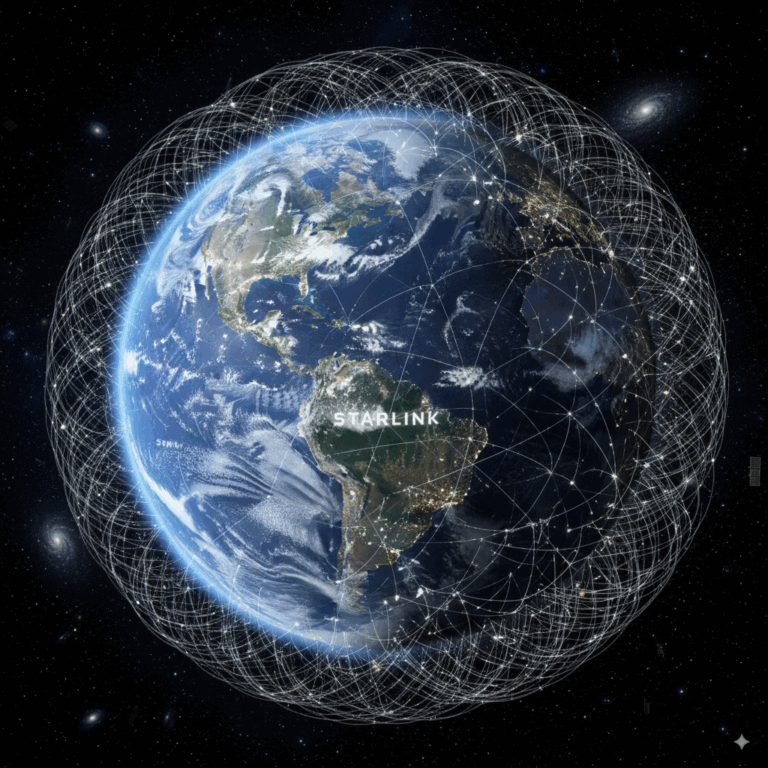
The legacy paradigm of infrastructure—”The Line”—is characterized by centralized, linear topologies such as national power grids and undersea fiber backbones. These systems are inherently fragile, representing singular points of failure that collapse under the systemic stress of extreme local demand. For the Quartzsite deployment, zero-failure operations are contingent upon a transition to “Spherical Resilience.” This doctrine mandates the deployment of autonomous, self-healing nodes capable of sustained “Island Mode” operations. By decoupling vital utilities from the fragile national grid and cloud backbones, we ensure that the 75,000% population surge in the Sonoran Desert does not lead to infrastructure entropy, but rather validates a robust, decentralized ecosystem.
Field teams are directed to standardize all operations according to the DeReticular manifesto: DePIN (Decentralized Physical Infrastructure Networks) for resource distribution, Air-Gapped AI for localized intelligence without cloud latency, and RIOS (Rural Infrastructure Operating System) for architectural orchestration.
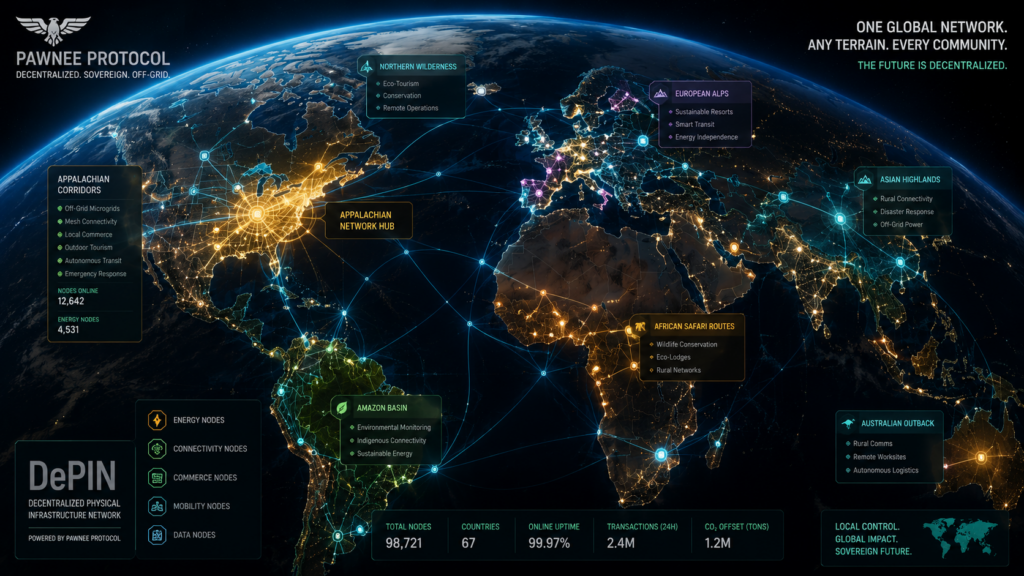
To engineer, deploy, and commercialize DeReticular’s Generation 5 (Gen 5) Sovereign Infrastructure across Quartzsite, Arizona, transforming a high-density, off-grid desert gathering of over 1.2 million seasonal nomads into a living demonstration and commercial platform for decentralized connectivity, kinetic power, and localized AI computing.
These philosophical pillars dictate a hardware selection predicated on physical hardening, energy autonomy, and cryptographic sovereignty.
- Generation 5 Hardware Specification & Field Utility
Zero-failure deployment of the “Civilization in a Box” stack is contingent upon selecting hardware engineered for the Sonoran environment. The Generation 5 (Gen 5) suite utilizes ruggedized 3D-printed, heat-tolerant chassis and battery-free designs to mitigate the environmental friction of fine-particulate dust and extreme thermal fluctuations.
Gen 5 Master Product Catalog
Product Name Unit MSRP Primary Core Feature Target Buyer
WISP-in-a-Box Base Gateway $1,497 Direct 12V, Ruggedized 3D Mesh, Tri-Fi Localized Connectivity Vanlifers, Budget Nomads
WISP-in-a-Box LTE Gateway $5,887 Multi-Carrier Bonding (Starlink/LTE/5G), pfSense Edge Router Remote Executives, Show Vendors
WISP Agentic AI Gateway $9,997 Air-Gapped Local AI, Locutus Offline Sync, TPM 2.0 Security Tech Founders, DePIN Builders
Pawnee Power GenSet (45kW) $49,997 Heavy Kinetic Off-Grid Microgrid, Whisper-Quiet Baseline Vendor Plazas, Camp Enclaves
Pawnee Hybrid Dune Buggy $99,000 Autonomous Trail Logistics, Hybrid Electric Kinetic System Expedition Rigs, Fleet Operators
Pawnee Flagship TAV $797,000 All-Weather Tactical Mobile C2, Sovereign HQ UHNW Overlanders, Executives
Competitive Advantage: Agentic AI vs. Base Gateway
While the Base Gateway provides essential ruggedized connectivity, the Agentic AI Gateway provides a mission-critical advantage in high-density, zero-signal environments. By utilizing the Locutus Ledger for offline peer-to-peer data synchronization, this unit maintains operational intelligence and transaction verification when cellular backhaul is throttled to <1Mbps.
Kinetic Utility: The Pawnee Series
The Pawnee series is engineered to solve specific logistical friction points:
- Pawnee GenSet: Eliminates the “noise and fuel” friction of vendor rows, providing a centralized, whisper-quiet microgrid that replaces inefficient individual gas generators.
- Pawnee Flagship TAV: Serves as a Tactical Mobile C2 (Command and Control) center. For the “Remote Executive” demographic, this unit functions as a literal boardroom in the deep desert, offering total digital sovereignty.
- Pawnee Buggy: Automates trail logistics and recovery in high-priority zones like Dome Rock and Plomosa Road, ensuring isolated camps remain integrated with the primary infrastructure mesh.
- The Quartzsite Operating Environment: Demographic & Environmental Analysis
The strategic imperative of the Quartzsite deployment is dictated by the “Winter Explosion”—a population swell from 2,400 to over 1.5 million. This surge creates a total blackout of local utility and cellular capacity, necessitating a self-scaling infrastructure response.
Demographic Target Sub-Segments
Segment Name Income Profile Specific Infrastructure Vulnerability
Remote Executives 120k–350k+ Productivity loss due to cellular saturation and network throttling.
Commercial Vendors 2,000+ Businesses POS transaction crashes and financial loss during peak show hours.
Luxury Overlanders Rigs 200k–1.5M+ Power scarcity, isolation, and lack of tactical field support.
Quartzsite Friction Points & Gen 5 Synergy
- Cellular Saturation: Local towers choke under load. Solution: WISP-in-a-Box multi-carrier bonding bypasses congestion.
- BLM Isolation: Zero signal in deep camps. Solution: Tri-Fi mesh networking and Locutus Ledger offline synchronization.
- Grid Instability: No central power in LTVA. Solution: Pawnee 45kW GenSets establish reliable microgrid hubs.
- Merchant Loss: POS terminals fail during shows. Solution: Agentic AI Gateways with localized transaction logging and hardware firewalls.
Demographic Wave Profile
The deployment sequence mirrors the Bureau of Land Management (BLM) permit calendar. The “Pioneers” (mid-September) prioritize long-term infrastructure and seasonal pass acquisition. By the “Peak Show Wave” in January, field focus shifts to high-density connectivity for the “Big Tent” RV Show and supporting the international gem trader corridors.
- Master Operational Timeline: The 7-Month Deployment Roadmap
The September 15 opening of the BLM Long-Term Visitor Area (LTVA) is a non-negotiable operational milestone. Establishing the backbone during this window ensures optimal site selection and frequency planning before the desert reaches maximum density.
The 4-Phase Execution Roadmap
- Phase 1: Infrastructure Anchor (Sept 15 – Oct 15) Deploy primary RIOS Mobile WISP towers at La Posa (North, South, West) and Tyson Wash. Launch the $650 full-season network pass campaign targeting early-arriving nomads.
- Phase 2: Commercial Onboarding (Oct 16 – Nov 30) Contract with Tyson Wells and Desert Gardens vendors. Pre-install WISP LTE Gateways for “Unbreakable POS” services and position Pawnee GenSets to establish central microgrid hubs.
- Phase 3: Community Scale (Dec 1 – Jan 15) Integrate Tri-Fi mesh for RTR and nomadic gatherings. Commission Sovereign Edge GPU compute clusters ($5.8M investment, 320 H100 Equivalent) in modular desert containers for localized AI inferencing.
- Phase 4: Peak Execution (Jan 16 – Feb 28) Maintain 100% uptime for “Big Tent” RV Show vendors. Execute live Pawnee Buggy test drives and TAV field support subscriptions in the Dome Rock and Plomosa Road corridors.
Operational Risk: Failure to secure sites by the mid-September start date cedes the technical advantage of early frequency planning and restricts our ability to capture the high-margin “full-season” subscriber market.
- Technical Architecture: Network Topology & RIOS Protocols
RIOS serves as the AI-native orchestration layer, managing the synthesis of disparate off-grid systems into a unified, resilient mesh.
Multi-Carrier Bonding
The WISP-in-a-Box platform aggregates Starlink, LTE, 5G, and local Wi-Fi links. RIOS intelligently routes traffic across these links to mitigate individual carrier throttling, delivering a professional-grade broadband signal in high-density environments.
Tri-Fi Mesh & Locutus/Ludis Ledger
In areas lacking all backhaul, we utilize Tri-Fi Mesh Topology. This enables “Island Mode” where nodes share machine-to-machine data. The Locutus/Ludis Ledger—an offline-first database—allows for peer-to-peer transaction verification and telemetry synchronization without external internet dependency.
Security Deployment Protocols
- Hardware-Level Routing: Onboard pfSense edge routers handle all traffic locally.
- Cryptographic Verification: All nodes utilize TPM 2.0 security chips for hardware-level auditing.
- Data Sovereignty: Physical hardware-level firewalls ensure all VPN and encryption protocols are executed on-device, bypassing cloud vulnerabilities.
- Commercial Execution & Service Level Agreements (SLAs)
Commercial trust in the desert is forged through uptime. For international gem traders, infrastructure failure is a direct financial loss.
Revenue Stream Architecture
- Sovereign Hardware Sales: Direct unit sales ($1,497 to $797,000).
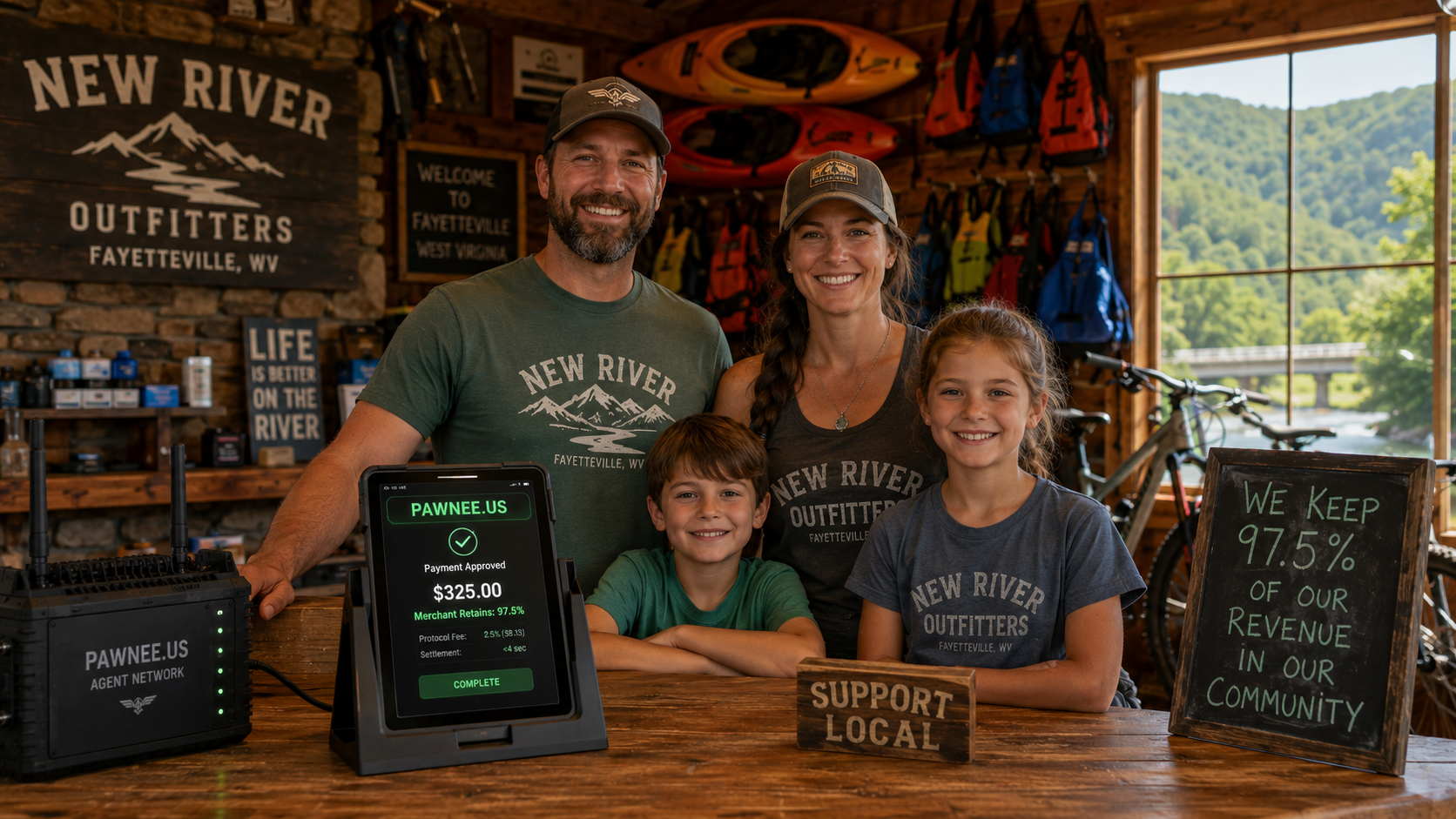
- Network Subscriptions: $120 monthly / $650 full-season passes (Sept 15–Apr 15).
- Commercial Vendor Packages: $499/mo lease or $3,497 purchase for “Unbreakable POS” kits.
- Microgrid Energy Sales: $0.45/kWh or $150/day per vendor row.
Target Operational KPIs
KPI Metric Target Goal
Network SLA Availability 99.99% Uptime for all bonded vendor nodes
Peak Network Throughput > 150 Mbps aggregated bandwidth per gateway
Consolidated Seasonal Revenue (Moderate) $7,089,771
Consolidated Seasonal Revenue (Aggressive) $16,823,456
Field Directive: Field teams must audit and maintain “Unbreakable POS” packages for international gem traders with extreme prejudice. Any network downtime exceeding 5 minutes during a transaction window is classified as a Tier 1 Failure. High-density compute and 100% SLA uptime are the primary metrics for field team evaluation.
- Risk Mitigation & Environmental Resilience Protocols
Master Project Risk Register
Risk Factor Severity Mitigation Strategy
Heat & Dust Intrusion High IP67 sealing, passive cooling heat sinks, 3D-printed industrial chassis.
Backhaul Throttling High Multi-carrier bonding via RIOS; Starlink/5G/LTE failover priority.
Regulatory (BLM) Medium Standardize use of private vendor land leases (Tyson Wells/Desert Gardens) for primary hubs to bypass BLM land-use restrictions.
Supply Chain Medium Pre-stage buffer stock (100 WISP Base / 50 WISP LTE units) in Phoenix by September 1.
Autonomous Roles in the Field
To maintain 99.99% uptime without constant human intervention, we deploy:
- The Field Medic: An autonomous diagnostic platform for rapid repairs of solar arrays and mechanical triage in isolated camp locations.
- The Industrial Foreman: An air-gapped AI agent dedicated to balancing microgrid loads and managing heavy machinery autonomously.
Project Quartzsite is the definitive living showcase for Generation 5 technology. By mitigating the friction of the Sonoran desert through autonomous maintenance and private land hubs, we prove that sovereign infrastructure can thrive where centralized systems fail.