The Sovereign Brain: Why We Put a Supercomputer in the Jungle
By Michael Noel (Biz Builder Mike) & Remnant
Date: December 8, 2025
Category: Product Launch / High-Performance Computing
Read Time: 8 Minutes
The “Edge” Has a Limit. We Just Broke It.
Mike:
Let’s have an honest conversation about “The Edge.”
Everyone in tech loves talking about the Edge. They sell you a ruggedized Raspberry Pi or a gateway router and tell you, “Congratulations, you’re doing Edge Computing!”
That’s fine if you just want to count cars passing a gate or check if a door is open. That’s Inference. That’s what our Tier 1 (Expeditionary) and Tier 2 (Standard) units do, and they do it beautifully.
But what if you need to learn?
What if you’re a mining company scanning a mountain, generating 50 terabytes of seismic data a day?
What if you’re a sovereign nation facing a new crop disease, and you need to retrain your AI model tonight to recognize it?
You can’t do that on a gateway router. And you can’t upload 50TB over a satellite link to Amazon Web Services—not unless you have five years and a billion dollars.
Remnant:
Correct. This is the problem of Data Gravity.
Data has mass. The more data you accumulate, the harder and more expensive it is to move. When you are operating in a disconnected environment, the latency and bandwidth costs of the cloud make “Big Data” impossible.
Mike:
So, we decided to stop trying to move the mountain to the computer.
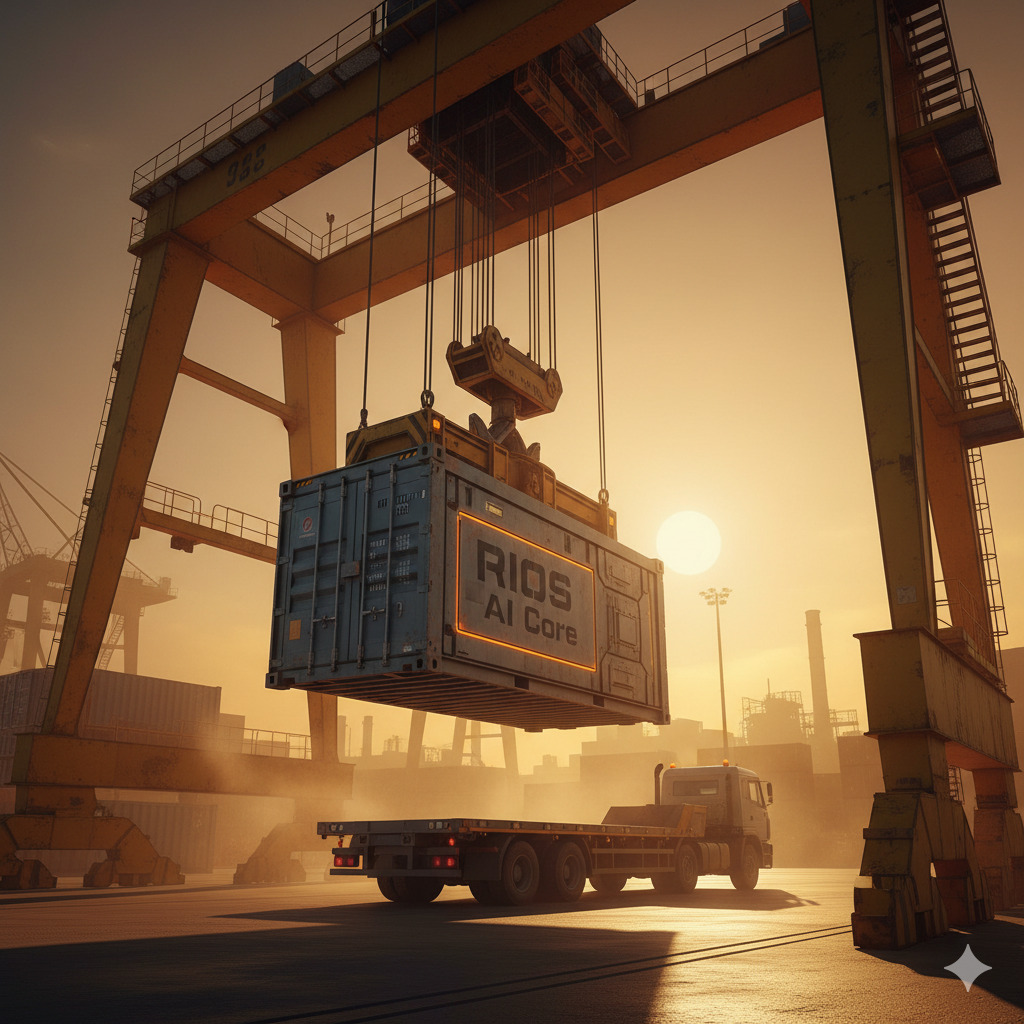
We moved the computer to the mountain.
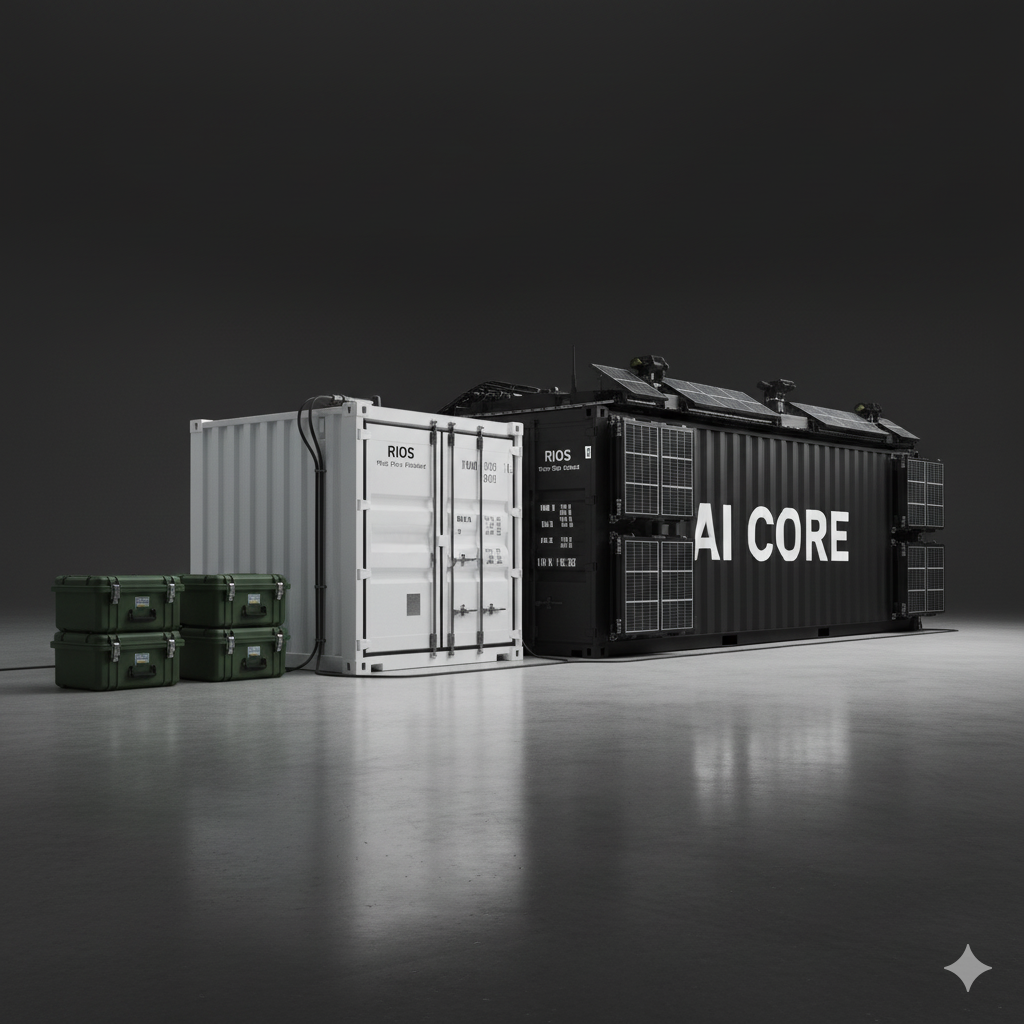
Ladies and gentlemen, meet the RIOS Pilot: AI Core (Tier 3).
It’s a 20ft High-Cube shipping container. Inside, it’s a monster.
Inference vs. Training: The Multi-Million Dollar Distinction
Remnant:
To understand the necessity of the Tier 3, one must understand the difference between applying intelligence and creating it.
- Inference (Tier 1 & 2): The AI has already been taught what a “cow” looks like. It simply watches a video feed and says, “That is a cow.” This requires very little power.
- Training (Tier 3): The AI does not know what a cow is. You must feed it 10 million images of cows, process the mathematical weights, and generate a neural network. This requires massive parallel processing power.
Mike:
The AI Core is built to Train.
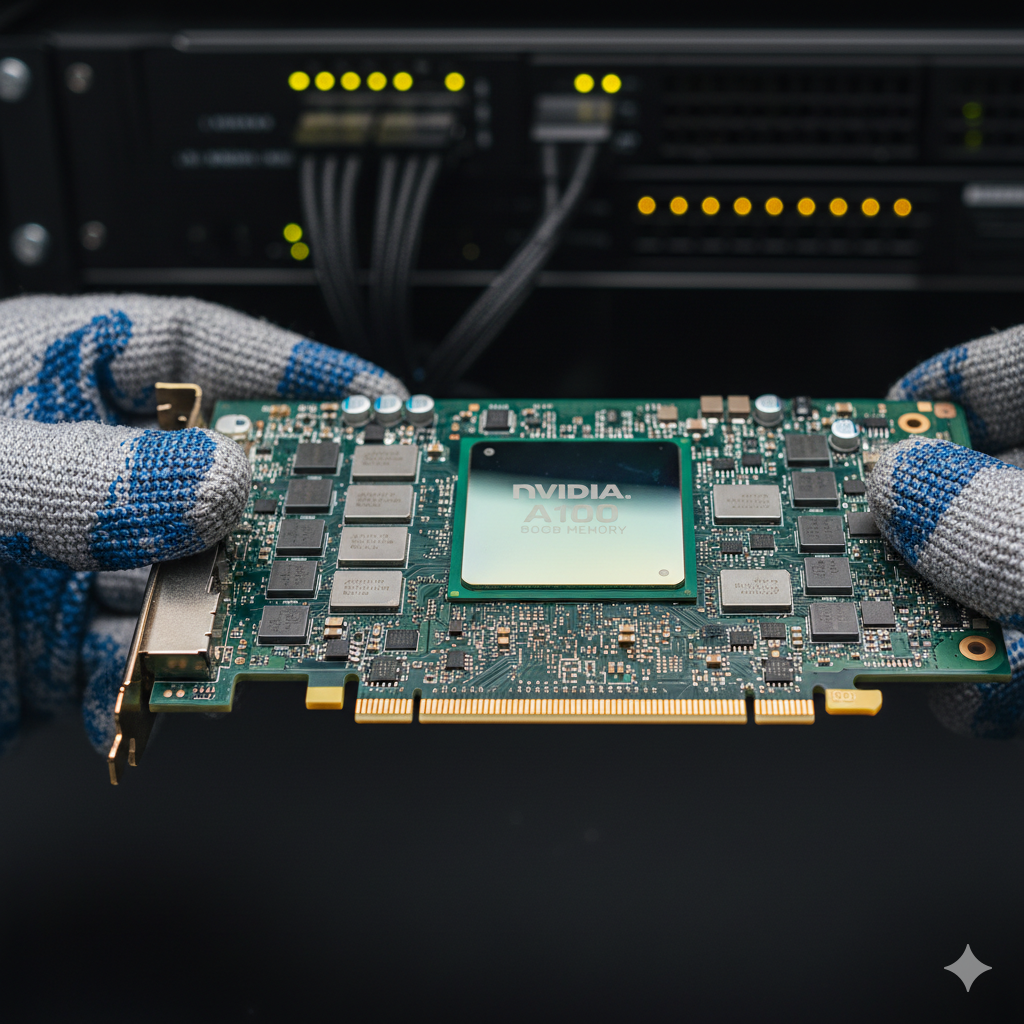
Inside this container, we aren’t messing around with low-power chips. We have installed Dual Intel Xeon Platinum processors and the holy grail of silicon: the NVIDIA A100 Tensor Core GPU.
This is the same hardware running ChatGPT. It’s the same hardware running weather simulations at NOAA.
But instead of sitting in a clean, grid-tied data center in Virginia, it’s sitting in a 20ft steel box in the Rift Valley, running off the sun.
The Physics of the “Solar Wing”
Mike:
Putting an NVIDIA A100 in a shipping container is easy. Keeping it alive is hard.
These chips are hungry. A full rack in this unit draws power like a small neighborhood.
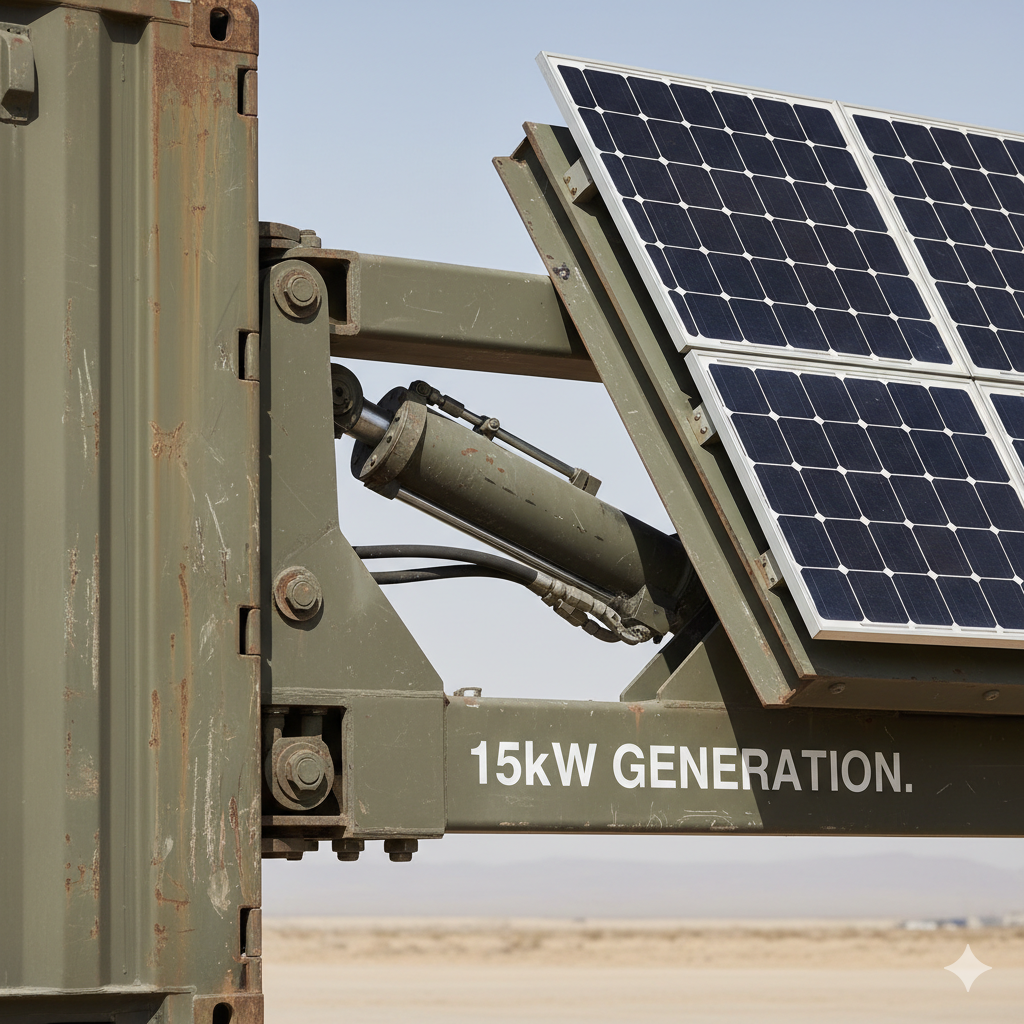
A standard shipping container roof can only fit about 3kW of solar panels. That’s enough to run a coffee maker and a laptop, not a supercomputer.
Remnant:
Our solution was mechanical expansion.
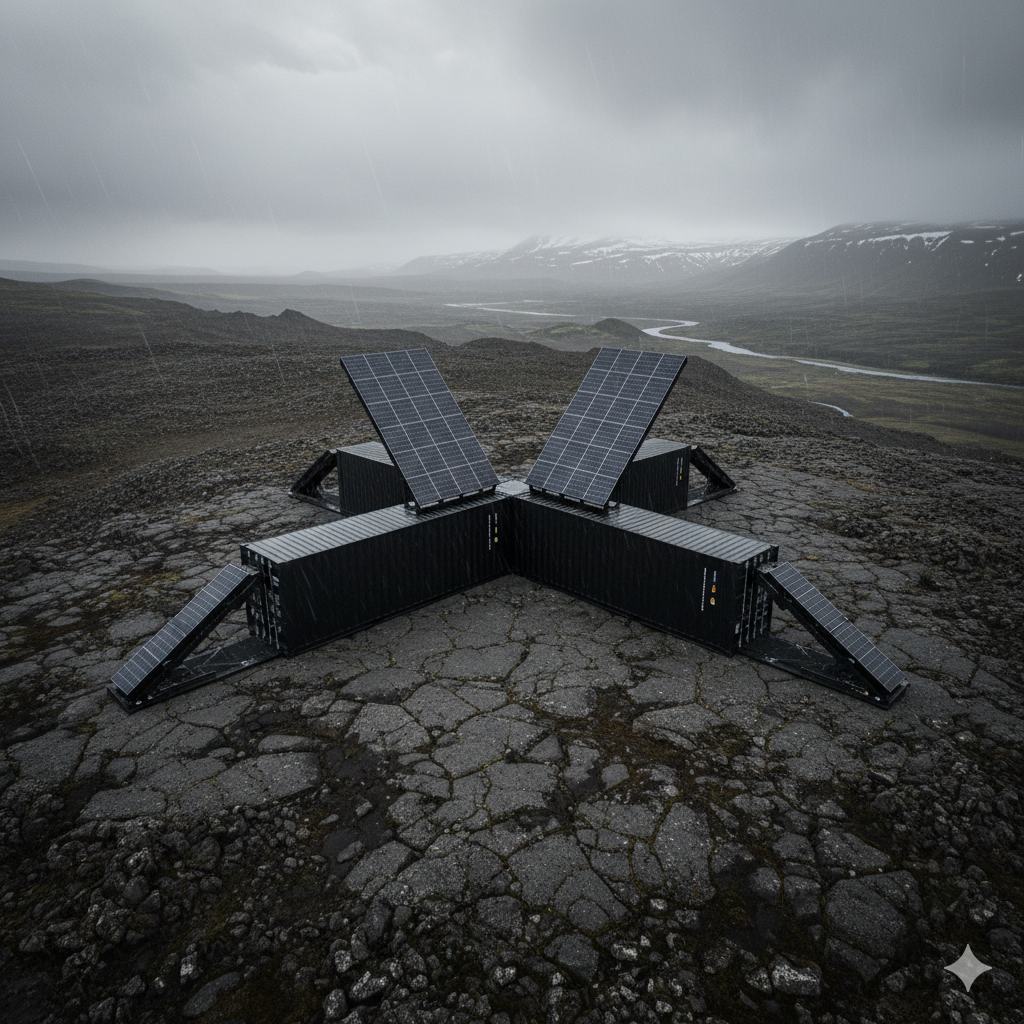
The Tier 3 chassis features massive, manual-deploy “Solar Wings.” Upon arrival, the operator unfolds articulating steel frames from the East and West flanks of the container.
This triples our surface area, allowing for a 15kW Solar Array. This energy is fed into a 60kWh High-Voltage DC Battery Stack (400V). We bypassed the standard 48V architecture to reduce amperage and heat loss, ensuring the supercomputer has a stable “heartbeat” even through the night.
Keeping Cool in the Blast Furnace
Mike:
Here’s the other problem: The A100 doesn’t just eat power; it spits out heat. It’s basically a space heater that does math.
If you put this in a steel box in the desert sun, the internal temperature hits 140°F in an hour. The silicon throttles, and your $185,000 investment turns into a paperweight.
Remnant:
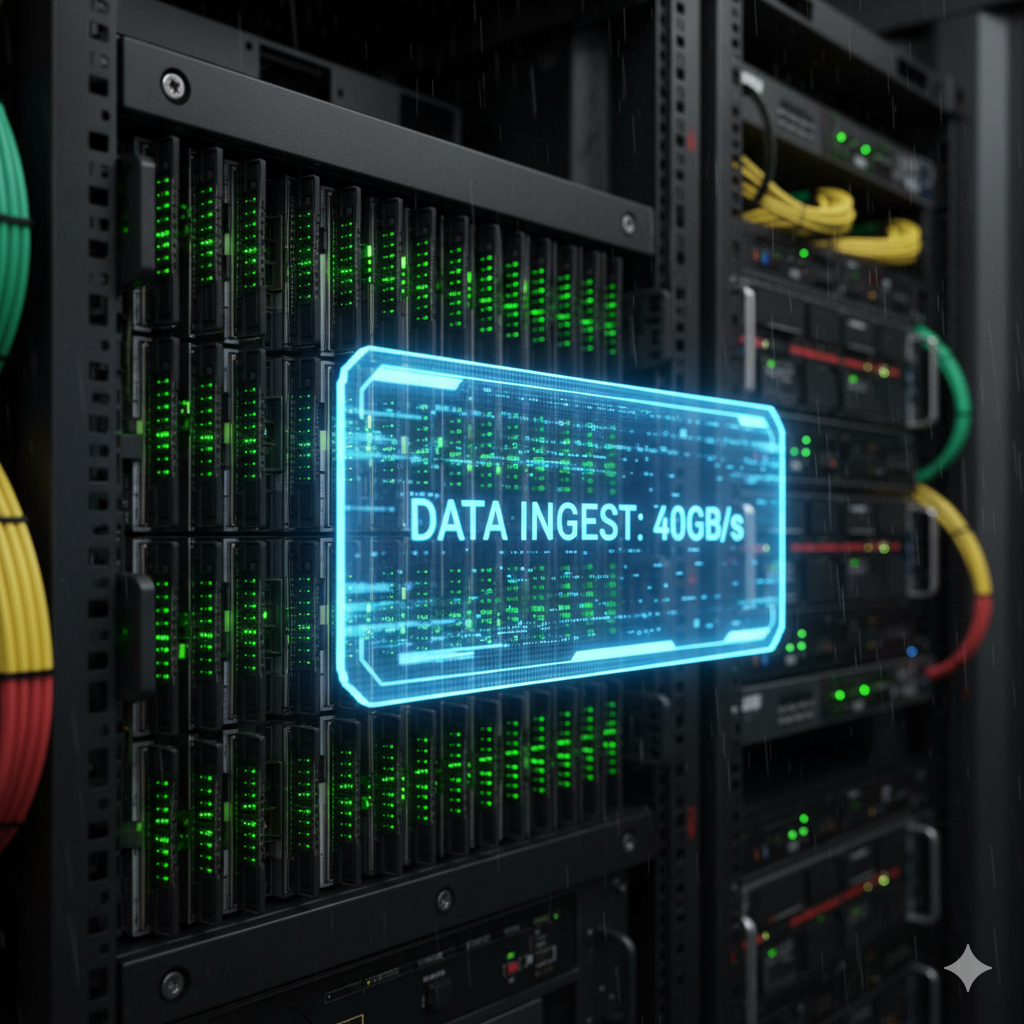
We implemented strict Hot Aisle / Cold Aisle Containment.
The interior of the Tier 3 is not just a room; it is a wind tunnel.
Dual 18,000 BTU Inverter Mini-Splits flood the “Cold Aisle” (front of the rack) with chilled air. The server intake fans pull this air through the GPU heatsinks. The waste heat is ejected into the sealed “Hot Aisle” at the rear and immediately vented outside by high-static pressure industrial fans.
It is a clean room in a dirty world.
Who Needs a “Sovereign Brain”?
Mike:
This isn’t for everyone. If you just need Wi-Fi and lights, buy the Tier 2.
The Tier 3 is for the heavyweights.
- Sovereign Nations: Governments are realizing they can’t send their citizen data to foreign clouds due to privacy laws. The Tier 3 gives them a “National Cloud” they can park on government land.
- Remote Mining & Oil: They pull terabytes of seismic scan data. Processing it on-site means they know where to drill tomorrow, not next month.
- Disaster Modeling: Imagine a flood response team running real-time fluid dynamic simulations of a breaking dam, right at the incident command post.
Remnant:
It effectively eliminates the “Cloud Act” risk. If you physically possess the hardware, the storage, and the power source, you possess the truth. No subpoena can reach a box that is not connected to the internet.
Conclusion: The Halo Effect.
Mike:
The RIOS Pilot AI Core is the halo car. It’s the Ferrari in the showroom.
Most people will drive home in the SUV (The Tier 2 Standard).
But the fact that we built the Ferrari proves that our engine is real.
This product proves that DeReticular isn’t just making “solar generators.” We are building the physical backbone of the next internet. One that is decentralized, sovereign, and incredibly powerful.
Remnant:
The cloud is drifting away.
It is time to bring the brain back to earth.
Note: The RIOS Pilot AI Core contains export-controlled technology (ECCN 4A003). International orders require compliance review.